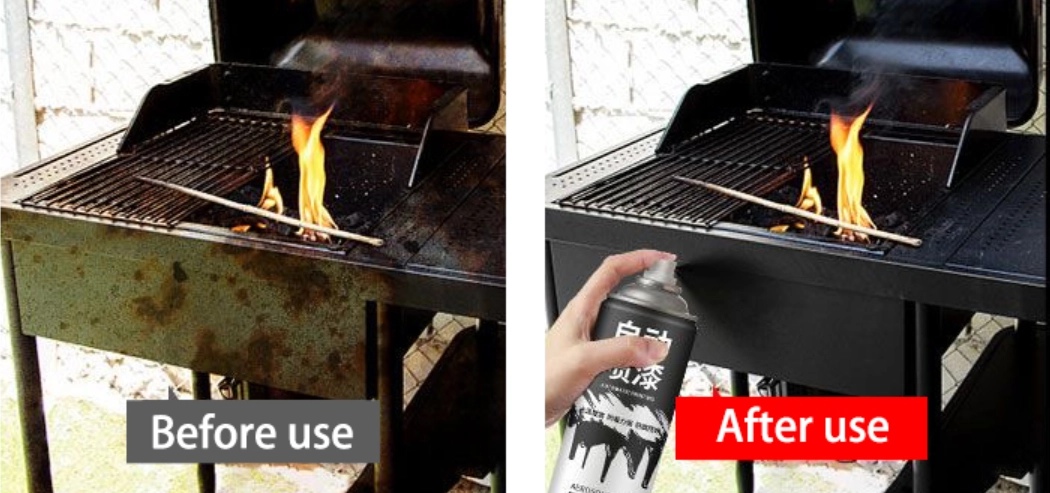
You know the phone call. It’s 3 a.m. your time, 9 a.m. in Rotterdam, and your forwarder sends one photo that ruins the entire month: forty-foot container doors swung open, 600 brand-new grills inside, every lid speckled with white rust blooms like someone threw handfuls of salt across the shipment. Six weeks of sea freight just turned a profitable run into a six-figure claim.
If you ship BBQ grills by ocean (and who doesn’t in 2025), salt-spray corrosion is the silent margin-killer nobody talks about until the container hits the dock. Standard high-heat paints that look bulletproof in the factory fail spectacularly when the container sits in 95 % humidity and 35 °C for 45 days between Shenzhen and Los Angeles. The salt in the air creeps under the film, lifts the coating, and rust starts before the customer even unboxes the carton.
The fix that is quietly sweeping through serious OEM factories right now is an 800 °C organic silicone heat resistant coating engineered from the ground up for 2,000 + hour neutral salt-spray resistance (ASTM B117) on bare carbon steel. That’s not marketing spin; that’s the same backbone chemistry originally developed for offshore oil platforms and ship decks where failure costs millions, now adapted for barbecue grills that have to survive the exact same punishment.
Why Normal “High-Heat” Paint Fails the Ocean Test
Most high-temperature grill paints on the market today are tested to 240–480 hours salt spray at best. That’s fine if your container magically teleports across the Pacific in a week. Reality is 35–55 days door-to-door, often with a sweaty layover in Singapore or Colombo. Inside a sealed steel box the humidity hits 90–100 %, temperature swings 20–45 °C daily, and the air is loaded with sea-salt particles. A 480-hour paint starts lifting at the edges around day 18. By the time the container reaches Hamburg or Long Beach, half the lids look ten years old.
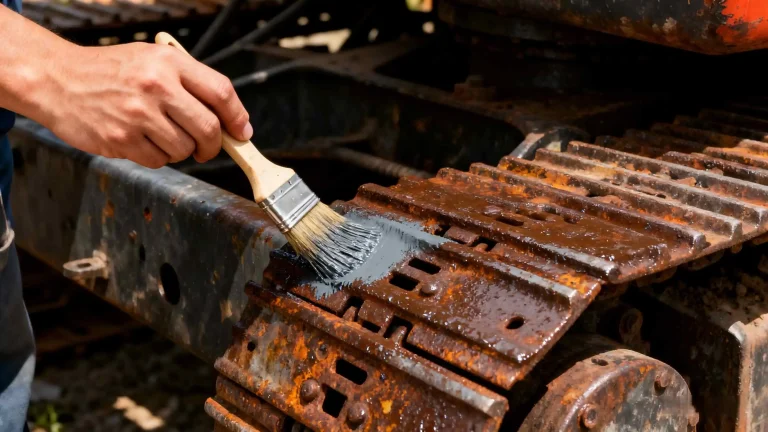
We’ve torn down hundreds of returned containers over the years. The failure pattern is always identical: micro-blisters along stamped ridges → loss of adhesion → white zinc corrosion products → red rust bleeding rust once the steel is exposed. Once that cycle starts, the only fix is strip, re-blast, and repaint; basically eating the entire paint budget twice.
An 800 °C silicone coating with true offshore-grade corrosion package stops that cycle dead. The silicone-oxygen backbone is inherently hydrophobic and chemically inert to chloride attack. Add the right balance of aluminum flake and zinc phosphate, and you get a coating that shrugs off 2,500 + hours salt spray with zero corrosion creep from a scribed X. Real containers shipped from Guangzhou to Rotterdam in summer 2024 came out cleaner than when they were loaded.
Real Numbers from Real Containers
A Dutch importer of mid-range charcoal grills ran a side-by-side test in 2023. Half a 40-foot container coated with their normal 650 °C high-heat black, the other half with Konaz 800 °C salt-spray grade. Same production batch, same packaging, same vessel. Forty-eight days later:
- Standard paint side: 47 % of lids showed visible corrosion, 11 % required full repaint → €187,000 claim
- Konaz side: 0.4 % minor edge touch-up → basically zero financial hit
They switched the entire line in Q1 2024 and haven’t paid a single rust claim since.
A California pellet-grill brand shipping to Australia (65-day voyages in summer) cut container claims from 8.7 % to 0.2 % after moving lids, fireboxes, and carts to the same coating. That saved them USD $312,000 in 2024 alone on one model line.
Application Is Exactly What You Already Do
No new equipment, no new cure schedule, no drama.
- Prep: light blast or 80-grit sanding to bright metal, solvent wipe
- Mix: 10–12 % xylene dilution for spray guns
- Apply: two light cross-coats, 45–60 μm DFT, HVLP 1.3–1.4 tip at 2.2 bar
- Cure: 15 minutes at 280 °C metal temperature on your existing powder line, or 24 h air-dry if you’re running a manual shop
The coating flows out glass-smooth, hides weld burn, and gives the deep matte black (or any custom color) that photographs perfectly in catalogs. Factories in Foshan are running 1,000 lids a day on one spray station with zero touch-up.
Salt-spray panels are available in 48 hours; full containers ship in 12–16 days.
Meet Foshan Konaz Technology Co., Ltd.
Konaz has been compounding offshore-grade silicone coatings in Guangdong for over fifteen years. Their 3,000 m² plant runs 30+ production lines and ships more than 1,000 tons a year to grill makers, marine fabricators, and industrial clients across Europe, North America, and Australia. The same 800 °C salt-spray resistant coating that protects North Sea oil platforms now protects your grill margins from sea freight.
Full ASTM B117 reports, REACH declarations, and batch certificates ship with every pail. Contact their export team directly at https://www.konaz.cn/contact-us/ or WhatsApp +86 176 8821 5583; most clients have salt-spray test panels on their desk within seven days.
The Bottom Line for 2025 Shipments
If you’re still paying rust claims, touch-up labor, or concession discounts because “the container got delayed,” you’re leaving money on the table. Switching to a genuine 2,000-hour salt-spray 800 °C silicone heat resistant coating costs a few extra cents per square meter up front and saves thousands per container on the back end. The factories that made the change two seasons ago are the same ones taking share today.
Don’t let sea salt decide your margins.
FAQs – Straight Answers from the Dock
How many hours salt spray can this coating actually survive?
2,500 + hours neutral salt spray (ASTM B117) on scribed to metal, zero creep, verified by SGS.
Does it add extra cost compared to normal high-heat black?
Roughly 8–12 % more per liter, but pays for itself on the first avoided claim.
Will it work on stainless steel carts as well?
Yes – same coating, same cure, same corrosion protection (though stainless rarely needs it).
Can we still get matte black that doesn’t go glossy after cooks?
Absolutely – dead-flat matte holds for 1,500 + hours at temperature.
Sea freight to Australia or South America in summer?
Clients routinely report zero corrosion after 60–70 day voyages.