Most coating failures don’t happen on day one.
They show up months later, usually when no one is watching.
A surface that looked fine during installation starts fading. A film that passed adhesion tests begins lifting at the edges. Sometimes it is just discoloration. Sometimes it is corrosion creeping under the coating, quietly doing damage that will be expensive to fix.
In heavy industry, those moments are rarely about “bad paint.” They are about decisions made too early, with too little context, under assumptions that no longer hold once heat, moisture, or chemicals enter the picture.
This is not a catalog-style overview. It is closer to how coating decisions actually get made when equipment runs hot, environments are unforgiving, and mistakes are paid for in downtime.
When “Extreme” Is No Longer an Exception
In real facilities, extreme conditions are often normal conditions.
Continuous heat above several hundred degrees. Rapid temperature swings between shutdown and full load. Moist air mixed with salts or process chemicals. Steel expanding and contracting every day. Floors taking impact from forklifts that never really stop moving.
None of that feels extreme to the people working there.
But coatings feel it immediately.
What matters is not whether an environment sounds harsh on paper, but whether the coating system was chosen with that reality in mind. Most failures trace back to one question that was never fully answered: what is actually stressing the surface here?
Why Coatings Fail Where They “Shouldn’t”
Many coatings fail while technically staying within their published limits.
That sounds strange until you see it happen.
A product rated for high temperatures discolors because the pigment system wasn’t stable under repeated thermal cycling. A chemically resistant layer loses adhesion because the metal underneath expands faster than the film can tolerate. A protective coating looks intact but allows moisture to creep underneath through microscopic cracks.
Failure often comes from combinations, not extremes.
Heat plus moisture. Chemicals plus abrasion. Temperature plus vibration.
When selection focuses on a single property, the rest show up later, uninvited.
Temperature Is Not Just a Number
Everyone asks about maximum temperature first.
They should, but they usually stop too early.
Sustained heat behaves differently than short spikes. Direct flame exposure is not the same as radiant heat. And materials react very differently when heating and cooling happens daily rather than occasionally.
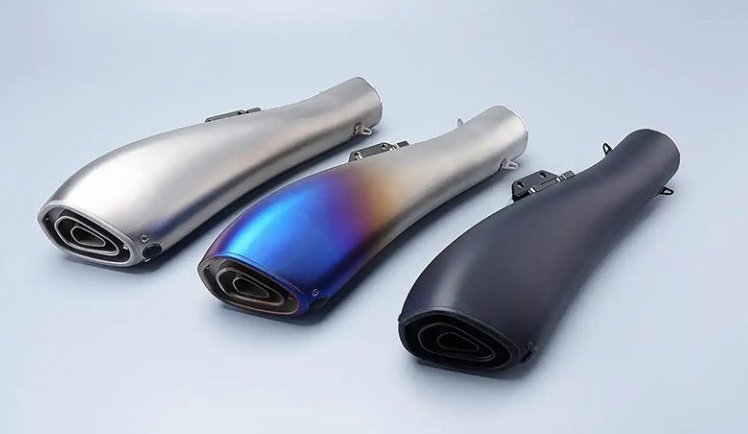
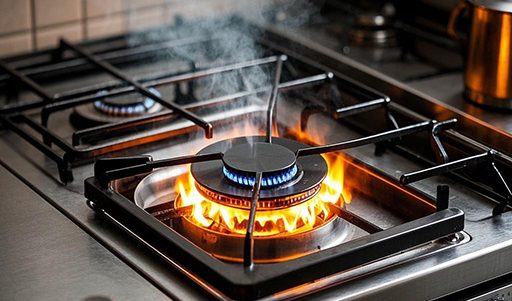
Coatings designed for real high-heat applications are built to stay bonded as metal moves. Color stability matters more than people expect, especially for visible components like exhaust systems, heating equipment, or outdoor units. Once discoloration starts, it is often a signal that the system is already under stress.
This is where high-temperature resistant coatings earn their place. Not because they survive heat once, but because they keep behaving the same way after hundreds of cycles.
Chemical Exposure Rarely Announces Itself
Chemical damage is subtle at first.
A surface may still look solid while the film slowly loses integrity. Oils, solvents, acids, or alkaline residues find weak points. Moisture follows. Then oxidation starts working from underneath.
In industrial environments, coatings that resist chemicals but lack flexibility tend to crack under thermal movement. Others resist heat well but soften under certain fluids.
Matching chemistry to reality means knowing what contacts the surface, how often, and at what temperature. That knowledge usually lives with operators, not spec sheets.
Substrates Don’t Forgive Bad Assumptions
Steel is rarely just steel.
Surface condition, preparation quality, and even the way a part was fabricated affect how coatings behave later. In extreme environments, adhesion is not negotiable. Thin, well-applied layers often outperform thick ones that trap internal stress.
Many long-term failures begin with surfaces that looked “clean enough” at the time. Heat and time are excellent at exposing shortcuts.
This is also why coating systems that tolerate minor variations in preparation tend to perform more consistently across different sites.
Where Selection Becomes a Business Decision
At some point, coating choice stops being technical and becomes financial.
Downtime costs more than coatings. Recoating hot equipment is rarely convenient. Replacing corroded components costs more than protecting them properly in the first place.
This is where the logic behind an industrial coatings selection guide for extreme environments becomes practical. The goal is not perfection. It is predictability.
If a coating behaves consistently under stress, maintenance planning becomes easier. Costs flatten out. Surprises decrease.
That matters to procurement teams just as much as it does to engineers.
Not Every Part Needs the Same Level of Protection
This is where people sometimes overcorrect.
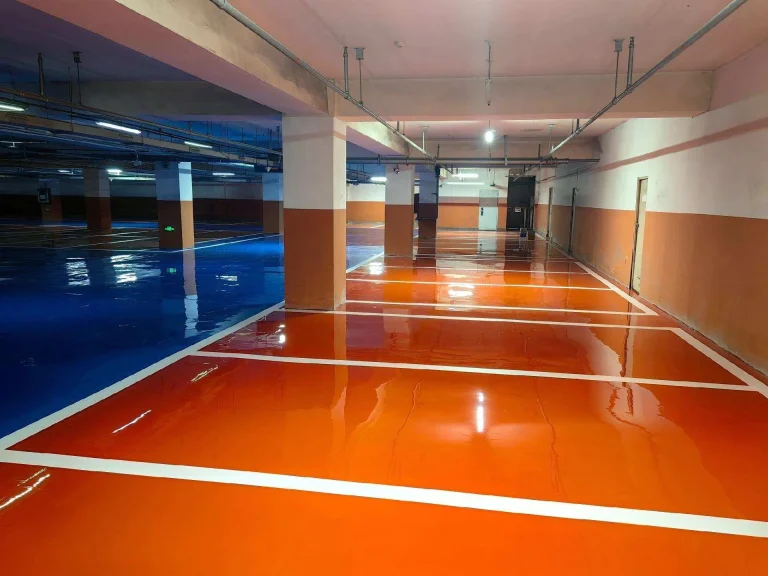
Not every surface requires the highest possible performance. Floors, for example, face a different kind of abuse. Mechanical wear, impact, chemical spills, and cleaning cycles dominate. Heat usually does not.
Industrial floor coatings succeed when they stay hard, resist chemicals, and remain easy to maintain. Trying to over-engineer them for heat rarely adds value.
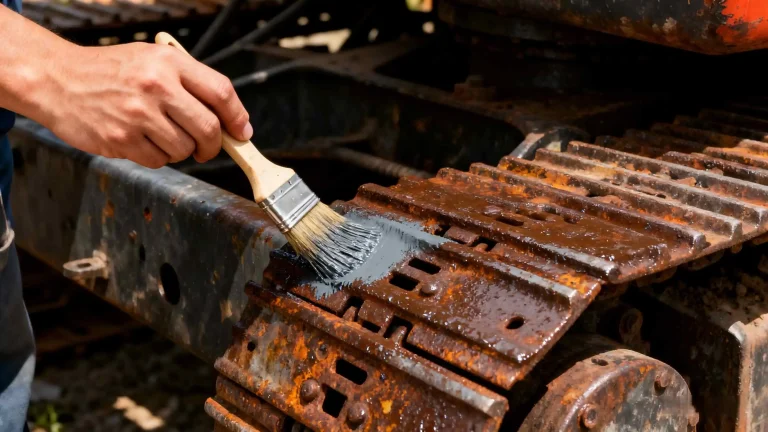
Likewise, anti-corrosion systems for outdoor steel live or die by adhesion and barrier protection, not temperature resistance.
Good selection means matching performance to risk, not maxing out every parameter.
Experience Matters More Than Checklists
No guide replaces experience.
Patterns repeat across industries. Edge lifting after repeated heating. Joint areas failing before flat surfaces. Discoloration showing up before adhesion loss. Moisture-related deformation appearing where coatings meet fasteners or welds.
These signals are easy to miss if no one has seen them before. They are obvious if someone has.
That is why coating decisions often benefit from manufacturers who have watched their materials age in real conditions, not just lab tests.
About Foshan Konaz Technology Co., Ltd.
Foshan Konaz Technology Co., Ltd. works at the intersection of materials science and industrial reality. For more than fifteen years, the company has focused on functional coatings built for conditions where ordinary solutions fall short.
Its core expertise lies in high-temperature resistant coatings capable of maintaining adhesion and appearance under sustained heat, including direct flame exposure approaching 800°C. These systems are used on metal components where color stability, durability, and resistance to peeling are not optional but expected.
Beyond heat resistance, Konaz supports industrial clients with protective coating solutions designed for long service life, stable performance, and consistent results across different operating environments. The company’s production capacity and formulation flexibility allow it to support both standardized applications and project-specific requirements.
The focus has remained steady: coatings that behave predictably when conditions do not.
Conclusion
Choosing coatings for harsh conditions is rarely about finding the strongest product. It is about understanding what actually causes failure over time.
Heat exposes weaknesses. Chemicals exploit them. Movement makes them visible.
The right decisions usually come from slowing down early, asking better questions, and accepting that no coating is universal. When selection reflects reality rather than assumptions, coatings stop being a recurring problem and start doing their job quietly.
That is often the best outcome.
FAQs
How do I know if a coating failure is caused by heat or something else?
Discoloration and surface chalking often point to thermal stress, while lifting at edges or joints may indicate movement or adhesion issues. Failures rarely have a single cause.
Is higher temperature resistance always better?
Not necessarily. If heat is not the dominant stress factor, other properties may matter more. Over-specifying one parameter can hide weaknesses elsewhere.
Why do some coatings fail even when applied correctly?
Application quality matters, but long-term performance depends on how the coating interacts with the substrate and environment over time, especially under repeated stress.
How often should coatings in harsh environments be inspected?
More often than standard applications. Early visual changes usually appear before serious damage occurs.
Can one coating system handle heat, corrosion, and wear at the same time?
Sometimes, but trade-offs are common. Understanding which stress matters most helps avoid compromises that fail later.