Exhaust systems live a tough life. Hot gases rush through pipes and manifolds, temperatures spike during hard acceleration, then drop when the engine idles or shuts off. Add road salt in winter, moisture from condensation, and constant vibration from the engine, and it’s clear why ordinary paint fails fast on these parts. Blistering, cracking, peeling—those issues show up quickly if the coating isn’t built for the job.
The right heat resistant coatings make a real difference. They protect metal from oxidation, hold up through thermal swings, and resist corrosion that eats away at unprotected surfaces. For automotive exhausts, picking one isn’t just about chasing the highest temperature rating on the spec sheet. Real-world performance comes down to how the coating handles the full mix of stresses it faces day in and day out.
Grasping the Real Conditions in an Exhaust System
Think about a typical drive. Cruising on the highway, exhaust gas temperatures often settle around 800 to 1000 degrees Fahrenheit near the manifold. Step on the gas for a pass, and those numbers climb fast—sometimes hitting 1200 degrees or more in performance setups. Downstream, toward the tailpipe, things cool off to 400-600 degrees under normal load.
But it’s rarely steady. Quick bursts from stoplights cause rapid heat-up. Coasting downhill or idling lets parts cool. That repeated expansion and contraction stresses any coating. In colder climates, road salt sprays up, mixing with condensate inside the system when it cools. Vibration from engine harmonics adds mechanical fatigue on top.
Engineers who’ve worked on fleet vehicles or aftermarket exhausts see this play out. A coating that looks fine in steady high-heat lab tests can fail prematurely when those cycles hit. Salt accelerates underfilm corrosion if the barrier isn’t tight enough. Vibration loosens adhesion over miles.
One common scenario: a truck towing heavy loads in winter. Peaks push manifold areas past 1100 degrees repeatedly, while salt exposure creeps in. Coatings without balanced corrosion resistance start showing rust creep from scratches or edges much sooner than expected.

Key Performance Needs That Go Beyond Just Temperature Tolerance
High temperature resistance grabs attention—ratings up to 800°C sound impressive. Yet in exhaust applications, other traits often decide long-term success.
Adhesion under thermal shock stands out. When metal expands faster than the coating during heat-up, weak bonds crack. Cooling pulls in the opposite direction. Good formulations flex with the substrate, avoiding delamination.
Corrosion protection matters equally. Exhaust condensate forms acidic, and external salt fog attacks. Coatings that block moisture and ions keep underlying steel safe longer.
Flexibility handles vibration. Rigid films shatter under engine shake; tougher ones absorb it.
Oxidation resistance prevents scale buildup that flakes off coating.
In practice, shops report that coatings strong in heat alone but weak in salt spray tests fail early on vehicles in harsh regions. Balanced properties extend part life noticeably.
Salt Spray and Chemical Attack in Real Use
Road de-icing salt doesn’t just sit on the outside. It gets flung up, mixes with water, and seeps into crevices. Inside, combustion byproducts create corrosive condensate.
Tests simulating this—like neutral salt spray hours—reveal how well a coating seals. Hundreds of hours without red rust indicate solid barrier properties. Automotive specs often demand this alongside heat cycling.
Handling Thermal Shock and Cycles
Rapid temperature swings mimic real driving. Heating to peak then forced cooling stresses interfaces. Coatings that survive many such cycles without cracking prove reliable.
Vibration compounds the issue. Engine mounts transmit shake; loose exhaust hangers worsen it. Flexible resins maintain integrity where brittle ones fail.
Selecting the Best Coating Type: A Practical Matching Guide
No single formula fits every exhaust. Match based on operating profile.
For street cars with moderate peaks—say average 500-700°C gas temps—a silicone-based coating rated to 800°C offers good all-around protection. Strong adhesion and corrosion resistance suit daily drivers facing occasional salt.
High-performance or tuned engines pushing higher peaks benefit from formulations handling direct flame contact briefly, maintaining color and film integrity.
In severe duty—like off-road or northern fleets—prioritize enhanced salt fog resistance. Composite barriers slow undercutting.
Layering sometimes helps: primer for adhesion, topcoat for heat.
Temperature Range as Starting Point
Classify by max expected:
- Up to 600°C: Many options work.
- 600-800°C: Silicone resins excel, no discoloration or peel.
- Beyond: Specialized for rare peaks.
But cross-check with cycles and corrosion needs.
When Corrosion Dominates the Risk
Winter road exposure? Look for proven salt spray performance. Real-world feedback from similar climates guides better than heat rating alone.
Prioritizing Cycle Stability
Frequent short trips cause more thermal shocks. Choose proven in rapid heat/cool tests.
Linking Lab Tests to On-Road Reality
Lab data helps, but interpretation matters.
Salt spray exposure—often hundreds of hours—gauges barrier against corrosive attack. Longer without failure correlates to better field corrosion control, though not perfectly.
Thermal cycle tests alternate high heat soaks with cools. Surviving thousands indicates shock resistance.
Vibration tables shake coated samples at elevated temps, revealing flex issues early.
Combine them for closest real-world mimic.
Shops use these to qualify suppliers. A coating passing extended salt spray plus cycles rarely disappoints in mixed conditions.
Frequent Pitfalls When Picking Coatings for Exhausts
Chasing max temperature alone. A 1000°C rating means little if adhesion fails at 700°C cycles.
Ignoring regional factors. Southern dry climates forgive weaker corrosion protection; northern ones don’t.
Skipping surface prep. Even great coatings lift if oil or scale remains.
Overlooking cure requirements. Some need baking for full properties; air-dry versions suit field repairs but may trade durability.
Assuming all silicones perform identically. Formulation differences affect flex, corrosion block.
Veteran fabricators learn these the hard way—reworks cost time and reputation.
Getting Application Right for Maximum Performance
Prep drives success. Sandblast or grind to bright metal, remove oils thoroughly. Adhesion suffers otherwise.
Apply thin, even layers. Thick builds trap solvent, leading to blisters under heat.
Follow cure: many benefit from 280°C bake 15 minutes, crosslinking fully. No oven? 24-hour air dry works, though slower.
Test small areas first on prototypes.
Proper process turns good coating into lasting protection.
About Foshan Konaz Technology Co., Ltd.
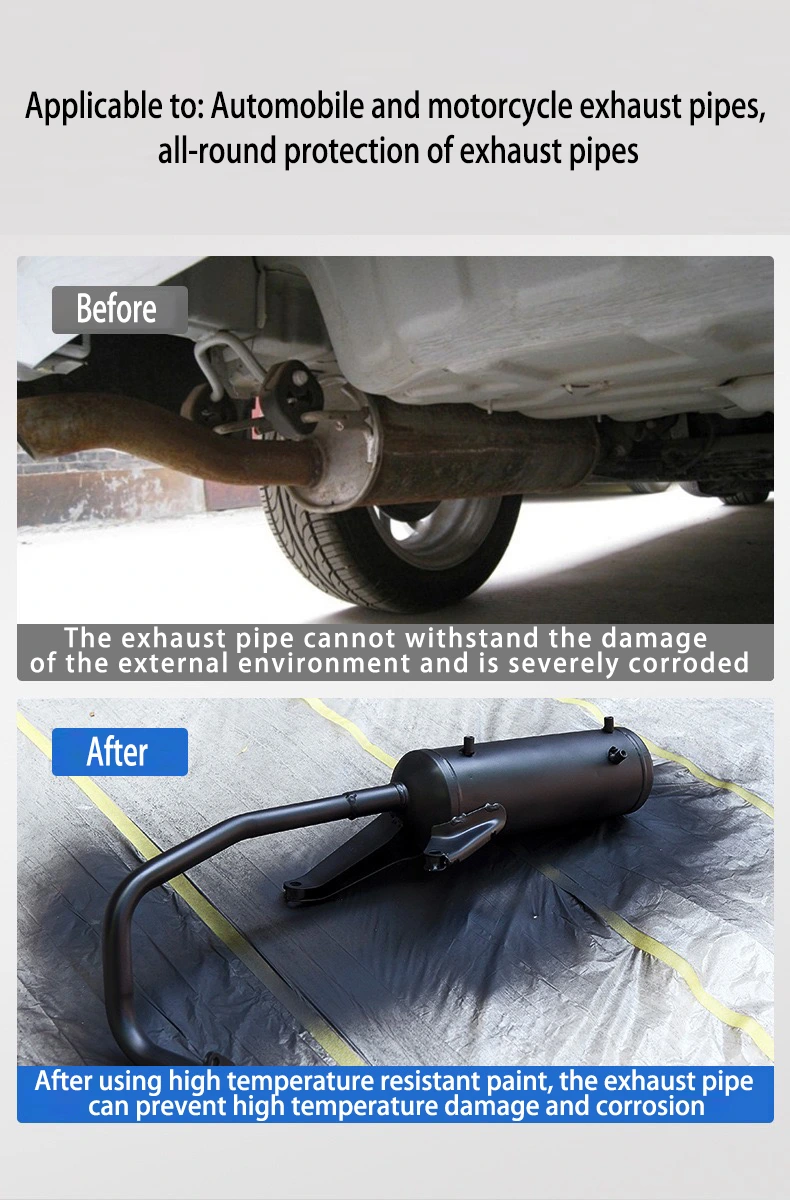
Based in Foshan, China, Foshan Konaz Technology Co., Ltd. specializes in advanced functional coatings, with a strong focus on high-performance solutions. Established over 15 years ago, the company operates a modern 3000-square-meter facility equipped with more than 30 production lines, achieving an annual output of 1000 tons. Their heat resistant coatings, built around organic silicone resins, stand up to 800°C, resisting discoloration, peeling, and chalking while providing robust adhesion in demanding settings like automotive exhausts. Exported worldwide, these products support industries needing reliable high-temperature protection.
Wrapping Up: A Balanced View on Decisions
Picking heat resistant coatings boils down to matching the full operating environment—heat peaks, cycles, corrosion threats, vibration. Lab numbers guide, but real durability shows in balanced traits. Thoughtful selection, solid prep, proper application: that’s what keeps exhausts protected mile after mile.
Frequently Asked Questions
What stands out most when picking heat resistant coatings for automotive exhaust systems?
Adhesion through thermal cycles and corrosion resistance often matter more than peak temperature alone. Exhausts face repeated heating/cooling plus salt exposure, so coatings holding tight without letting moisture creep under perform best long-term.
How do you align coating traits with actual exhaust stresses like vibration or road salt?
Start with expected temps and cycles from driving style, then layer on regional factors—heavy salt use demands strong barrier properties. Test data from combined thermal shock and salt spray helps predict fit.
Which tests best mirror everyday exhaust conditions?
Combined thermal cycling with salt fog exposure comes closest, revealing how coatings handle heat swings plus corrosive attack. Pure high-heat holds tell part of the story.
Does top heat tolerance guarantee long-lasting exhaust protection?
Not by itself. Weak flex or poor sealing leads to early cracking or underfilm rust, even if the rating looks high.
What application steps most often cut coating life on exhaust parts?
Skipping thorough cleaning or blasting leaves contaminants that weaken bonds. Thick uneven layers trap issues that surface under first heat cycles. Full cure—bake when possible—locks in performance.