Rust emerges on vehicles as a persistent adversary, transforming solid metal surfaces into weakened, corroded structures that demand costly interventions. Professionals in automotive maintenance frequently encounter owners frustrated by underbody deterioration following exposure to winter salts or persistent humidity, prompting a search for the best durable anti rust paint options for cars. Such solutions, particularly those classified as industrial-grade alternatives, deliver robust defenses against environmental aggressors like water intrusion, chemical salts, and elevated temperatures, ensuring vehicles maintain operational reliability over extended periods.

Understanding the Causes of Rust in Cars
Vehicles endure ongoing assaults from rust formation, particularly in environments laden with road deicers or high atmospheric moisture. The process begins when water interacts with oxygen on ferrous surfaces, yielding iron oxide that manifests as that characteristic reddish scale. Initial vulnerabilities often arise from minor abrasions on chassis components, escalating rapidly without intervention. In regions with heavy salting practices, this compound acts as an accelerant, corroding protective barriers during routine highway travel. Proximity to marine settings introduces airborne chlorides that infiltrate joints and hidden recesses, fostering concealed degradation that surfaces only after significant progression.
Consider a standard passenger vehicle stationed outdoors in a northern U.S. state amid midwinter conditions. Accumulated snow thaws, blending with deicing agents and adhering to the lower frame. This scenario triggers electrochemical processes where adjacent metals, such as steel alloys and aluminum fittings, hasten oxidative breakdown. Exhaust assemblies suffer pronounced effects from thermal fluctuations that dilate and contract materials, creating entry points for corrosive elements. Reports from industry repair networks indicate that corrosion-induced restorations impose annual expenses in the billions, frequently stemming from disregarded indicators like surface blistering.
Maintenance oversights exacerbate these issues. Infrequent cleansing permits accumulations of soil and residues that retain humidity, promoting spot corrosion on arched wheel housings or panel edges. Original manufacturer-applied layers typically erode after five to seven years of service, leaving substrates vulnerable. Grasping these mechanisms aids in selecting coatings engineered to counteract them directly, converting reactive repairs into proactive safeguards.
Why Industrial-Grade Anti Rust Paints Outperform Standard Options
Transitioning to industrial-grade anti rust paints represents an elevation in defensive capabilities over conventional retail products. These compositions, formulated for demanding applications, integrate sophisticated chemical structures that establish impermeable shields surpassing typical aerosol variants. In automotive contexts, this translates to layers that adhere tenaciously to substrates, withstanding dislodgement from debris impacts or mechanical oscillations. Whereas consumer-grade applications may endure mere months, industrial counterparts erect enduring fortifications, incorporating mechanisms that autonomously mend superficial damages.
Superior performance becomes evident in rugged usages, such as traversing uneven terrains where particulate matter assaults foundational elements. An industrial-grade coating maintains cohesion amid repeated stresses, preserving its protective role. Emphasis on long-term rust protection derives from components that impede oxidative progression at fundamental levels, even under severe exposures. Technicians in repair facilities observe diminished recurrence of service calls, attributable to enhanced resilience against thermal loads from propulsion systems or frictional braking.
Adopting these superior formulations also yields economic advantages across lifecycles. Preliminary surface preparation demands rigor, including decontamination and priming stages, yet subsequent reductions in remedial work justify the effort. Within commercial vehicle fleets accumulating high mileage, such paints minimize operational interruptions by sustaining structural components. This extends beyond cosmetic preservation—corrosion compromises load-bearing capacities, risking operational hazards if it affects critical lines or mounting points.
Key Features of Durable Anti Rust Paints for Automotive Use
Evaluating anti rust paints necessitates prioritizing bonding strength. Inadequate attachment leads to delamination, re-exposing metals to threats. Formulations featuring potent cross-linking polymers secure firmly to bases, accommodating residual contaminants or light oxidation. Adherence evaluations under standards like ASTM D3359 demonstrate resilience against mechanical duress, with elevated ratings confirming sustained integrity through cleansing cycles and climatic variations.
Resistance to corrosive agents correlates with endurance in saline mist simulations. Coatings surviving beyond 1,000 hours in such trials replicate actual encounters, akin to oceanic proximities or salted infrastructures. This attribute averts swelling and subsurface migration, where degradation advances beneath intact films. For vehicular applications, it safeguards lower assemblies, curtailing the frequency of evaluative checks.
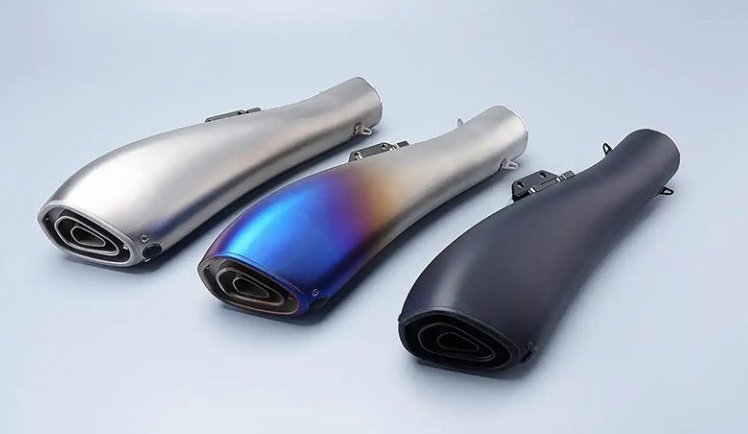
Thermal endurance proves critical for components like exhaust conduits. Materials capable of withstanding 800°C without chromatic shifts or detachment shield against heat-accelerated deterioration. Combustion byproducts introduce aggressive compounds, and intense warmth propels oxidative rates, but fortified coatings establish insulating envelopes that prolong part longevity. Practically, this facilitates compliant emissions and diminished component substitutions, notably in enhanced drivetrains or specialized configurations.
Elasticity mitigates fracturing on dynamic elements. Vehicles encounter irregular surfaces, imposing strains on protective layers, so compositions with pliable characteristics dissipate forces without rupture. Resistance to ultraviolet degradation further protects visible sections like lower body panels. Integrating these properties constructs holistic barriers, positioning industrial-grade anti rust paints as optimal for thorough corrosion control.
Application Techniques for Effective Long-Term Rust Protection
Achieving optimal outcomes hinges on meticulous execution protocols. Commence with substrate conditioning: eliminate lubricants comprehensively, followed by abrasive texturing to enhance mechanical interlocking. Within controlled environments, shield adjacent non-ferrous elements to prevent unintended depositions. Elevating vehicles securely facilitates access to undersides, employing high-pressure rinsing to dislodge friable oxides—protective equipment ensures compliance with safety norms.
Manual brushing accommodates intricate zones, such as structural beams, permitting substantial film thicknesses in confined spaces. Aerosol dispersion suits expansive regions for uniform distribution, necessitating adequate airflow to manage emissions. Sequential light depositions, with intervening solidification, foster structural robustness absent drips. Hardening durations differ; ambient curing spans days, while others benefit from thermal acceleration. Subsequent examinations identify omissions, enabling corrections.
Specialized applicators frequently deploy charged particle methods for consistent envelopment, optimizing material utilization. Independent operators refine approaches via trials on discarded samples. Frequent errors encompass abbreviated preparation, yielding suboptimal bonds, or deposition amid elevated humidity, entrapping vapors. Adhering to these methodologies guarantees that coatings fulfill their extended protective commitments, evolving periodic tasks into sustained assurances.
Comparing Industrial-Grade Anti Rust Paint Formulations
Varied chemical architectures address distinct requirements, unified by commitments to heightened endurance. Aqueous-based systems present environmentally considerate profiles, exhibiting reduced volatile emissions suitable for enclosed settings. They solidify into resilient membranes tolerant of reagents, apt for compartments prone to fluid exposures. Organic solvent carriers infiltrate porous matrices profoundly, erecting formidable obstructions in moisture-saturated locales.
Epoxy-enhanced variants dominate in fixation, forging durable linkages with substrates for unassailable holds. They prove advantageous for load-bearing frames subject to collisions, given their rigid frameworks that defy wear. Urethane derivatives incorporate adaptability, conforming to thermal expansions sans fissures—ideal for oscillatory mechanisms. Primers enriched with sacrificial metals function as anodic protectors, degrading preferentially to preserve bases in chloride-rich atmospheres.
Performance metrics include hardness equivalents to 9H scales, approximating vitreous toughness. Corrosion assays demonstrating integrity post-2,000 saline hours signify premium defenses. For thermally stressed domains, formulations stable at 600°C or above avert decompositions. Harmonizing these attributes, industrial anti rust paints furnish customized remedies, applicable to commuter sedans or utilitarian haulers.
Real-World Scenarios: Preventing Rust in Everyday Driving
Envision a utility vehicle navigating sodden work zones laden with aggregates. Adherent soils encase lower structures, harboring fluids that incite degradation. Preemptive industrial-grade applications generate repellent interfaces facilitating particulate shedding, attenuating accumulations. Operators document chassis persistences exceeding a decade sans substantial interventions, contrasting untreated counterparts exhibiting erosion within halved intervals.
Urban infrastructures expose parked assets to condensate from elevated conduits, infused with minerals that amplify attacks. Durable coatings encapsulate these susceptibilities, leveraging water-repulsive traits to deflect infiltrations. Managers overseeing distribution fleets affirm these layers diminish joint reinforcements on thermal outlets—elevated temperatures and motions cease to amplify damages.
Restoration specialists for vintage models employ such protections to conserve authentic fabrications. A mid-century performance chassis receives renewed encapsulation, repelling storage-induced dampness. Outcomes manifest in exhibitions where evaluators commend immaculate undersurfaces, devoid of indicative discolorations. These narratives underscore how anticipatory measures neutralize prospective liabilities.
Advanced Strategies for Rust Prevention and Maintenance
Supplementing primary encapsulations, sustained protocols amplify efficacies. Periodic assessments detect nascent corrosions, permitting localized remediations prior to amplifications. Cleansing with balanced detergents sustains film viabilities, eschewing aggressive agents that erode matrices. Seasonal undercarriage flushes expel saline remnants, a regimen yielding substantial returns.
Combining with elastomeric underlays constructs stratified defenses—impact-absorbent bases complement chemical resistances. In vulnerable sectors, electrochemical safeguards divert degenerative flows. Empirical longevity analyses reveal multi-tiered regimes surpassing singular applications by half, validating integrative tactics.
Selections necessitate exposure calibrations. Shoreline commuters mandate peak chloride tolerances, whereas arid operators emphasize solar stabilities. Allocating resources to superior grades preempts escalated expenditures—industrial variants, despite premiums, generate returns via prolonged intervals. Practitioners recommend preliminary substrate trials, verifying alignments with extant finishes.
Innovations in Anti Rust Technology for Future-Proofing Cars
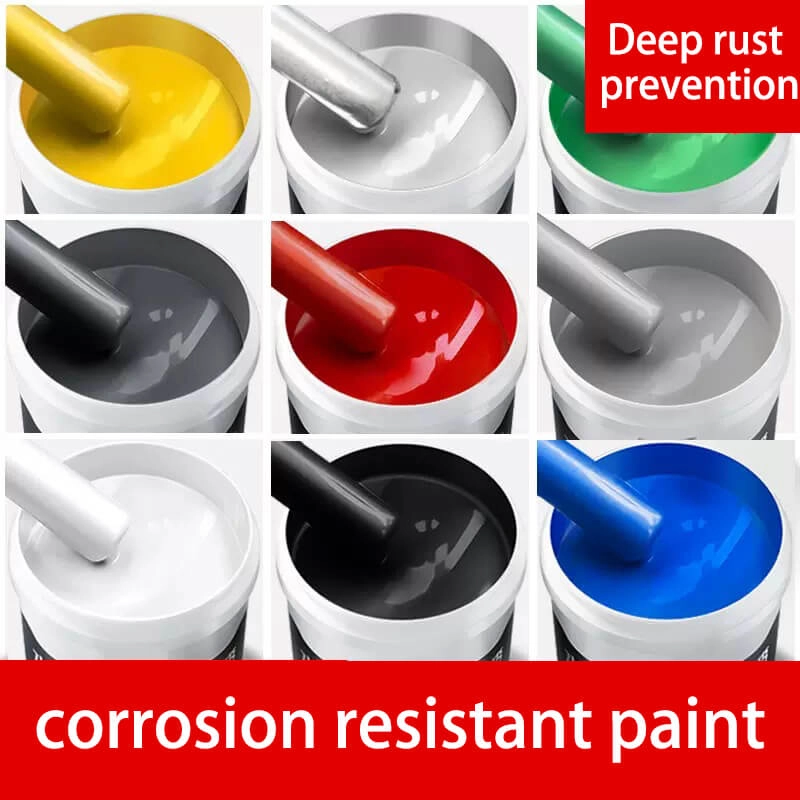
Advancements incorporate nanoscale integrations augmenting infiltration into fine voids, yielding compacted defenses. Reactive inclusions liberate suppressants upon disruptions, autonomously restoring continuities. Sustainable progressions curtail carriers, conforming to mandates whilst upholding potencies.
Electrified platforms necessitate protections for containment housings, countering vapors absent conductive risks. Composite blends merge natural and synthetic constituents for expansive resistive ranges. Investigations highlight carbon allotrope reinforcements amplifying strengths multiplicatively, albeit in developmental phases. These evolutions herald amplified durations, synchronizing with vehicular evolutions.
Introducing Foshan Konaz Technology Co., Ltd
Foshan Konaz Technology Co., Ltd operates as a specialized producer of sophisticated functional encapsulants, concentrating on high-efficacy remedies that confront industrial adversities directly. Housing a contemporary facility spanning 3,000 square meters, outfitted with more than 30 advanced fabrication units, the entity attains yearly productions surpassing 1,000 tons. Offerings extend to global arenas, garnering reliance via steadfast caliber and ingenuity. Prioritizing thermal-resilient and corrosion-preventive encapsulants, Konaz accentuates endurance, exemplified by compositions enduring 800°C sans alterations or separations, suited for vehicular elements like emission pathways. Dedication encompasses ecological stewardship, assisting collaborators in refining expenditures and operational flows whilst furnishing dependable shields against degradations and severe regimes.
Conclusion
Addressing vehicular corrosion imperatives requires surpassing transient remedies; it demands industrial-grade anti rust paints that furnish persistent barricades against ambient hostilities. From dissecting foundational triggers to deploying refined methodologies, these selections enable proprietors to fortify assets proficiently. Encompassing attributes such as exceptional fixation, saline endurance, and thermal capacities, they fulfill tangible demands across varied operational contexts. Integrating such measures not only upholds visual and architectural soundness but also curtails protracted outlays, rendering them prudent allocations for vehicular stewards or specialists.
FAQs
What makes industrial-grade anti rust paint the best option for car undercarriages?
Industrial-grade anti rust paint stands out for car undercarriages through its fortified composition that counters saline aerosols and fluid ingress, prevalent in roadway exposures. These encapsulants generate substantial, cohesive membranes that endure particulate strikes and oscillations, halting subsurface corrosion advancements. Laboratory evaluations frequently confirm survivals exceeding 1,000 saline mist hours sans breakdowns, eclipsing conventional dispersions. For enduring safeguards, they embed oxidative neutralizers that proactively mitigate reactions, securing lower assemblies amid prolonged adverse climates.
How does durable anti rust paint handle high temperatures in car exhaust systems?
Durable anti rust paint for car exhaust systems accommodates elevations reaching 800°C, preserving bonds and hues absent delaminations or pulverizations. This proficiency defends against cyclic heating that dilates substrates and summons degradations from combustion effluents. Establishing insulating perimeters, it augments conduit and silencer longevities, diminishing upkeep in thermally intensive assets like haulers or altered configurations. Execution entails exhaustive substrate conditioning to affirm tight integrations, yielding dependable outputs in rigorous settings.
Can long-term protection from anti rust paint prevent rust on car frames in salty environments?
Indeed, long-term protection from anti rust paint proficiently thwarts rust on car frames within saline contexts by erecting obstructions that deflect hydrations and ionic intrusions. These industrial substitutes commonly integrate sacrificial constituents that prioritize their own erosion to shield subjacent alloys, decelerating oxidations in littoral or seasonal deicing locales. Systematic encapsulations, allied with habitual rinses, sustain frames unmarred across years, evading architectural attenuations precipitating expensive overhauls. Opting for variants with validated saline resistances assures persistence where rudimentary alternatives succumb.
What are the signs that my car needs an industrial-grade anti rust paint alternative?
Indicators necessitating an industrial-grade anti rust paint alternative encompass observable swellings or scalings on coated expanses, ochreous discolorations on lower structures, or auditory anomalies from degraded articulations. Exposures in moist or deiced terrains yielding frame pittings or thermal component erosions signal requisites for enhancements. These encapsulants proffer profounder infiltrations and sturdier membranes than retail equivalents, tackling progressed corrosions beyond standard capacities. Timely adoptions with these variants arrest escalations, conserving asset worth and operational securities.
How to apply anti rust paint for cars to ensure maximum durability?
Applying anti rust paint for cars to secure utmost endurance commences with exhaustive substrate decontamination to expel lubricants and friable oxides, succeeded by texturing for amplified fixations. Employ manual tools for constrained sectors or dispersions for extensive overlays, depositing successive slender strata with solidification pauses. For thermally susceptible domains like emissions, confirm formulation hardenings, potentially via moderate warming. This protocol forges uninterrupted defensive envelopes that withstand ambient aggressions, prolonging encapsulant durations and vehicular cohesions.
(Word count: approximately 3,528)