In chemical plants, chemical-resistant coatings and linings form the frontline defense against constant exposure to acids, alkalis, and other aggressive process media that attack storage tanks, pipelines, and reaction vessels. Corrosion losses worldwide still run into trillions annually, and in process industries a large share stems from these exact conditions—acids dissolving metal, alkalis causing embrittlement, combined effects accelerating failures in tanks holding concentrated sulfuric or hydrochloric solutions, pipelines carrying caustic streams, or vessels mixing oxidizing agents. Getting the selection right cuts unplanned outages, extends service intervals, controls repair budgets, and keeps environmental risks in check.
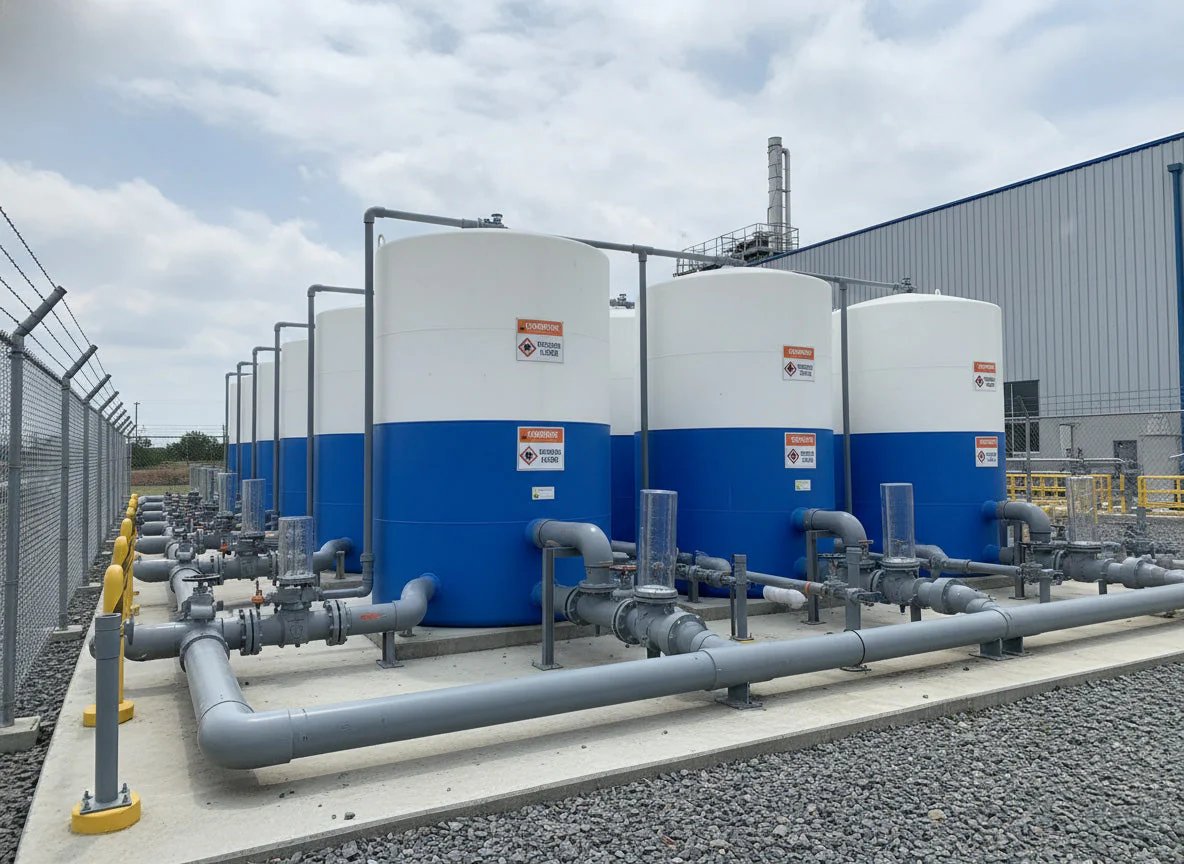
Experience from the field shows that generic charts rarely tell the full story. Real performance hinges on exact concentration, temperature spikes, exposure duration, and whether the attack comes from full immersion, splash, vapor condensation, or external mist on hot surfaces. The sections below walk through the mechanisms at play, critical decision points, resin families with their practical strengths and limits, a structured way to narrow options, typical breakdown modes seen in service, and situations where high-temperature hybrid approaches pull ahead.
Understanding Corrosion in Acid & Alkali Service
Acids drive material loss through dissolution or localized pitting; sulfuric at high concentrations eats steel quickly once the passive layer breaks, hydrochloric penetrates even faster because chloride ions disrupt protection, phosphoric and nitric add their own oxidative punch at elevated levels. Alkalis attack differently—sodium hydroxide above 30% saponifies coatings with ester groups, potassium hydroxide stresses austenitic grades, ammonia variants trigger cracking under stress.
The exposure pattern changes everything. Immersion in a reaction vessel or bulk storage tank requires near-impermeable barriers to block permeation over years. Splash zones near flanges, pumps, or fill points see cycles of wetting, drying, and concentration that blister films if adhesion weakens. Vapor spaces above liquids carry mists that condense into aggressive droplets on cooler overheads or nozzles. External surfaces—think insulated pipe runs or tank shells—deal with thermal gradients plus occasional spills, humidity carrying chemical traces, or process heat turning mild atmospheres corrosive.
Temperature pushes boundaries further. Many lines run 70–140°C routinely, with excursions higher during cleaning or upsets. At those levels standard binders lose crosslink integrity, soften, or crack from differential expansion. Composite exposure—heat plus acidic vapors—turns marginal systems into early failures, something plant reliability teams see repeatedly when immersion-grade products get applied externally without accounting for the thermal load.
Key Factors to Consider When Selecting Coatings & Linings
Start with chemical compatibility rooted in real immersion testing data rather than broad compatibility tables. Look for hours survived at service concentration and temperature per ASTM D543 or equivalent—short-term dips mislead when years of exposure are the goal. Swelling, weight gain, hardness drop, or adhesion loss signal trouble ahead.
Temperature capability comes next. The cured film’s Tg and crosslink density dictate how long integrity holds before thermal degradation sets in. Systems rated well above peak process temperature provide margin for cleaning cycles or steam-outs.
Exposure category drives build thickness and reinforcement needs. Full immersion usually calls for 20–40 mils or heavier, often with glass flake for tortuous path barriers. Vapor or splash can work with lighter films if permeation resistance stays high.
Substrate type shapes prep and priming. Carbon steel demands near-white blast (SSPC-SP 10) and a profile that locks the coating mechanically. Stainless needs careful handling to avoid passivation interference, concrete requires moisture-tolerant primers or etching to open pores.
Surface preparation quality controls outcomes more than almost any other variable. Residual salts pull moisture through films, causing osmotic blisters; oils prevent wetting. Dew point management during application stops condensation under the first coat.
Application realities matter in operating plants—limited shutdown windows favor airless spray or fast-cure products. Plural-component setups cut pot life issues on large areas. Thickness verification and holiday detection become non-negotiable for immersion service.
Cost analysis extends beyond material price. Factor surface prep labor, scaffold access, cure time impacting production loss, recoat frequency, and worst-case failure expenses like cleanup or regulatory fines.
Compliance rounds out the list. Secondary containment may trigger EPA SPCC rules, potable-related contact needs NSF approval, food/pharma lines demand FDA compliance.
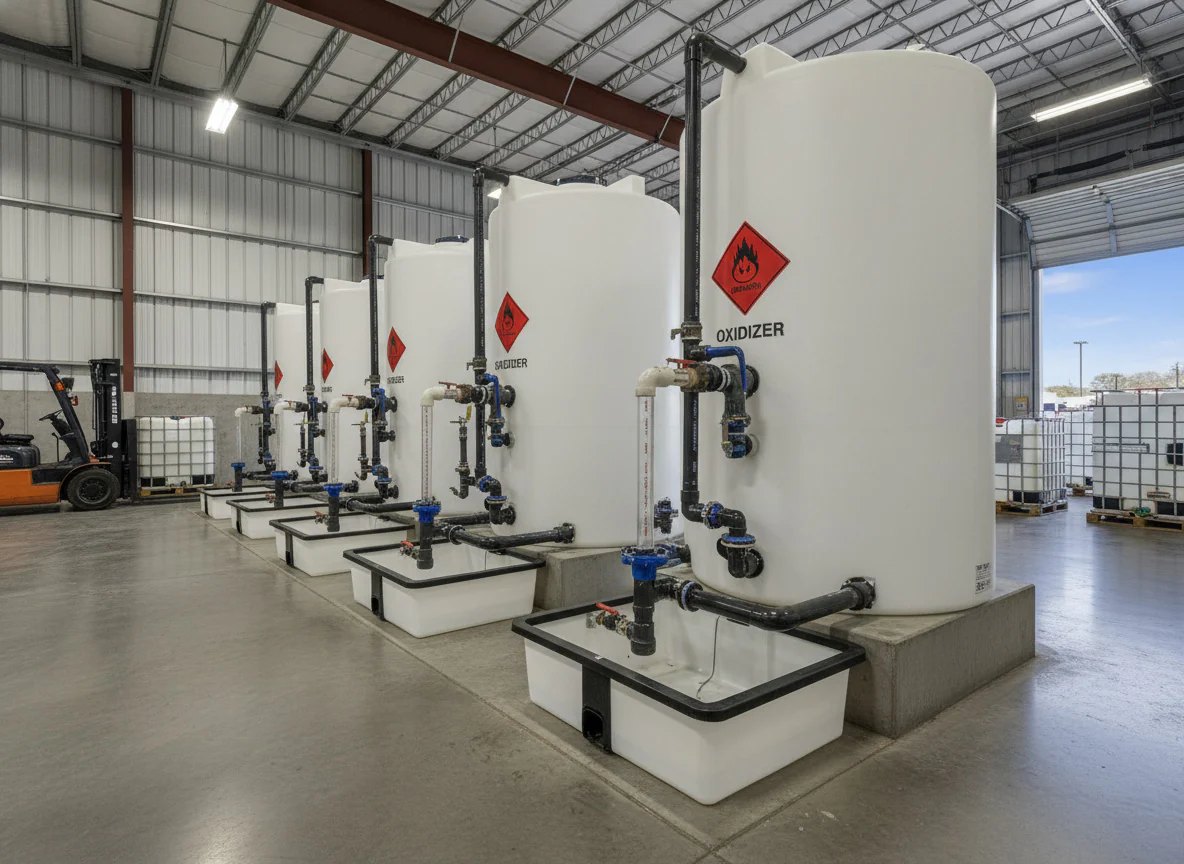
Common Types of Chemical-Resistant Coatings & Linings – Comparison
Epoxy-based systems remain workhorses for moderate acid and alkali exposure. Bisphenol A or F variants give strong adhesion, low shrinkage during cure, and decent resistance to diluted acids, caustic solutions, and many solvents. They handle splash and atmospheric service reliably but struggle with concentrated strong acids above 60°C where ester groups hydrolyze.
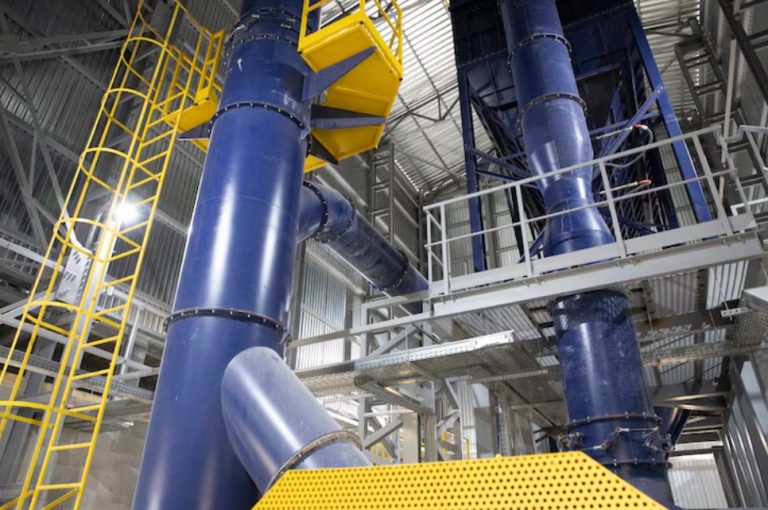
Novolac-modified epoxies step up crosslink density with phenolic content, pushing resistance higher against concentrated sulfuric, hydrochloric, and oxidizing acids. Thermal stability reaches 120–150°C in immersion for many formulations, making them common choices for aggressive internal linings in storage tanks and process vessels.
Vinyl esters sit between polyesters and epoxies, delivering excellent performance against strong acids, bleach environments, chlorine compounds, and phosphoric streams. Low viscosity helps wetting complex geometries, rapid cure suits tight schedules, though strong alkalis can challenge them more than novolac options.
Fluoropolymer linings cover the broadest spectrum—concentrated acids and bases at higher temperatures—with very low surface energy that sheds residues. Application often involves baking or sintering, adding steps and cost, but the payoff shows in extreme services.
Siloxane-hybrid formulations leverage silicone backbone flexibility combined with organic crosslinking for standout thermal endurance. They hold up at 200°C and beyond while resisting oxidation, moisture penetration, and moderate chemical vapors. In chemical facilities these frequently protect external pipework, tank exteriors, or vapor-zone components where process heat meets occasional acid or alkali mist.
Glass-flake reinforced variants, typically vinyl ester or epoxy carriers, create layered barriers that slow permeation dramatically. They suit immersion with added abrasion or thermal shock.
Rubber linings—natural, chlorobutyl, bromobutyl—bring elastomeric give for differential movement but need precise bonding and curing cycles.
Exact performance shifts with formulation details, applied thickness, and cure protocol. Supplier immersion curves at service conditions remain the best starting filter before pilot testing.
Step-by-Step Selection Process
Document the full service envelope first: every chemical present, peak and typical concentrations, temperature range including transients, pressure if relevant, exposure pattern, mechanical loads, and expected life target.
Assess substrate condition through visual checks, pH testing, chloride/sulfate detection, and hardness mapping.
Cross-reference conditions against performance databases to shortlist three to five candidates.
Secure detailed resistance reports from manufacturers—focus on hours at temperature and concentration, not generic ratings.
Run total cost of ownership math: materials plus prep, application, downtime value, recoat cycle, and risk-adjusted failure costs.
Apply test patches on actual surfaces when stakes are high; monitor adhesion, blister formation, and physical changes after accelerated exposure.
Lock in specifications with QC gates: DFT gauges, low-voltage holiday detection, pull-off adhesion values, and cure confirmation methods.
Common Failures & How to Avoid Them
Osmotic blistering and delamination trace back most often to contaminated surfaces or application in high-humidity conditions. Soluble salts draw water through the film; strict soluble-salt testing and dew-point control eliminate the majority of cases.
Permeation allows undercutting corrosion when species reach substrate. Higher-build films, flake reinforcement, or multi-layer builds with contrasting colors for defect spotting cut this risk sharply.
Thermal breakdown shows as chalking, cracking, or softening when temperature exceeds rating. Building in 20–30°C margin above recorded peaks covers most excursions.
Application flaws—pinholes, holidays, thin edges—create direct attack paths. Stripe coating welds and edges, followed by spark testing, catches defects before service.
Field records repeatedly show mismatched selections in concentrated acid tanks failing in under a year, while well-specified reinforced systems deliver ten-plus years in comparable duty.
When to Consider High-Temperature Resistant Hybrid Solutions
Process lines frequently pair elevated temperatures with corrosive atmospheres, especially externally on insulated equipment or exhaust paths. Immersion-focused linings crack or disbond under sustained heat in those zones.
Siloxane-based or hybrid high-temperature coatings preserve film coherence from 200°C up to much higher levels while countering oxidation, salt-laden moisture, and moderate vapor-phase chemical attack. They fit pipeline exteriors, tank roofs and supports, heat exchanger shells, and reaction vessel non-immersed areas where thermal cycling meets acid or alkali traces.
In plants running phosphoric, chlor-alkali, or sulfuric processes, pairing these hybrids externally with heavy-duty internal linings builds layered protection that matches real operating stresses.
About Foshan Konaz Technology Co., Ltd.
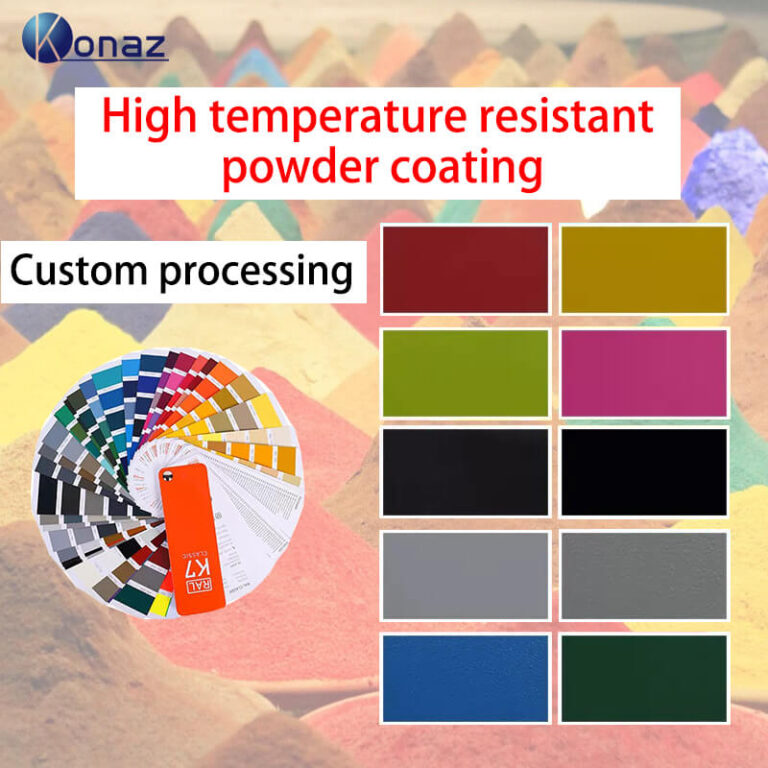
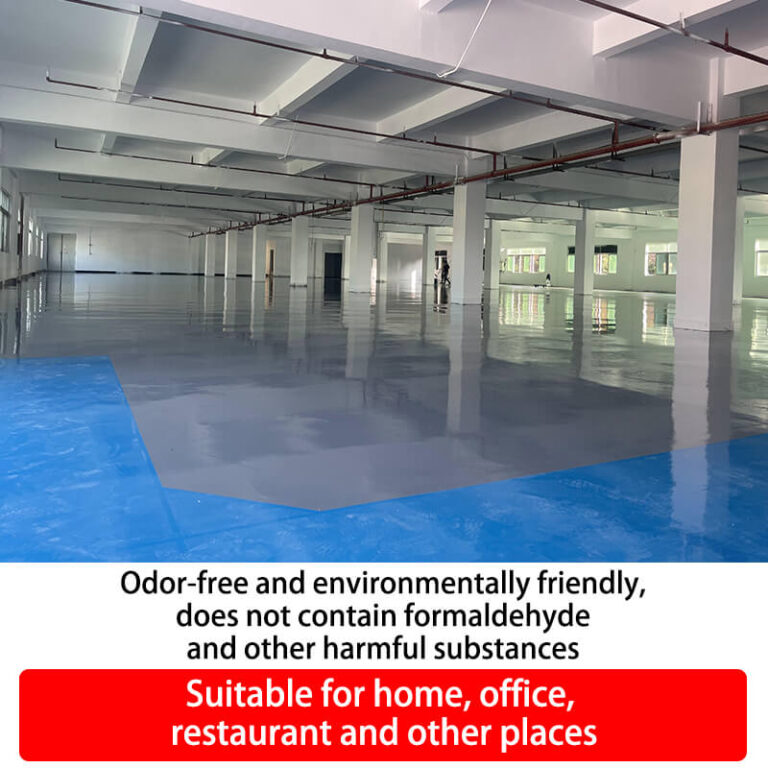
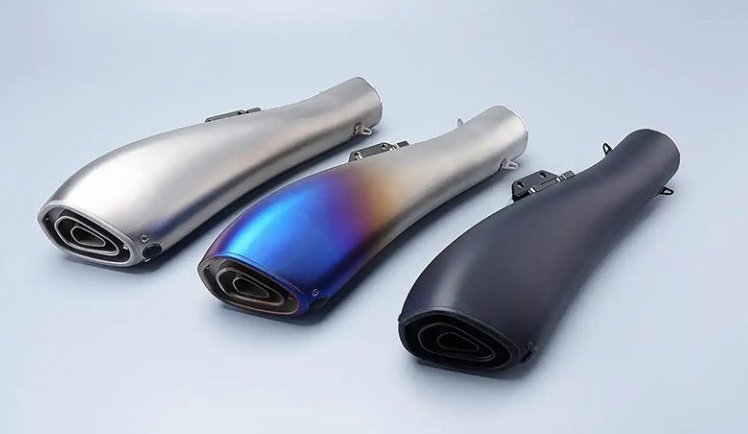
Foshan Konaz Technology Co., Ltd. develops and manufactures advanced functional coating materials geared toward industrial demands. Based in Guangdong Province, China, the company runs modern production lines focused on high-performance solutions. Key lines include high-temperature resistant coatings that withstand direct flame exposure up to 800°C with no discoloration, peeling, or chalking, delivering durable protection on metal surfaces in demanding conditions. Anti-rust paints provide strong adhesion and extended resistance to moisture, salt spray, and oxidation across metal substrates, machinery, and pipelines. Epoxy floor paints bring high hardness, abrasion resistance, and chemical durability suited to industrial floors. Emphasis stays on material innovation that boosts performance, simplifies application, controls costs, and aligns with environmental goals. Products reach automotive exhaust, heating equipment, industrial machinery sectors, and export markets worldwide.
Conclusion
Choosing appropriate chemical-resistant coatings and linings comes down to matching system capabilities precisely to process realities—chemical profile, thermal range, exposure mode, and economic trade-offs. No universal answer exists; thorough condition mapping, data verification, and field validation drive reliable outcomes. Plants that prioritize this approach see fewer interruptions, longer intervals between recoats, and better containment of risks. Where heat combines with acid and alkali service, hybrid high-temperature options frequently provide the practical edge that keeps assets intact longer.
FAQs
What is the best coating for sulfuric acid storage tanks in chemical plants?
Novolac epoxy or vinyl ester systems typically perform best for immersion in concentrated sulfuric acid, resisting degradation over extended periods. External surfaces facing vapors or elevated temperatures often benefit from high-temperature hybrid coatings that handle thermal cycling without cracking.
How do I choose chemical resistant linings for pipelines handling strong alkalis?
Identify exact concentration, temperature, and flow characteristics first, then compare immersion test data for vinyl ester or alkali-stable epoxy options. Abrasion from velocity may require reinforced builds or higher-thickness applications for longevity.
Why do chemical resistant coatings fail in high-temperature acid environments?
Most failures occur when the selected system lacks sufficient thermal margin above operating peaks, resulting in softening, cracking, or barrier loss. Specifying ratings with headroom for excursions and verifying cure under heat prevents the majority of thermal breakdowns.
Can high-temperature coatings provide acid and alkali resistance for reaction vessels?
For non-immersed areas or exteriors exposed to heat plus corrosive vapors or splashes, siloxane-hybrid high-temperature coatings deliver effective protection where standard immersion linings degrade. They complement primary internal systems in combined thermal-chemical duty.
How important is surface preparation for acid resistant coatings in chemical plants?
Surface preparation determines long-term success—poor blasting, residual contaminants, or inadequate profile cause most adhesion failures and blistering. Achieving the required cleanliness and anchor pattern, then applying under proper environmental controls, remains essential for performance in aggressive service.