Anybody who has worked on outdoor fire pits or indoor fireplaces for a few seasons has seen the same story repeat. The coating looks nice for the first couple months, maybe even the whole first year if the owner is lucky. Then comes the inevitable — discoloration turning everything dull gray-brown, large pieces peeling off the hottest zones, rust blooming through the damaged areas, and eventually the whole job has to be done over again. Very common pattern.
High-temperature silicone-based coatings rated for continuous service at 800°C with documented direct flame resistance offer a realistic way to break this expensive and annoying cycle. Konaz heat-resistant coatings belong to this narrow performance category — they are engineered to handle long-term direct flame exposure at 800°C while keeping very good color stability and staying firmly attached to the substrate.

Typical Failure Patterns — What Actually Happens in the Field
Most failures follow one of three main paths, sometimes all three at the same time.
Thermal expansion mismatch kills coatings very quickly. Steel fire pit rings and fireplace fireboxes expand significantly when they get hot. A coating that becomes rigid or brittle at temperature simply cannot follow that movement. Result: micro-cracks → larger cracks → moisture gets in → rust pressure from underneath → big pieces fall off. Classic.
Direct flame zones are much more brutal than people realize. Flame impingement temperatures are dramatically higher than the average surface temperature reading. Many coatings that look acceptable on the data sheet start carbonizing, bubbling or turning dark gray/black the moment they see real yellow-white flame for any extended period. Once that damage starts it spreads fast.
Surface preparation shortcuts cause more failures than almost anything else. Leaving mill scale, light rust, welding slag, cutting oil, finger grease or old paint ghosts on the surface is asking for trouble. No matter how good the coating is, if it cannot get intimate mechanical and chemical bond to the substrate, sooner or later the heat cycles will find the weak interface and start the peeling process.
Why Konaz 800°C Coating Behaves Differently in Real High-heat Service
The backbone of this product line is carefully selected organic silicone resin. This resin family keeps very useful flexibility much deeper into the high-temperature range than conventional organic binders. That remaining flexibility is the main reason the coating can follow steel movement during rapid heat-up / cool-down cycles without cracking.
Special high-temperature stable pigments and fillers are another key difference. They are chosen specifically because they do not thermally decompose, do not significantly change color, and do not migrate inside the film even after many hundreds of hours at 700–800°C. This is where most of the long-term color stability comes from.
The cured film forms a relatively dense barrier layer that strongly limits oxygen and water vapor reaching the substrate. Reduced oxidation rate + strongly reduced under-film corrosion = dramatically slower rust pressure buildup → much longer time before adhesion failure can start.
Field and Lab Evidence — What the Coating Actually Survives
Multiple rounds of direct burner flame testing (propane/air mix, flame temperature peaking 780–820°C) have been run on properly prepared and cured panels. After 200+ hours accumulated exposure with many cold-to-hot cycles → no peeling, no blistering, no large-scale discoloration, no chalking.
Real installation feedback from fire pit fabricators and fireplace restoration shops shows a similar picture. Units that receive heavy weekend use from March through November, then sit outside uncovered all winter, still look almost the same the next spring — provided the application was done with proper surface prep and correct cure procedure.
Practical Step-by-step Application Procedure That Actually Works
Good results are not magic. They come from following a very strict sequence.
Surface prep is non-negotiable
Take the part down to bright metal. Sandblast / grit blast is best. Aggressive flap disc or wire wheel is second best. Hand sanding is usually not adequate on heavy mill scale or old burned paint. After mechanical cleaning, solvent wipe with high-quality degreaser until the rag stays clean. Any oily residue left behind will cause fisheyes or delamination later.
Application technique matters a lot more than most people think
Spray is strongly preferred — better thickness control, more uniform coverage. Apply in multiple very thin wet-on-wet coats. Heavy single coat almost always leads to solvent entrapment → bubbling during first fire. Normal target dry film thickness is 25–40 microns. Going significantly thicker usually hurts more than it helps.
Curing — this is where many jobs are won or lost
Ideal situation: forced bake at ~280°C for 15–20 minutes. Gives the highest possible cross-link density and the best long-term heat resistance. No oven available → room temperature dry minimum 24 hours, then very careful staged first firing: small fire → 2–3 hours at low temperature → next day medium fire → third day full normal usage This gradual approach allows the remaining volatiles to leave the film slowly and lets final cross-linking happen without surface defects.
First few fires are still special
Even with the staged approach, keep the very first 2–3 fires shorter and gentler than normal usage. The goal is controlled polymerization without shocking the film.
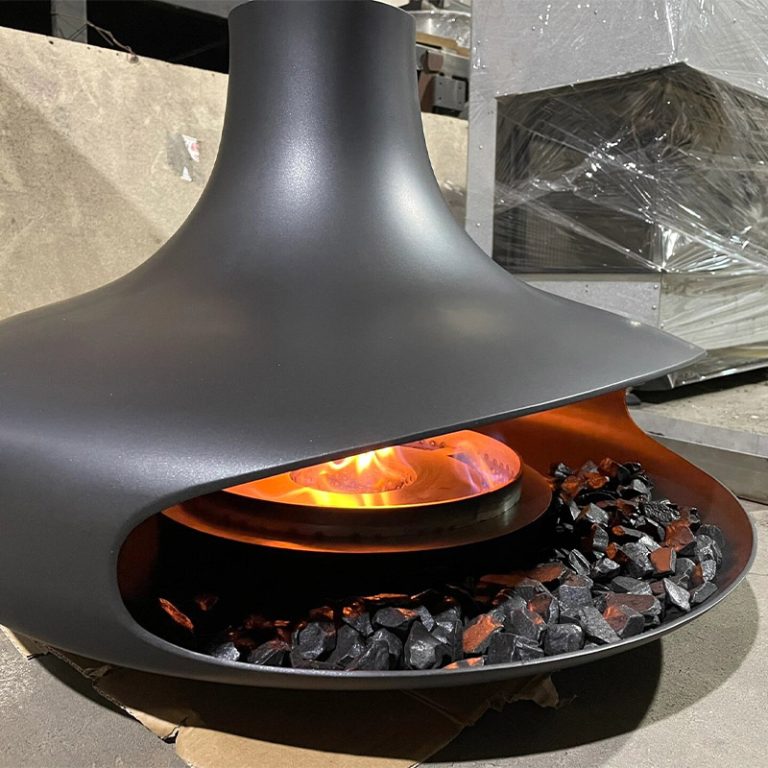
Who Really Needs This Level of Performance
This coating class makes the most economic sense in the following situations:
- high-end residential fire pits that are meant to be a permanent landscape feature
- commercial venues that run fires 3–5 nights per week
- clients who are extremely upset when they have to repaint / recoat every 1–2 years
- fabricators who want to dramatically reduce warranty callbacks about coating appearance
For very light residential use, occasional weekend fires, and owners who do not mind touching up every couple years — less expensive options can still be acceptable.
About Foshan Konaz Technology Co., Ltd.
Foshan Konaz Technology Co., Ltd. operates a modern coating manufacturing facility located in Foshan City, Guangdong Province. The company specializes in high-performance functional coatings with particular focus on extreme environment applications. Annual production capacity exceeds 1000 tons. The heat-resistant product line is built around organic silicone systems designed for long-term service under continuous high temperature and direct flame exposure.
Conclusion
When the goal is a fire pit or fireplace coating system that can survive many seasons of real use — including direct flame zones — without constant touch-ups, peeling, or severe discoloration, very few products actually deliver. Konaz 800°C heat-resistant coating series, when applied with disciplined surface preparation and correct curing technique, belongs to the small group of materials that routinely meet this difficult performance target.
Frequently Asked Questions
Why does almost every fire pit coating peel on the bottom and sides after one season?
Most coatings are simply not engineered for continuous service at the real temperatures that occur in direct flame zones. Thermal expansion mismatch + weak adhesion + moisture getting under the film usually causes the failure. Coatings rated for continuous 800°C service with high silicone content show dramatically better field life.
How do I know a high-temperature coating will really hold color under direct flame?
Look for products that specifically claim continuous 800°C resistance together with documented direct flame testing showing no significant discoloration after extended exposure. Organic silicone-based systems with carefully selected pigments normally give the best long-term color hold.
What is the correct way to apply 800°C heat-resistant coating on an outdoor fire pit?
Blast or aggressively sand to clean bright metal, degrease completely, apply multiple thin coats (preferably spray), and cure with 280°C bake whenever possible. If no oven — air dry 24+ hours then use very careful staged first firings to complete the cure without defects.
Can the same 800°C coating be used inside a wood-burning fireplace and on an outdoor fire pit?
Yes — provided the substrate is suitable carbon steel or stainless, and surface preparation / application / curing are done correctly. The coating handles both enclosed high-temperature environments and fully exposed outdoor weathering very well.
How many years can a good 800°C coating actually last on a heavily used outdoor fire pit?
On properly prepared and cured applications — 4–7 years of normal heavy seasonal use before significant maintenance is usually needed. Annual inspection of the hottest areas and quick touch-up of any mechanical damage extends service life even further.