Slips and falls remain a steady concern in parking facilities, appearing most frequently on ramps, during sharp turns, and in sections where pedestrian paths cross vehicle routes, driving up injury reports and liability burdens for owners and facility teams. Underground ramps become especially problematic when rainwater or snowmelt tracks inside and lingers on sloped concrete, weakening tire hold and pedestrian stability. Vehicle oil leaks mix into that moisture, forming thin, hazardous films in narrow curves or entry approaches. Epoxy floor paint developed with anti-slip characteristics addresses these conditions by creating controlled surface texture while keeping the wear resistance and clean-down capability required for ongoing vehicular traffic. The system delivers stable friction coefficients in dry and wet states alike, aiding properties in satisfying safety standards and cutting down on documented incidents without sacrificing a clean, organized look.
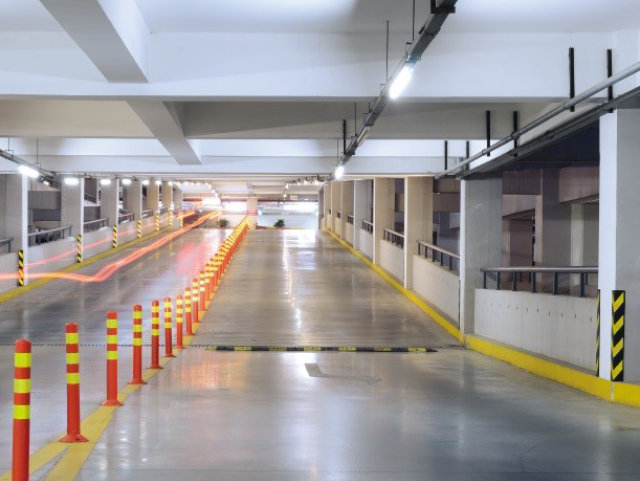
Ramps below grade inherently present slip issues because of their usual 5 to 15 percent slopes, which magnify the effects of any traction drop during braking, speed changes, or steering inputs. Water carried on tires or shoes pools in low spots and transition areas, and vehicle fluids leave greasy buildup near stalls or service bays. Transitional zones—close to elevators, stairwells, or loading docks—add extra layers of exposure. Drivers need reliable tire contact for control when turning or backing, while pedestrians count on firm footing when moving across lanes. Incident records from mall, hospital, and residential parking operations regularly flag these crossover points as key trouble spots, particularly after weather events introduce additional moisture.
Ongoing surface polishing from traffic makes matters worse. Tire rolling over extended periods gradually smooths concrete or previous coatings, removing fine texture and leaving ramps far more likely to slip under wet or contaminated loads. Structures without protective systems see this wear progress quicker, turning typical inclines into repeated hazard locations. Early corrective action limits recurring claims, follow-up reviews, and service interruptions.
Understanding Slip Risks in Underground Parking and Ramp Areas
Moisture films stand out as the primary driver of slips in underground parking setups. Rain or meltwater entering from outside spreads thin layers across smooth floors or older finishes, pushing the coefficient of friction below consistent levels. In regions with regular snowfall, leftover de-icing salts further erode grip. Engine oils, transmission fluids, and hydraulic leaks create slick zones that tend to concentrate around parking positions or maintenance entries.
Incline combined with contamination impacts ramps most directly. Gravity channels water downward, gathering it at bends, lower transitions, or depressions where vehicles slow or change direction. Pedestrian crossings through these lanes introduce additional risk—abrupt stops or fast steps turn unreliable without enough surface grip. Commercial parking summaries frequently name wet ramps and turning zones as leading causes of pedestrian falls and light vehicle slides.
Prolonged polishing of concrete accelerates the pattern. Continuous tire and foot traffic erodes natural roughness, resulting in floors that shed water inefficiently and provide limited hold when wet or oily. Without targeted treatment, these areas repeat hazards, especially through shifts in seasonal weather.
Anti-Slip Standards and Performance Grades for Parking Applications
Safety regulations and field practices set definite slip-resistance thresholds for parking environments. OSHA and ADA guidelines stress sufficient friction to reduce fall risks, with tougher criteria for ramps and wet-susceptible locations. Coefficient of friction goals typically settle at 0.6 dry and 0.5 wet or better in vehicular zones to offset drops from moisture or contaminants.
Grades adjust to specific use patterns. Pedestrian-dominant sections prefer milder textures that supply traction without feeling overly rough or collecting debris. Vehicular ramps and lanes under heavy use require bolder profiles to resist tire smoothing and maintain braking response. Broadcast systems with exposed aggregate fit steep inclines where maximum grip remains essential, while blended additives work for moderate slopes or flatter turns.
Objective testing confirms results. Dynamic friction measurements in wet and dry conditions produce data that ties closely to actual slip likelihood during service. Facilities in high-rainfall or snowy areas prioritize coatings with established wet-condition ratings to strengthen risk controls and compliance documentation.
Scientific Pairing of Anti-Slip Aggregates and Application Methods
Consistent anti-slip results depend on accurate specification of aggregate material, size range, and integration method within the epoxy floor paint build. Silica quartz, aluminum oxide, and certain polymer grits make up the core selections, each defined by particular hardness, shape, and sizing. Coarser particles—generally 20-40 mesh—build strong tire engagement on ramps where vehicles brake hard, accelerate, or follow curved trajectories under load. Finer particles in the 60-100 mesh range handle well in pedestrian-involved turns or shallower inclines, delivering adequate friction while allowing straightforward cleaning.
Broadcast distribution spreads aggregate into the fluid base or mid coat, embedding particles partially so edges stay exposed for contact. This placement works especially well on steeper ramps, where the protruding grit keeps traction through water films or light oil. Broadcast density scales to exposure—heavier application tackles severe wet conditions, lighter spread fits zones that weigh grip against appearance and maintenance needs. Direct incorporation into the finish coat creates a more even, subdued texture suited to moderate-traffic sections.
Thickness across layers supports durability. Base coats establish bond and substrate isolation, intermediate coats add flexibility for minor shifts, and top coats lock aggregate against tire shear. Vehicular systems often reach 20-40 mils total build to handle extended rolling without particle loss. Shot-blast preparation to CSP 3-5 profile forms the mechanical anchor that prevents early bond separation under operational loads.
Field examples show the practical outcomes. A ramp in a multi-level garage treated with dense coarse quartz broadcast held steady wet traction through several winter seasons, with markedly fewer skid reports than smoother neighboring sections. Finer aggregate mixes in turning bays lowered pedestrian slip events during rain while permitting quick cleaning between peak usage.
Konaz Anti-Slip Epoxy Systems in Real-World Parking Scenarios
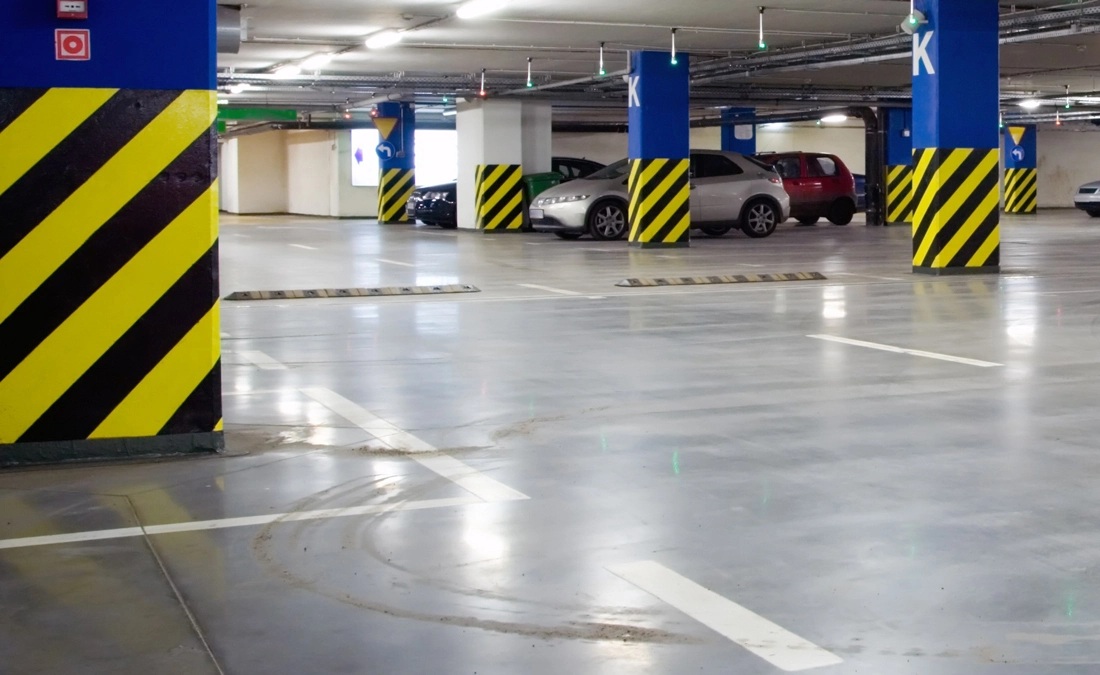
Shopping mall underground parking handles dense vehicle movement and pedestrian flow, particularly along ramp entries, exits, and weather-exposed turns. Anti-slip epoxy floor paint with broadcast aggregates provides reliable tire traction on slopes, while the seamless, color-stable surface resists oil buildup and tire marks and cleans effectively under pressure washing. Integrated striping and neutral tones keep the layout clear and retail-appropriate.
Hospital parking structures need dependable safety at ramps for emergency and staff access, where ambulance and delivery vehicles run alongside frequent wet cleaning. Anti-slip coatings maintain friction during rain or snow, allowing swift, secure transit. The formulation withstands disinfectants and preserves texture under heavy rolling loads, meeting hygiene and functional standards.
Residential community garages serve everyday resident traffic plus occasional service vehicles. Ramps connecting levels or leading to basement parking require traction to avoid slips from people carrying items or in winter weather in colder regions. Adjusted anti-slip profiles deliver moderate grip that simplifies sweeping and vacuuming, maintaining the neat, modern appearance common in these properties.
In each application, industrial-grade epoxy floor paint systems achieve lasting results when aggregate choices match traffic demands and site conditions.
Foshan Konaz Technology Co., Ltd – A Trusted Provider of Industrial Coatings
Foshan Konaz Technology Co., Ltd manufactures advanced protective coatings designed for severe industrial and commercial service. Operating from Guangdong Province, China, the company runs modern production facilities focused on consistent quality and performance in tough settings. The epoxy floor paint line highlights high hardness, wear resistance, and chemical stability, making it suitable for factories, warehouses, parking structures, and basements facing abrasion, vehicle traffic, and fluid exposure. Konaz applies strict quality controls and offers tailored formulations to meet particular needs in durable floor protection.
Conclusion
Wet ramps, turning zones, and mixed pedestrian-vehicle areas in underground parking create ongoing slip hazards from moisture, oils, and surface wear over time, but anti-slip epoxy floor paint systems handle them through targeted aggregate texture and layered application. Coarser broadcast profiles secure vehicular traction on inclines, finer selections protect pedestrian paths, and precise execution sustains grip and durability through years of exposure. The method lowers incident rates, supports regulatory compliance, and keeps facilities clean and presentable. Managers responsible for these spaces gain clear benefits in safety performance, liability reduction, and operational consistency from well-executed anti-slip coatings.
Frequently Asked Questions
How do I make a parking ramp less slippery with anti-slip epoxy floor paint?
Anti-slip epoxy floor paint uses broadcast aggregates like coarse silica quartz scattered into the wet top coat on ramps, forming exposed texture that maintains grip in wet or oily conditions. Proper surface preparation and controlled aggregate density keep performance steady over extended service without quick wear.
What aggregate size works best for anti-slip epoxy in underground parking turns?
Aggregates sized 60-100 mesh provide balanced traction in turning zones with pedestrian traffic, offering solid friction while making cleaning easier than coarser sizes used on steeper ramps.
Does anti-slip epoxy floor paint hold up to vehicle traffic in garage ramps?
Industrial-grade anti-slip epoxy floor paint with reinforced top coats and embedded aggregates resists tire abrasion and rolling loads in garage ramps, holding stable friction for 10 years or more under typical conditions when installed correctly.
Can anti-slip epoxy coatings be used in hospital or mall underground parking?
Anti-slip epoxy coatings work effectively in commercial underground parking like hospitals and malls, delivering wet traction, resistance to cleaners, and seamless surfaces that support safety markings and routine maintenance.
How long does anti-slip epoxy floor paint last on parking ramps?
Anti-slip epoxy floor paint with suitable aggregate selection, multi-layer thickness, and regular cleaning retains effective traction and wear resistance for 10–15 years or longer in underground parking ramps exposed to vehicles and seasonal weather.