High temperature powder coatings are used in industrial environments. As well as being subject to high temperatures, they can also be exposed to the effects of oxidation and to chemical attack. It is not nice to see a coating peel or change color. Not only does it look bad, but it also reduces the corrosion protection that the coating was providing and leads to coating failure. In this article we shall be covering the reasons for coating failure as well as looking at solutions to these problems and discussing the role of a reliable supplier such as Foshan Konaz Technology Co., Ltd. who supply high quality coatings.
What Factors Cause High Temperature Powder Coatings to Peel?
Peeling is one of the typical failures occurring in high-temperature coatings. Such failures mostly are caused by surface preparation errors, improper coating curing, or by substrate contamination. In high-temperature applications, peeling is common. However, silicone high-temperature resistant paint from konaz ensures excellent adhesion as well as heat resistance. It guarantees coating’s integrity in temperature range from 200°C up to 800°C and thus prevents peeling caused by high temperatures in various high-temperature equipment. Material as well as process play crucial role in ensuring coating’s integrity in extreme temperatures.
Surface Preparation Deficiencies
Surface contaminants such as oil, rust or dust prevent adhesion of the powder to the substrate, and a simple wipe down or air blast will not remove all contaminants. In addition, moisture which has become trapped in the coating can vaporize within the coating as it is heated. This moisture creates high internal pressure within the coating which can lead to blisters or cracking and eventual coating peel. In many instances coating peel is due to poor film quality. Coatings of poor quality typically deteriorate under heat. High-quality coatings which have been verified to perform well under high-temperature applications are available and addressing high-temperature-related problems with these verified high-quality coatings is the key. Effective surface preparation, that totally removes all surface contaminants and provides an appropriate and consistent anchor profile for the powder coating to key to to ensure adhesion of the coating film.
Incorrect Curing Conditions
Curing is the final crosslinking of the powder film to form a solid crosslinked structure. Undercuring results in an incomplete crosslinking reaction of the molecules in the powder layer, which leads to a weak film, which in turn can be delaminated by heat. Overcuring, on the other hand, results in a hard, brittle coating layer with the risk of micro cracks, which can propagate during thermal cycling. Inhomogenities in the oven temperature lead to areas with different hardness and elasticity on the surface of the component. Only a precise curing according to the manufacturer’s instructions ensures complete crosslinking and flexibility of the coating.
Substrate Compatibility Issues
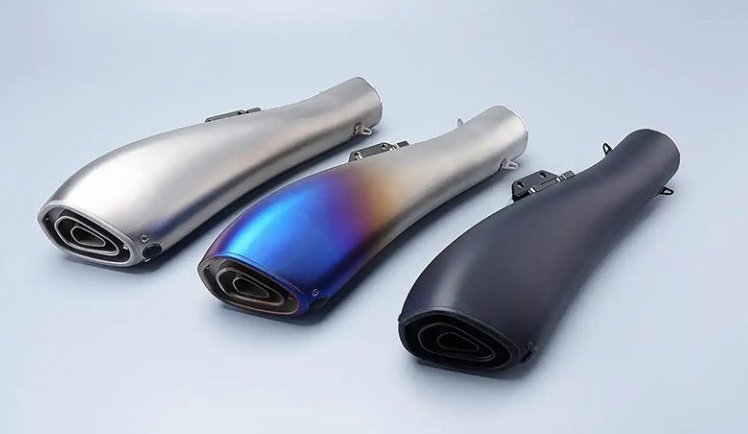
Different metals have different rates of expansion with temperature, and so the coating expansion will rarely match that of the substrate to which it is bonded. As a result, there will be interfacial stresses that will attempt to split the coating from the substrate as the parts are cycled between different temperatures. In addition to interfacial defects, there are a number of other potential causes of coating failure at elevated temperature. These include oxide layers that have formed during pre-coating heating being left as weak boundary layers that are scratched into the substrate surface by the application of the coating, and paint film becoming unstable at high temperature and thus peeling from the substrate. The use of a high temperature paint, such as a silicone based high temperature paint, can help to prevent such problems as they provide a high temperature protective coating that resists the effects of high temperature without peeling. Such high temperature resistant coatings are available that are able to withstand temperatures of up to 800℃, making them ideal for use in products such as fireplaces, BBQs and exhaust systems. They are also one of the best anti-corrosion paints for use at high temperature.
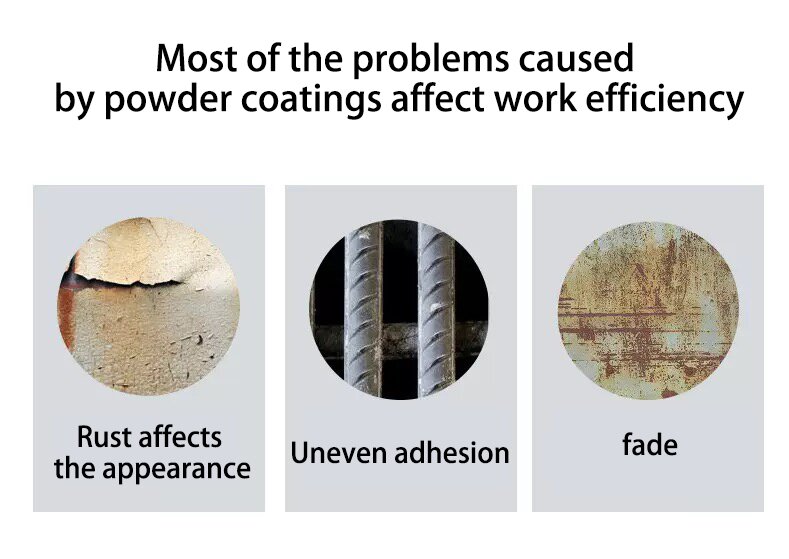
Why Do High Temperature Powder Coatings Discolor After Heat Exposure?
Discoloration is one of the visible signs of degradation. High-temperature resistant coatings can suffer from discoloration in long-term exposure to high temperatures in oxidizing environments or to intense light. This discoloration is caused by a lack of thermal stability of the pigments used or by damage to the resin structure. It indicates changes in the pigment’s chemical composition or oxidation of the resin that affect the coating’s optical properties.
Thermal Degradation of Pigments and Resins
Organic pigments are subject to degradation at high service temperatures. Above a certain temperature, resin oxidation occurs which can affect gloss and color by changes in the molecular structure of the polymer. Repeated baking cycles accelerate the fading or yellowing of pigments. Light-colored coatings are sensitive to high service temperatures and to oxidation, turning yellow or dark. For long-term use, thermally stable inorganic pigments are preferred.
Environmental Contaminants and Chemical Reactions
Exposure to fumes from exhaust gases or industrial chemicals can cause surface darkening or chalking, typically near sources of combustion where coating materials can react with gases. The deposits from soot or other combustion byproducts create unsightly discoloration “spots” that cannot be removed by mechanical means. While high humidity or moisture, in combination with high temperatures, can encourage micro-corrosion under the coating film, initial visual sign of this type of attack is typically reflected as uneven color change on the surface of the metal.
How Can Peeling and Discoloration Be Prevented in High Temperature Applications?
Preventive actions relate to optimization of material, process and environment during life of application and service.
Enhanced Surface Treatment Procedures
A multi-stage degrease process is used to strip the surface of oils and oxides followed by an abrasive blast to create the optimal anchor pattern for painting. A conversion coating, such as a phosphate treatment, can also be applied to increase paint adhesion. These coatings must, however, be compatible with the chosen powder paint and be designed for heat resistance. The paint must then be left to dry completely before application to prevent any moisture in the paint being trapped and causing blistering when the paint is subsequently baked.
Process Optimization During Application
The adhesives need to be cured according to the manufacturer’s recommended schedule in order to achieve full crosslinking of the polymer without risk of overexposure. The use of calibrated ovens with temperature monitoring and uniform temperature throughout the oven will help to minimize variations between individual items that have been coated. The application of correct thickness of coating will also help to prevent excessive internal stress due to subsequent expansion and contraction as the coated items are subjected to temperature fluctuations.
Material Selection for Thermal Stability
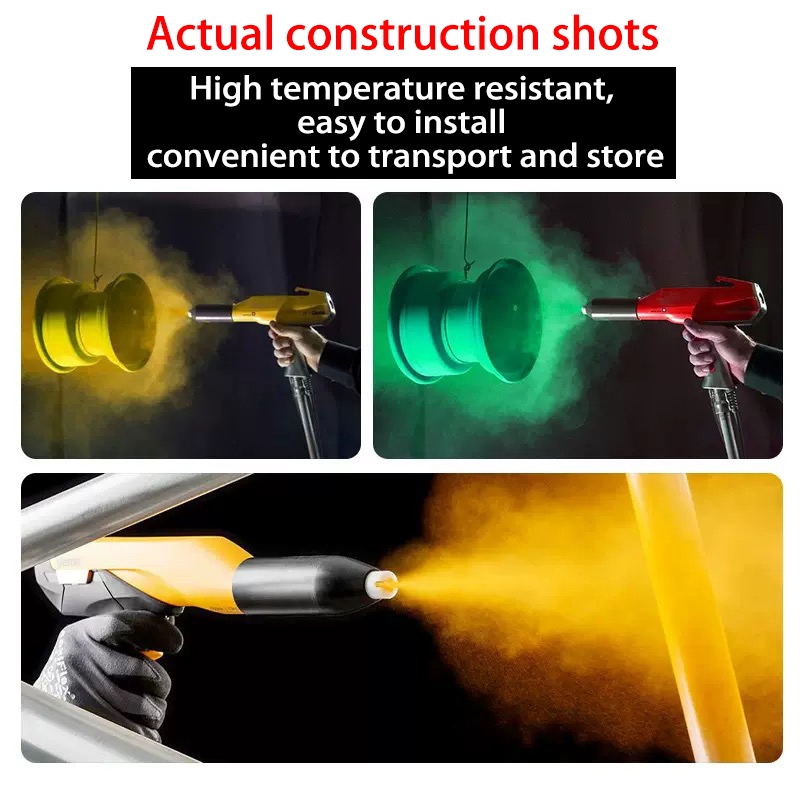
The performance of a material over time at high temperatures is largely dependent on the formulation of the material. Normal anti-corrosion paint at high temperatures suffers from blistering, discolouration and peeling, whereas high-temperature silicone coatings maintain their performance for a long time at temperatures of 200-800°C. They do not peel and suffer only slightly from chalking. They are also able to withstand large numbers of thermal cycles. Inorganic pigments, such as iron oxide pigments, have better colourfastness than organic pigments at high temperatures. The silicone-based resins are flexible after repeated heat treatment cycles. Additives for enhanced UV-stability enable the use of the coating for outdoor applications and protect against photodegradation.
What Are Effective Solutions When Failures Have Already Occurred?
After peeling or discoloration of components under extreme conditions has occurred, measures to remove causes and to restore function of protection by systematic evaluation have to be taken.
Inspection and Diagnosis Procedures
A thorough inspection prior to recoating should include adhesion testing by crosshatch and measurement of film thickness by non-destructive gauges. Microscopic examination of the failed coating will reveal if the failure is due to contamination of the substrate, incorrect curing conditions or chemical degradation of the coating resin.
Recoating Strategies for Damaged Surfaces
It is essential to remove any defective layers using suitable thermal or chemical surface removal methods that are matched to the underlying substrate to avoid distortion or corrosion. Primer coats can then be re-applied as required to optimize adhesion between the primer and topcoat. The curing process for the topcoat should then be completed in a manner that ensures uniform coverage density. Post-process verification of the finished coating is then required to check for coating quality.
How Does Foshan Konaz Technology Co., Ltd Support Reliable High Temperature Coating Performance?
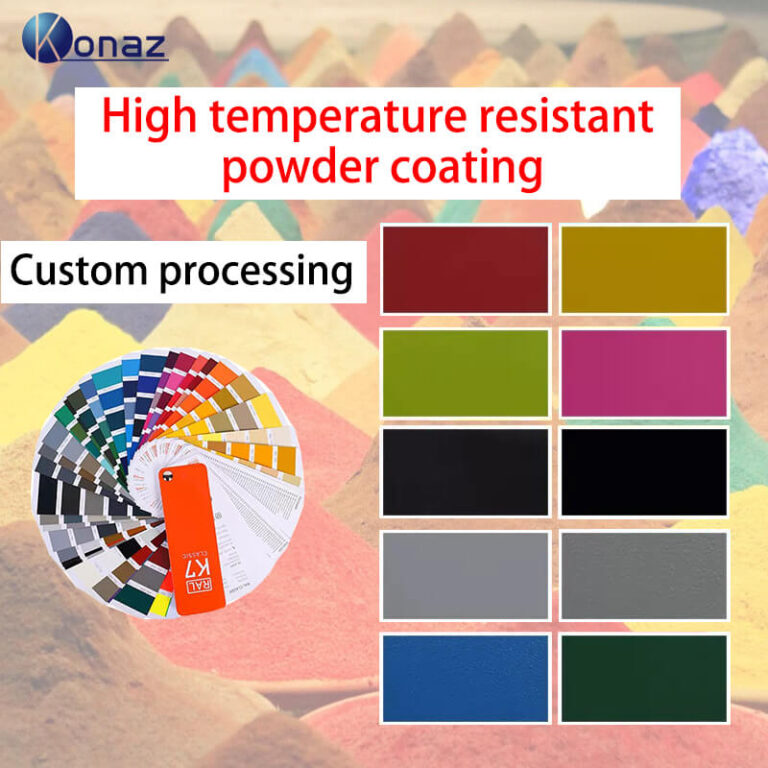
Foshan Konaz Technology Co., Ltd is an innovative high-end high temperature powder coatings manufacturer, and its products can work safely and stably up to 1000°C+ in high temperature environment for a long time. The company integrates innovation and high quality control together to provide the high quality products which can work well in many fields, such as car exhausts and power plant equipment with high temperature parts etc. In general, the metal parts such as car exhausts, fireplaces and stove burners are always in high-temperature status for a long time, and ordinary paint can’t work well under such situation. But the silicone high-temperature paint can work well for long time in 200℃~800℃ thermal environment with strong adhesion, anti-corrosion and rust-proof functions. Silicone high temperature powder coatings products of Konaz have various colors with good coloring keeping property, and good anti-corrosion function to prevent the oxidation corrosion. The products are supported by global technical teams, and the company also provides the technical services such as production process optimization and application recommendation for different applications.
Key Takeaways for Long-Term Coating Reliability
There is a complex interplay of factors that need to be optimized in order to generate durable performance in difficult service conditions, i.e. accurate substrate preparation, accurate curing control, optimal materials that have high thermal stability, and ongoing monitoring and control during the manufacturing process. High-temperature resistant coatings are designed for extremely high-temperature service conditions, and are able to resist peeling, discolouration and chalking at hundreds or even thousands of degrees Fahrenheit. The sophisticated approach taken by the coatings in achieving protective integrity in the most severe of operational conditions, and over extended periods of time, results in the coating requiring less maintenance, and ultimately results in higher equipment reliability.
FAQs About High Temperature Powder Coatings
1. What is the typical operating range for high temperature powder coatings?
High temperature powder coatings generally perform well between 300°C and 1000°C, dependant on the resin used and the stability of the pigments. As a specialty paint, high-temperature resistant coatings perform well at temperatures of 200°C+ to 800°C+ and above. They offer strong adhesion and resist blistering and peeling. The coatings are very durable and are used in a variety of applications including gold melting buckets, pet incubators and fireplaces for long term protection.
2. Can discoloration affect corrosion resistance?
Yes. Discoloration indicates degradation of the resin that is protecting the metal from corrosion. This allows oxygen to penetrate beneath the film, forming corrosion at sites which were previously protected.
3. How often should coated components be inspected in thermal applications?
By regular inspection every 6 up to 12 months in time the first stages of deterioration can be detected and in time necessary maintenance actions can be performed to prevent full delamination failure, especially under cyclic heating as typical for many industrial applications.
4. Are silicone-based powders better than polyester types for heat resistance?
Flexibility of silicone systems combined with high thermal degradation temperature makes them more suitable for continuous high temperature operation than the polyester resins which degrade rapidly at moderate temperature. konaz’s Silicone High Temperature Resistant Paint is resistant to 800℃ without peeling, can withstand direct open flames and thermal cycles, ideal for coating high temperature parts.
5. What role does curing play in avoiding peeling issues?
Appropriate curing of the coating results in complete crosslinking of the polymer chains and strengthens adhesion between coating layers. Deviations from these processes result in poor adhesion which will develop peeling as coating is repeatedly subjected to cyclic heating and cooling stresses typical of many industrial assemblies which operate at high temperatures.