In maintenance and refurbishment operations involving heated metal components, surface failure patterns repeat across appliance and exhaust applications. Gas stove burner caps and grates lose integrity from continuous exposure to 300–600°C flame zones, grease deposits, and aggressive cleaning routines that erode original finishes. Radiators and space heaters exhibit rust initiation and paint delamination driven by thermal cycling between ambient and 80–150°C combined with condensation in enclosed or humid environments. Exhaust pipes degrade through hot gas passage at 400–800°C, mechanical vibration, and external corrosives including salts and acidic condensate. Structural metal frequently remains viable, yet coating systems not designed for the full spectrum of stresses permit rapid progression to visible damage and functional compromise.
Konaz water-based high temperature coatings respond to these conditions with formulations engineered for metal substrates operating from 200°C to 800°C. The silicone-resin chemistry carried in water achieves low volatile organic compound output, enables room-temperature film formation over 24 hours or accelerated curing via short exposure at 180–280°C, and develops resistance to thermal shock, discoloration, and surface attack from chemicals or abrasion. The absence of heavy solvents facilitates use in settings where ventilation remains limited and application odor must stay minimal.

Recoating in this manner directly mitigates replacement-driven expenses for stoves and radiators, eliminates premature disposal of still-functional assemblies, and overcomes the short service intervals typical of generic high-heat paints under cyclic or aggressive exposure. Preparation to a profiled, contaminant-free surface followed by controlled multi-layer buildup generates protective films capable of sustained performance without early breakdown.
Why Old Gas Stoves, Heaters, and Exhaust Pipes Deteriorate Over Time
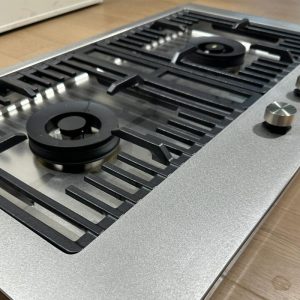
Stress profiles dictate failure characteristics. Burner assemblies on gas stoves endure repeated flame impingement at 300–600°C together with carbon and detergent contact, fracturing factory enamels and exposing substrate to oxidation that develops into pitting and widespread discoloration.
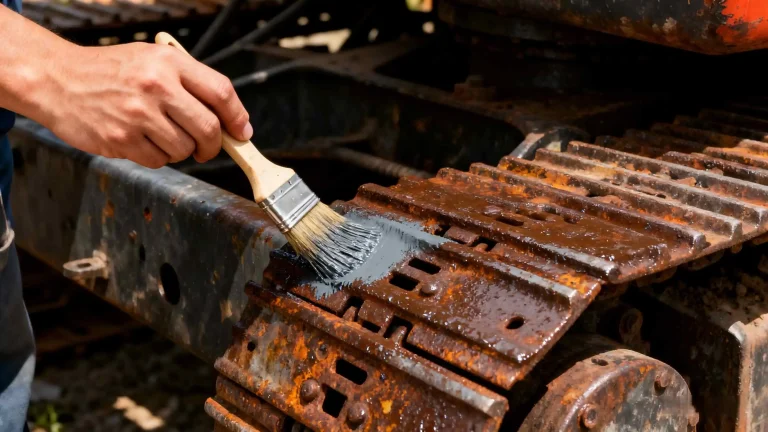
Radiators experience temperature swings from cold standby to 80–150°C operation in moisture-prone locations, where condensation settles on cooler surfaces and initiates rust beneath paint that has cracked from expansion-contraction mismatch. Corrosion then propagates laterally, lifting adjacent film over successive heating periods.
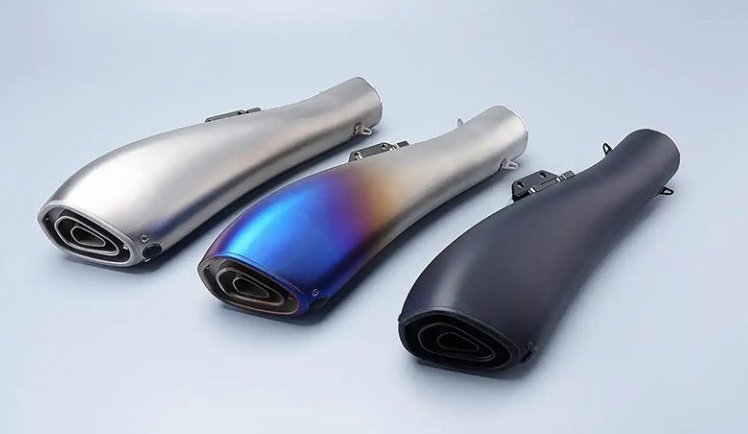
Exhaust systems transport gases at 400–800°C while subjected to vibration and environmental attack concentrated at joints and bends. Initial delamination allows ingress that accelerates material loss unless interrupted by appropriate barrier renewal.
Degradation stems from coatings inadequately matched to combined thermal, chemical, and mechanical demands rather than fundamental metal inadequacy. Replacement figures—gas stoves typically ranging $500–$2,000, cast iron radiators $300–$1,500, exhaust segments $200–$1,000—highlight the disparity against recoating approaches that retain existing hardware.
Why Konaz Water-Based High Temperature Coatings Stand Out for Restoration Projects
Many solvent-based high-temperature systems necessitate strong extraction, retain persistent volatile compounds, and rely on high post-bake temperatures to reach specified properties. Konaz water-based high temperature coatings employ water-dispersed organic silicone resin to deliver sharply reduced VOC levels, application with negligible odor, and curing that progresses effectively at ambient conditions or through brief 180–280°C exposure for faster hardness development.
The resulting film demonstrates color retention, freedom from peeling or chalking within rated limits up to 800°C in elevated grades, and effective barriers to water, chemicals, abrasion, and ultraviolet exposure. Adhesion holds on properly abraded metal, accommodating the grease-laden surfaces of stove parts and the vibratory loads on exhaust components.
Cleanup proceeds with water and mild detergent, while application suits conventional brush, roller, or spray techniques. Operational history in appliance servicing and exhaust system detailing reveals extended maintenance intervals relative to solvent-based counterparts, notably in environments with frequent temperature variation or restricted ventilation.
Essential Preparation: Tools and Materials Needed
Results correlate closely with surface condition at coating time. Assemble 400–800 grit abrasives, wire brushes suited to rust scale, degreasing agents including acetone or equivalent, nitrile gloves, eye protection, respirators, masking tape and sheeting, plus application implements—brushes for detail work, rollers for larger flats, or spray equipment for even distribution.
Theoretical coverage approximates 8–10 square meters per liter per coat, adjusted for texture and absorption. Success favors multiple thin applications over single heavy passes to minimize defects such as runs or solvent entrapment. Follow dilution specifications when spraying. Material expenditure ordinarily remains in the $200–$300 range, producing substantial savings against full-unit procurement.
Step-by-Step Guide to Application
General Surface Preparation
Secure the workspace, isolate energy supplies, and establish cross-flow ventilation. Remove detachable elements—burner caps and grates from stoves, accessible exhaust portions, radiator sections where feasible—and degrease to eliminate oils, residues, and particulates. Abrade to consistent bright metal or stable existing profile, clear all dust, ensure complete dryness, and protect surrounding areas from overspray.
Renovating a Gas Stove
Address burner heads, grates, and exposed framing. Deposit an initial thin sealing coat, then apply subsequent layers at 1–2 hour intervals until coverage achieves uniformity. Allow 24-hour ambient cure or brief 280°C bake when equipment permits. Reinstall components following full hardness attainment. The treated surface then withstands direct flame, grease accumulation, and routine cleaning without lifting or color shift.
Refreshing Heaters and Radiators
Select shades compatible with heat radiation requirements—frequently neutral or metallic finishes. Clean finned surfaces without distortion. Build thin coats to preserve airflow channels. Two layers generally suffice for moderate-temperature duty. The coating accommodates dimensional changes without fracture, maintaining both appearance and thermal transfer across operating seasons.
Coating Exhaust Pipes
Temperature endurance governs selection here. Following degreasing and rust elimination, apply successive thin coats with appropriate flash-off periods. Baking, when practical, advances cross-linking. The barrier sustains exposure to exhaust gases, road salts, and vibration without adhesion compromise or degradation.
Performance Insights and Practical Tips
Field applications confirm durability: stove surfaces exhibit reduced grease adhesion and easier cleaning, radiators preserve finish integrity through multiple heating cycles, exhaust runs demonstrate corrosion resistance in salted or humid climates. Coordinate color choices with end use—darker tones for exhaust systems, lighter for radiators and heaters. Maintain application above 10°C and within moderate humidity bands. Layering in thin passes enhances film flexibility and substrate bond.
Safety Considerations and Long-Term Maintenance
Conduct operations in adequately ventilated zones with appropriate personal protective equipment, particularly during atomization. Cured coatings conform to low-VOC specifications and carry no ongoing exposure concerns. Employ only mild cleaning agents—refrain from abrasive pads or aggressive solvents. Perform annual visual checks and address localized wear through spot recoating. When preparation and application align with protocol, service expectancy reaches 3–5 years routinely, with extensions common under controlled conditions.
Real Cost Savings and Benefits
Replacement of a mid-range gas stove at $1,200 stands in contrast to material costs of $150–$250 for restoration. Radiator refurbishment avoids $800–$1,200 outlays, while exhaust repairs bypass $500+ in component expenses. Retaining operational units reduces material waste and resource demand. Restored assemblies commonly achieve thermal performance and longevity comparable to or exceeding original specifications.
About Foshan Konaz Technology Co., Ltd.
Foshan Konaz Technology Co., Ltd. maintains its base in Guangdong Province, China, concentrating on advanced functional coatings with primary focus on high-temperature resistant technologies. The facility occupies 3000 square meters, operates more than 30 production lines, and achieves annual output near 1000 tons. Core competencies include development of systems that provide thermal endurance, substrate adhesion, and regulatory alignment for industrial, automotive, and residential applications.
Conclusion
Application of Konaz water-based high temperature coatings to aged gas stoves, heaters, and exhaust pipes constitutes a field-validated strategy for service life extension at minimized cost. Rigorous surface preparation combined with disciplined layering produces films that resist thermal cycling, corrosion, and mechanical wear. The practice integrates economic efficiency with reduced environmental loading in equipment management.
FAQs
How do I fix peeling paint on my gas stove burner caps without replacing them?
Degrease and abrade to a sound metal profile, then deposit Konaz water-based high temperature coatings in multiple thin layers. Complete cure—24 hours ambient or short bake—establishes a barrier resistant to flame contact and prevents further peeling.
What type of paint works best for renovating an old radiator or heater at home?
Konaz water-based high temperature coatings supply adhesion and cycling tolerance up to 150°C and higher, accompanied by low odor and straightforward handling. They arrest rust progression and sustain surface condition through prolonged heating periods.
Can I use high temperature coating on my car exhaust pipe to stop rust?
Konaz water-based high temperature coatings manage exhaust gas temperatures to 800°C in appropriate formulations, offering corrosion protection and stable appearance. Thorough preparation and layered application secure performance against driving and environmental stresses.
Is water-based high temperature coating safe and eco-friendly for indoor DIY projects?
Reduced VOC emissions, minimal odor during use, and water-based cleanup render these coatings suitable for indoor environments compared with solvent-borne systems. They maintain environmental compliance while delivering reliable heat resistance on metal parts.
How long does Konaz water-based high temperature coating last on stove or exhaust parts?
Adequate surface conditioning and application yield at least 3–5 years of service in standard conditions, with sustained resistance to peeling, discoloration, and corrosion under elevated thermal and variable exposure.