Introduction
Direct-to-film printing stands as a cornerstone in modern garment decoration, enabling intricate designs on various fabrics, yet challenges such as ink bleeding, especially involving white ink on coated film, persist in disrupting workflows. This defect appears as unintended spreading, where pigments from color layers infiltrate the white underbase or disperse across the film’s coating, resulting in distorted transfers and increased scrap rates. In production environments focused on custom apparel or textile manufacturing, pinpointing the origins of DTF ink bleeding proves critical for upholding standards of precision and efficiency. Specialists in functional coatings, including Foshan Konaz Technology Co., Ltd., develop materials aimed at improving ink retention on PET substrates. However, the underlying factors often stem from complex interactions among ink properties, coating characteristics, and procedural elements. This discussion examines the triggers of white ink bleeding on coated film, details remedial approaches, and presents strategies for avoidance, drawing on established practices in the field.
Understanding the Mechanics of DTF Ink Bleeding on Coated Film
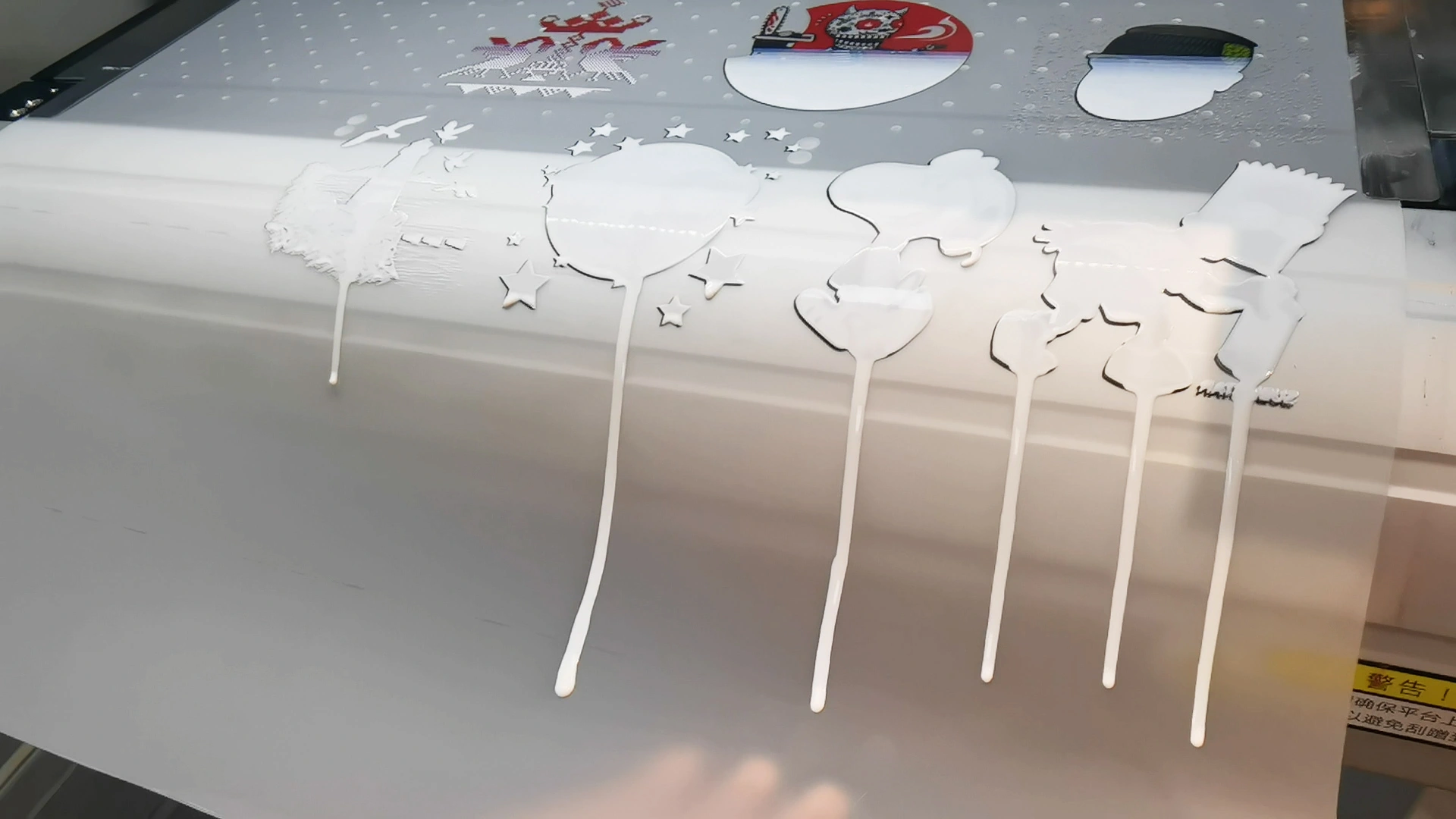
Direct-to-film processes depend on a structured layering where white ink establishes an opaque foundation on the coated PET film, facilitating color adhesion and vibrancy during heat transfer to textiles. Bleeding disrupts this sequence, manifesting as diffusion that blurs boundaries and compromises the final product’s integrity. Production lines handling bulk orders for branded merchandise frequently encounter this, where a single flawed run can lead to significant rework, elevating costs and delaying shipments. The coated film serves as the medium, its surface engineered to absorb ink while maintaining release properties for clean peeling post-transfer.
White ink, laden with opaque agents like titanium dioxide, demands coatings capable of managing its higher density without permitting lateral movement. Insufficient absorbency in the coating allows ink to migrate, forming irregularities visible under inspection. Observations from printing operations suggest that around 25-35% of DTF-related faults trace back to such material mismatches, particularly when films exhibit variability in thickness or surface treatment. Practitioners in the industry note that bleeding seldom occurs in isolation; it signals broader imbalances, encompassing everything from ink composition to equipment alignment.
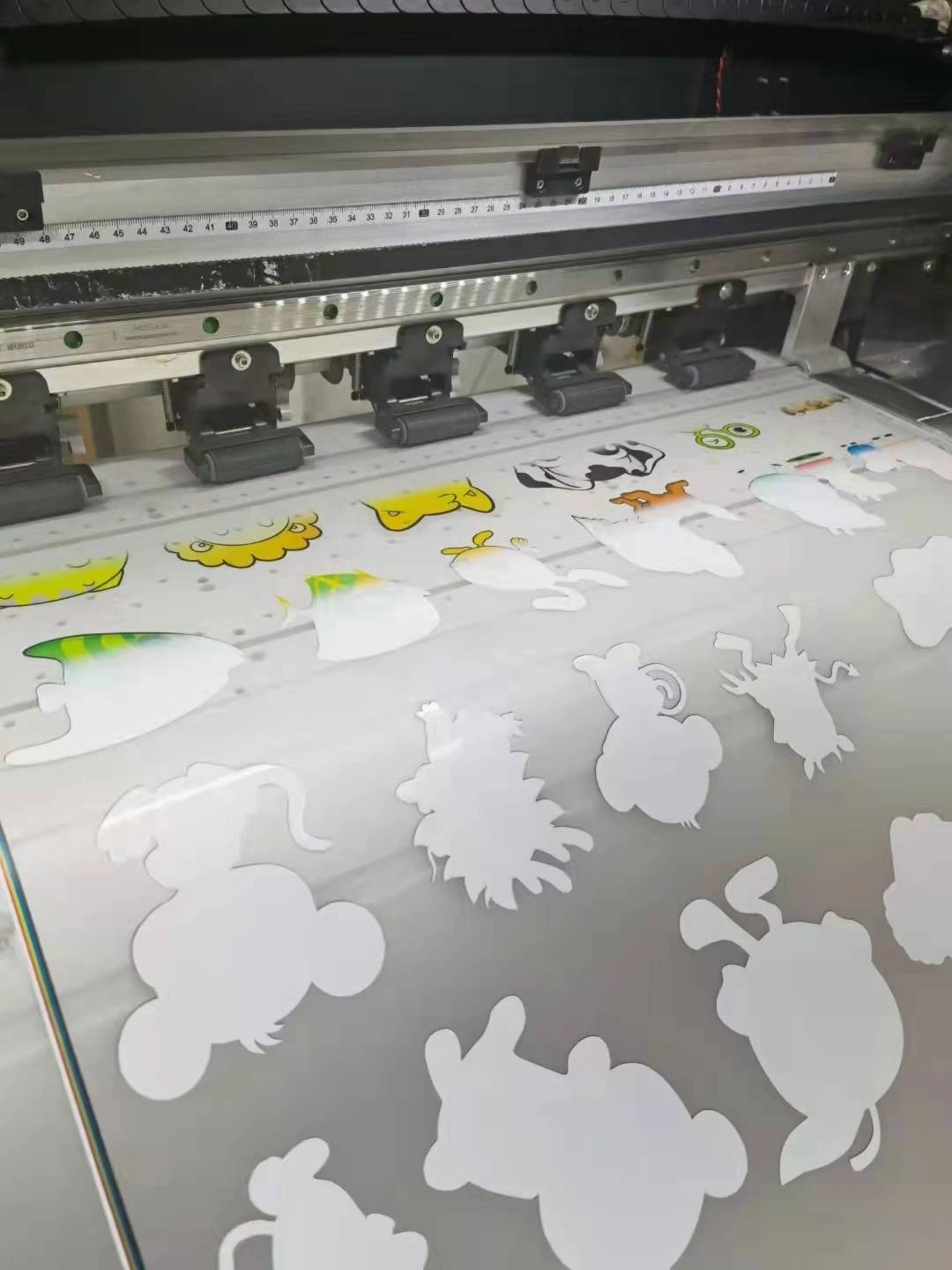
In a standard operational setup, the film advances through the printer, receiving white ink initially, followed by process colors. Without adequate setting of the white layer, overlays provoke intermixing, evident in softened edges or color shifts. This becomes pronounced on coatings where absorbent and release functions compete, yielding suboptimal hold. Over extended periods, chronic bleeding diminishes throughput, with reports indicating material expenses doubling in affected batches. Mastery of these principles shifts troubleshooting from reactive measures to systematic corrections, aligning DTF applications with commercial requirements for consistency and pace.
Common Causes of White Ink Bleeding in DTF Printing
Incompatible Ink and Coating Formulations
Mismatches between white ink and film coatings rank among the leading contributors to bleeding in DTF systems. White inks, formulated for opacity with substantial pigment loads, necessitate coatings that secure them without facilitating spread. Deficient coatings—those overly permeable or inconsistently applied—fail to immobilize the ink, prompting seepage during deposition or drying phases. In facilities processing hundreds of films per shift, substandard batches can yield bleeding in up to 15-20% of prints, linked directly to erratic absorption profiles where white ink encroaches on surrounding zones.
This incompatibility extends to interactions with color inks. Lower-viscosity colors penetrate the white foundation more readily, especially on films with sparse coatings. Field experiences document instances where supplier changes precipitated bleeding, as novel inks clashed with prior films. Ambient moisture intensifies the effect, softening coatings and eroding their containment. Laboratory evaluations reveal that coatings achieving less than 60% absorption efficiency double bleeding occurrences relative to superior alternatives, highlighting the imperative for harmonious materials.
Equipment and Maintenance Deficiencies
Maintenance lapses in printing hardware significantly exacerbate white ink problems on coated films. Obstructed nozzles or misdirected jets unevenly distribute ink, forming accumulations that overflow boundaries. Settlement in white ink reservoirs creates inconsistencies, depriving heads of steady supply in prolonged sessions. Routine oversight of agitation protocols in busy shops leads to diluted flows, where ink escapes confinement on the substrate.
Variations in roller tension compound the issue. Damaged or uneven rollers abrade coatings, concentrating ink in compromised areas and fostering diffusion. Diagnostic data from printers indicate that discrepancies in advancement steps—arising from film gauge differences—displace the white underlayer, exposing perimeters to color intrusion. In volume-driven settings, these technical shortcomings can suspend activities, demanding alignments that disrupt schedules.
Environmental and Operational Factors
Surrounding conditions markedly affect white ink performance on coated films. Increased humidity, prevalent in non-climatized facilities, saturates coatings, diminishing structural integrity and encouraging ink migration. Temperatures exceeding 24°C induce irregular curing, encapsulating volatiles that subsequently trigger expansion or bleeding upon pressing. Documented examples from textile plants show humidity surges elevating flaw rates by 10-20%, attributable to weakened film surfaces.
Procedural choices play a role too. Overapplication of ink via software configurations saturates the coating beyond capacity. Rapid printing without inter-layer pauses permits blending of moist deposits. Experts dealing with assorted materials observe that synthetic blends heighten risks if coatings lack specificity, as application heat can reactivate dispersed ink. These elements, frequently intertwined, require comprehensive assessment for accurate identification.
Effective Fixes for White Ink Bleeding on Coated Film
Adjusting Ink Management and Preparation
Remediation begins with refined ink protocols. White ink’s tendency to stratify calls for vigorous mixing prior to use, promoting even consistency. Daily printer agitation in operational contexts homogenizes components, averting fluid escapes that induce bleeding. For moderate-scale runs, this practice can curtail imperfections by 20-30%, enhancing coating synergy.
Persistent issues warrant compatibility assessments using trial substrates. Transitioning to inks suited for absorbent coatings curbs spread. Where colors encroach on white, diminishing CMY densities in processing software segregates applications, restricting intrusion. Practical implementations demonstrate that separating black channels safeguards white foundations on coated PET, producing crisper outcomes.
Optimizing Printer Settings and Maintenance
Hardware adjustments deliver prompt mitigation for white ink concerns. Decelerating print velocities affords layers curing intervals, minimizing overlay bleeding. Tailoring advancement increments to film dimensions corrects offsets, addressing marginal diffusion in various configurations. Consistent nozzle verifications and cleansings eliminate blockages, guaranteeing accurate placement on surfaces.
For films susceptible to abrasion, roller inspections prevent breaches leading to concentrations. Transitioning to substrates with fortified absorbent features, incorporating static resistance, bolsters ink stability. In industrial applications, these modifications resolve immediate bleeding while prolonging machinery durability, with reduced interruptions noted.
Material Upgrades and Process Refinements
Fundamental corrections involve material enhancements when initial measures prove inadequate. Films featuring unified layers—merging release, uptake, and bonding—better withstand diffusion than segmented variants. Substrates offering elevated density and firm grip accommodate white bases sans distortion, suitable for rigorous uses.
Curing refinements, employing regulated heating to uniform drying, anchor ink prior to transfer. In export-oriented operations, static countermeasures in coatings limit charge-related dispersion. Derived from accumulated expertise, these enhancements convert intermittent remedies into dependable methods, assuring uniform excellence in outputs.
Preventive Strategies to Avoid Future DTF Ink Bleeding
Incorporating safeguards into DTF routines forestalls white ink bleeding on coated films. Supplier selection emphasizes verified coatings, prioritizing uptake thresholds over 75%. In active environments, tracking atmospheric variables enables anticipatory tweaks, mitigating defect escalations.
Ongoing instruction reinforces protocols, including ink homogenization and configuration fine-tuning. Staged quality audits detect nascent bleeding indicators, such as irregular white deposits. Larger installations benefit from automated climate regulation, curbing fluctuations. These approaches cultivate robustness, evolving threats into controllable aspects.
Embracing progressive substrates, adaptable to particular workflows, secures future viability. Sector developments favor coatings resilient across wider thermal spectra, lessening external influences. Through prevention emphasis, operations not only suppress bleeding but amplify productivity, fortifying positions for enduring achievement.
A Brief Overview of Foshan Konaz Technology Co., Ltd.
With a foundation spanning more than 15 years, Foshan Konaz Technology Co., Ltd. operates as a specialized producer of advanced functional coatings, concentrating on high-temperature endurance and applications in digital printing. The enterprise maintains a 3,000-square-meter plant housing over 30 units of sophisticated equipment, yielding 1,000 tons annually. Products reach international markets, emphasizing resilience—no fading or detachment in harsh settings—and cater to industries like automotive, appliances, and exterior gear. Continuous advancements refine material efficacy, bolstering industrial efficiency and ecological compliance. For insights into coating solutions, relevant documentation provides further details.
Conclusion
Confronting DTF ink bleeding within white strata requires dissecting origins, spanning material dissonances to procedural gaps, complemented by precise remedies such as ink handling and machinery calibration. Preemptive tactics reinforce stable results, equipping specialists to address hurdles adeptly. As advancements in printing unfold, managing these concerns guarantees transfers of superior caliber aligned with stringent criteria.
Frequently Asked Questions
Why does DTF white ink bleed on coated film during printing?
DTF white ink bleeding on coated film during printing frequently arises from inadequate coating uptake, where the substrate’s surface inadequately restrains dense pigments, permitting infiltration into overlying colors. Ink disparities or ambient moisture aggravate the condition, yielding diffuse patterns that impair definition.
How can I fix color ink seeping into the white base on DTF coated film?
To rectify color ink seeping into the white base on DTF coated film, initiate by curtailing color extents in processing tools and confirming ink homogenization for viscosity retention. Advancing to coatings with robust uptake, as outlined in materials on white ink absorbent coating material, effectively confines the diffusion.
What causes excessive white ink runoff on coated PET film in DTF setups?
Excessive white ink runoff on coated PET film in DTF setups commonly results from impeded nozzles or variable roller forces, which compromise the coating and induce accumulations. Accelerated printing absent sufficient inter-layer drying exacerbates the matter, alongside inks ill-suited for adhesion.
How do I prevent DTF ink bleeding issues on white layers for long-term production?
Preventing DTF ink bleeding issues on white layers for long-term production entails scheduled upkeep like jet inspections and atmospheric oversight for humidity management. Opting for aligned substrates from established providers, as discussed in our services, combined with data recording, aids in foreseeing and evading persistent challenges.
Is misalignment a common cause of white ink bleed edges on coated film?
Misalignment indeed constitutes a frequent cause of white ink bleed edges on coated film, typically from erroneous advancement metrics displacing the foundation in deposition. Aligning equipment to substrate gauges and referencing overviews on about us for substrate knowledge can ameliorate this proficiently.