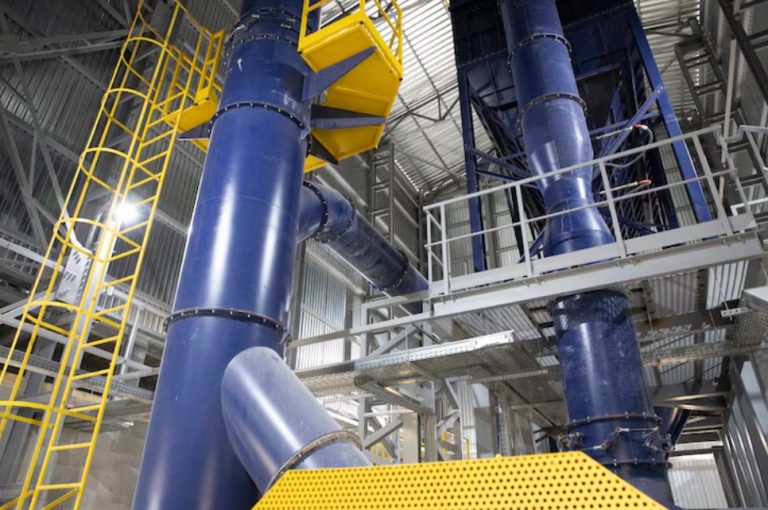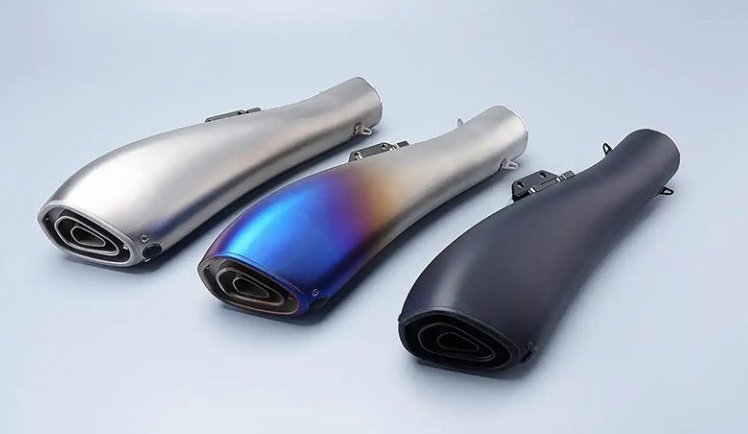
Heat resistant coatings are used in industrial applications that have extreme temperatures on a continuous basis. Power plants, exhaust system from cars, metal processing factories, as well as components for aerospace require special coating that can withstand extremely high temperatures. Unlike regular coatings that can chip, peel, change color, or even lose adhesion to the surface beneath, heat-resistant coatings provide a reliable solution to protect surfaces from corrosion, oxidation, and deterioration.
The designer of paints and coatings to improve their heat resistance needs to understand the material science. The selection of the base material (resin system) such as for example silicones, epoxy-silicone hybrid resins, polyimides, the effect of inorganic pigments and of ceramic fillers, crosslinking mechanisms, and the curing process. All these points have an influence on the coating’s properties and its behavior with respect to thermal stress, either static or cyclic.
Heat Resistance Design Guide: Thermal Performance Factors, Coating Formulation for Durability, Testing for Heat Resistance – Thermal Aging and TGA/DSC, Applying Coatings in High Temperature Environments, Emerging Trends in Heat Resistance Coatings – Nanomaterials and Low-VOC, Sustainable Coating Formulations. Whether you are a coating engineer, a maintenance person, or a purchasing agent, this guide will help you to design coatings that will last in high temperature environments.
What Factors Affect the Heat Resistance of Paints and Coatings?
The thermal performance of paints and coatings can be determined by the chemical composition of a paint or coating, by the interactions with the substrate on which it is applied and by the conditions to which it is exposed. Understanding these points allows paint and coatings formulators to design paint and coatings formulations which maintain the mechanical and esthetic properties of a paint or coating under extreme heat.
Composition of the Resin System
The polymer backbone determines the upper service temperature for a coating. Paints for high-temperature service are based on silicone, epoxy-silicone hybrids, or polyimides. These paints remain flexible and adhere to surfaces even after long exposure to heat. The crosslink density of the coating matrix determines its ability to resist deformation and cracking at high temperatures.
High-temperature resistant paint is a high heat paint designed to maintain a stable appearance even when exposed to high temperatures up to 800°C for long periods of time, without cracking or peeling. This high heat paint is examples of how the resin architecture determines the long-term stability of coatings used in industrial applications.
Role of Pigments and Fillers
Pigments and fillers not only provide color but also influence reflectivity and structural reinforcement. Inorganic pigments like iron oxide, aluminum, and titanium dioxide improve radiant heat reflection. Ceramic fillers are used to enhance dimensional stability and reduce degradation caused by repeated heating cycles. The particle size distribution affects both thermal conductivity and uniform film formation, which are vital for maintaining consistent protection across surfaces exposed to high heat.
Influence of Additives and Curing Agents
In addition to heat stabilizers, which prevent oxidation during storage and long-term exposure to heat, there are also catalysts, which promote the curing reaction in order to achieve a high crosslinking density. The curing reaction has to be carried out correctly in order to achieve a good adhesion of the coating layers to each other and to the substrate. During thermal stress, the coating can develop microcracks if the coating has not been cured sufficiently. For a long-term usage of the coating under continuous load, such as in a power station or in the exhaust system of a car, all the parameters have to be combined in such a way that the coating is able to withstand the stresses.

How Can Formulation Strategies Enhance Thermal Durability?
The new heat resistant coatings have to be durable, flexible, hard and chemically stable at varying temperatures.
Optimizing Polymer Selection
High glass transition temperature polymers are selected to enable coating films to remain rigid at high temperatures. Coating films are made more resistant to oxidation by incorporation of silicone or fluoropolymer segments, which have stable Si–O and C–F bonds. Hybrid resin systems provide long term durability in a number of industrial applications by merging organic toughness with inorganic stability.
Heat-resistant coatings are specialized protective coatings which are designed for operation at high temperatures. In operation, they retain their physical and chemical properties, and prevent damage to the substrate. The delicate balance between organic flexibility and inorganic robustness is what characterizes modern high-performance formulations.
Improving Crosslinking Mechanisms
Crosslinkers which have thermal stability, such as melamine, and phenolic type, improve coating film’s cohesion and density. Controlled curing schedule is required in order to avoid uncontrolled stress accumulation that could cause blisters and/or delamination. Crosslink density of the coating film increases with crosslinkers, thus mechanical strength and also barrier property against gases and/or corrosive vapors are improved.
Surface Modification Techniques
Surface pretreatment, by means of sandblasting, removes surface dirt which prevents adhesion. Surface activation by means of plasma cleaning increases wetting of substrate surface. A primer which is especially formulated for high-temperature substrates reduces delamination risk. As this primer is designed to cover coating and metal layers, it is able to accommodate large differences in their thermal expansion rates. Furthermore, a nanostructured surface layer is able to mitigate the thermal expansion mismatch of a coating, thus ensuring the long-term durability of such a coating also under cyclic heating.
What Testing Methods Evaluate Heat Resistance Effectively?
Evaluation methods for coatings must be reliable in order to ensure adequate performance in areas of aerospace, car manufacturing, metalworking and power generation.
Thermal Aging Tests
Thermal aging tests are carried out in climate chambers at elevated temperatures for a long time. Changes of gloss, of color, of hardness and of adhesion after thermal aging cycles are an indication for the long-term behavior of a system.
Thermogravimetric Analysis (TGA) and Differential Scanning Calorimetry (DSC)
TGA measures mass loss during decomposition across temperature ranges to quantify thermal stability limits. DSC identifies transitions such as melting points or glass transitions that define usable temperature windows for each formulation type.
Infrared Reflectance and Emissivity Measurements
The above tests are a measure of how efficiently a coating is able to reflect or emit radiation. For high temperature application where heat is constantly being transferred to the piece by heat sources, coatings with high reflectance are helpful in preventing the surface from overheating, as this equipment can be operating at temperatures of hundreds of degrees Celsius.
How Do Application Processes Influence Thermal Performance?
The method of application is critical to creating a uniform, consistently thick film that adheres properly and provides effective heat resistance protection.
Selection of Appropriate Application Techniques
Spray coating offers uniform coverage on components with complex geometries, such as exhaust manifolds and turbine housings, while dip or flow coating offers uniform layer thickness on large industrial parts, such as rollers, dies, and other precision components. The temperature at which a powder coating is cured is critical to film density and adhesion when coating complex components.
A number of paints exist which have special formulas that will allow the paint to last long into time without fading or discoloration even after long use at high temperatures, such as 800℃ for example. Such paints can only be properly applied with strict process control to achieve desired results.
Importance of Curing Conditions
Gradual curing ramp-up is used to prevent solvent entrapment and subsequent blisters. Post-curing treatments are used to complete crosslinking reactions within the polymer structure to attain highest mechanical properties and chemical stability during service life.
Why Choose Foshan Konaz Technology Co., Ltd as a Reliable Supplier?
Foshan Konaz Technology Co., Ltd is able to provide specialized solutions for industries that need heat resistant parts to maintain consistent performance under extreme conditions. Such industries include metallurgical industry and automotive exhaust systems.
Expertise in High-performance Formulations
konaz’s products are developed for advanced applications, including silicone-based polymers reinforced with ceramics. These parts can operate at temperatures over 800°C, depending on the specific design. Furthermore, konaz’s Silicone High-Temperature Resistant Paint has heat-resistance, anti-corrosion and non-peeling characteristics, and is therefore ideal for coating factory parts that operate in the long-term at high temperatures. Parts coated with this paint will function reliably and maintain their integrity even in high temperature environments.
Commitment to Quality Control and Innovation
Each production batch is tested to the international standards for the heat resistance of the coating, as per the test method ASTM D2485. On an ongoing basis, we invest in R&D in order to develop an eco-friendly solvent-free coating formulation to be used on steel, aluminum or composite substrates used in various industries worldwide.
Low-VOC environmentally friendly formula: Compliance with global environmental protection standards, Safe and reliable, Suitable for markets and fields with high environmental protection requirements, Konaz is among leading suppliers who combine sustainability with technical competence.
How Can Future Developments Shape Heat-resistant Coating Technologies?
Research into more effective thermal protection solutions is emerging, incorporating latest innovations in material science, nanotechnology and sustainable chemistry.
Integration of Nanomaterials for Enhanced Stability
Nano-particles, like nano-silica or alumina, increase the temperature resistant barrier efficiency and also the mechanical stiffness of the particles. Graphene based additives create conductivity and highest heat dissipation, which makes them ideal for new type of electronic enclosures as well as aerospace applications, that are exposed to fast thermal cycles.
Sustainable Formulation Trends
Waterborne silicone systems now offer reduced VOC emissions without compromising longevity under severe conditions—a key step toward greener manufacturing practices worldwide. Bio-based resins derived from renewable resources are being explored as substitutes for petrochemical polymers while maintaining comparable performance metrics crucial for heavy industry adoption trends highlighted by global market research forecasts predicting steady growth rates around 5–6% annually.
Advances in new materials will increase the temperature resistance of coatings and expand their fields of application. Newer materials will become more efficient and meet environmental requirements and performance requirements at the same time.
Conclusion: Advancing Toward More Resilient Thermal Protection Systems
As the art of resin chemistry continues to evolve in tandem with that of filler technology, today’s heat resistance coatings have been able to maintain service reliability in an ever-increasingly demanding number of industrial applications worldwide. Optimised materials are developed with contributions from material scientists and coating formulators alike, brought to market by coatings manufacturers such as Foshan Konaz Technology Co., Ltd. and used by industries around the world to create cost-effective environmental solutions that are fit for purpose and which provide a stepping stone for the next generation of protective coatings to be developed in order to meet future industrial challenges.
FAQs
What temperature range can typical heat-resistant coatings withstand?
Industrial grade coatings can operate continuously in the temperature range of 200°C up to 600°C and there are special high temperature formulations available based on silicone or ceramic binders for short peak temperatures up to 800°C.
How often should heat-resistant coatings be maintained or reapplied?
The maintenance frequency depends on the severity of the operating environment. For routine inspection, we recommend a periodic check every 12–24 months to detect early signs of oxidation or film degradation before it causes structural damage.
Can heat-resistant paints also provide corrosion protection?
Yes. Many of the formualtions are set up with anti-corrosive pigments such as zinc phosphate or aluminum flakes in them. These form a protective film on the surface of the metal that prevents moisture from entering. They are still effective at elevated temperatures. Long term service life is maintained.