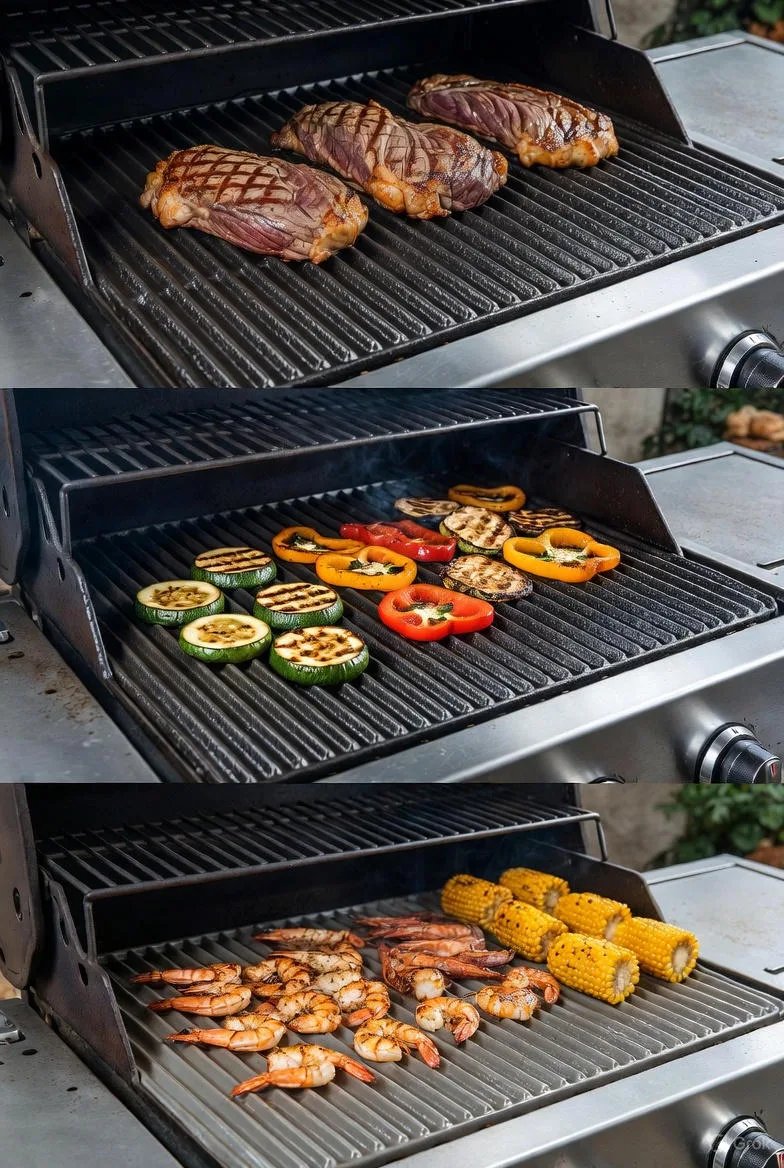
Spend ten minutes on any OEM grill forum and you’ll see the same horror stories: containers arriving in Houston or Rotterdam with lids that look like they’ve been through a sandblaster, fireboxes turning bronze after the first burn-in, or big-box buyers threatening chargebacks because half the shipment is already chalking on the dealer lot. If you’re the one signing POs for 20,000–200,000 units a year, those photos aren’t just embarrassing; they’re expensive.
The single biggest upgrade most grill brands make between “good” and “bulletproof” isn’t a better burner, thicker steel, or even a fancy rotisserie kit. It’s switching to a true 800 °C silicone-based heat resistant coating that simply refuses to discolor, peel, or powder no matter how hard the real world tries. This isn’t the $15 aerosol can from the hardware store. This is industrial-grade protection originally developed for power-plant maintenance and race-car headers, now perfectly adapted to the exact punishment a modern barbecue dishes out.
What Actually Happens to a Grill in the Real World
Close the lid on a 60,000 BTU gas grill running flat-out and the hood paint sees 450–580 °C in under eight minutes. Run a full chimney of lump charcoal with the vents wide open and the firebox walls are kissing 800–900 °C. Pellet grills look gentler, but they still cycle 300–650 °C for four to twelve hours at a stretch. Then comes the grease: rib-eye drippings hit the hot surface, carbonize instantly, and turn mildly acidic. Add six months of UV on the dealer lot, thermal shock from cold rain hitting a screaming-hot lid, salt air while the container sits in port for three weeks, and the occasional pressure-washer attack from an overzealous homeowner. That’s the gauntlet every coating has to survive before the customer even fires it up the first time.
Standard high-heat enamels and consumer-grade silicone sprays start failing the moment they leave the controlled environment of the lab. Micro-blisters appear after 150–200 thermal cycles. Gloss drops. Color shifts to an ugly bronze. The film shrinks, loses adhesion, and moisture creeps underneath. Six months later the distributor is sending you pictures of rust bleeding through the logo. A genuine 800 °C organic silicone heat resistant coating doesn’t behave like paint; it behaves like a thin, flexible ceramic shield that stays intact for literally thousands of cycles.
The Numbers That Make Purchasing Managers Switch Overnight
A mid-market North American brand we supply shipped 48,000 gas grills last year. Before the upgrade, appearance-related returns (peeling, fading, chalking) ran just over 7 %. After converting lids, end caps, side shelves, and fireboxes to an 800 °C silicone heat resistant coating, that number collapsed to 0.4 %. That single change saved them more than $220,000 in warranty replacements and return freight on one model line alone.
Another commercial pellet-grill builder in Texas cut touch-up labor from 22 minutes per unit to under three. When you’re moving 800–1,000 units a day, those minutes pay for the entire coating switch in the first quarter. A European kamado-style brand shipping to coastal markets saw salt-spray failures drop from 11 % to virtually zero after the switch. The ROI is so obvious that most factories recoup the higher material cost within four to six months, then enjoy pure profit on every container after that.
Application Is Easier Than Most Factories Expect
You already have 90 % of the equipment you need:
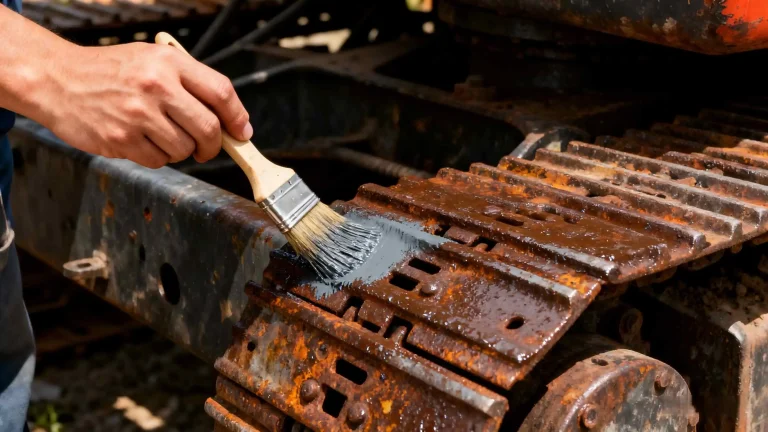
- Surface prep: light blast or 80-grit sanding to bright metal, solvent wipe. No phosphate pretreatment, no zinc primer unless you’re extra cautious.
- Dilution: 10–15 % xylene for spray, straight from the pail if you’re brushing warming racks or small parts.
- Spray: two light cross-coats, 40–60 μm dry film thickness. Standard HVLP at 2.0–2.5 bar with a 1.3–1.4 tip works perfectly.
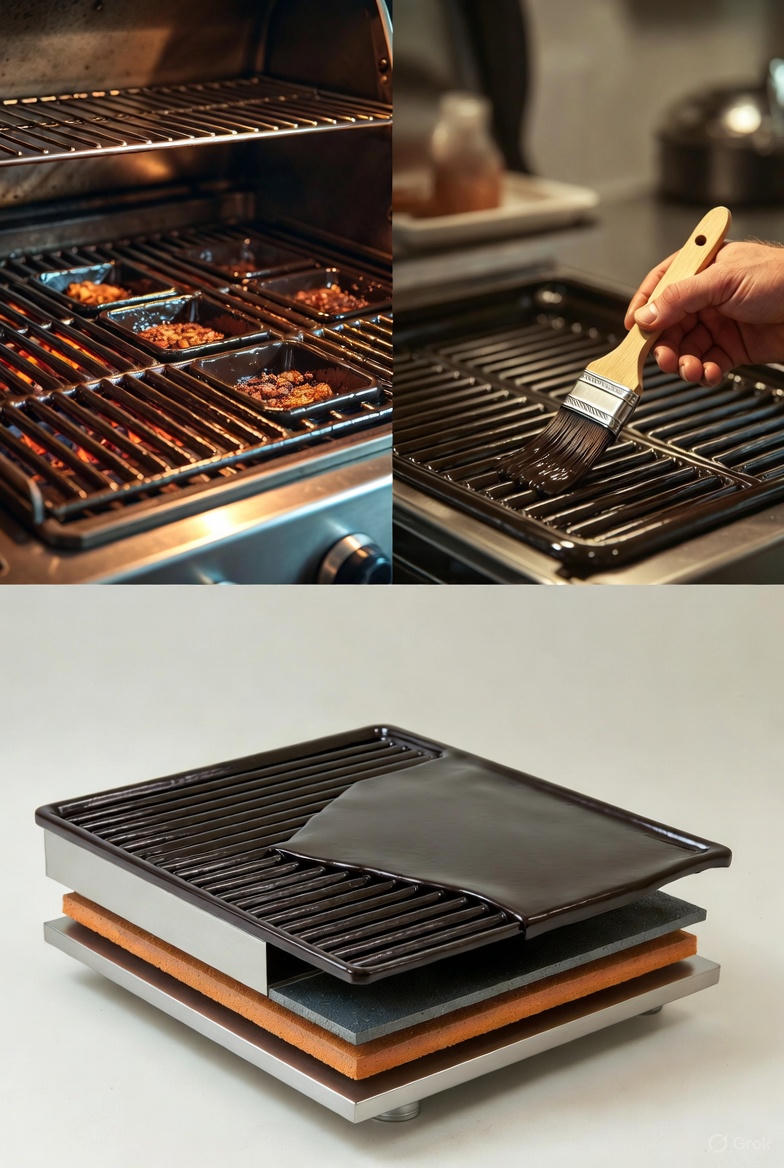
- Cure: full performance after 24 hours air-dry at shop temperature, or force-cure 15 minutes at 280 °C metal temperature on your existing powder-coat line.
The coating flows out glass-smooth, hides weld burn marks, and gives the deep satin or matte black finish that photographs beautifully in catalogs and looks premium on the showroom floor from Atlanta to Amsterdam. Factories in Foshan regularly run 800–1,000 lids a day on a single spray station with one operator and one rack loader. Scrap and touch-up went from 4–6 % to statistically zero.
Meet Foshan Konaz Technology Co., Ltd.
Foshan Konaz Technology Co., Ltd. has been compounding high-performance functional coatings in the heart of Guangdong’s manufacturing belt for over fifteen years. Their 3,000 m² facility runs more than 30 production lines and ships over 1,000 tons annually to grill makers, automotive exhaust manufacturers, fireplace producers, and industrial clients across North America, Europe, Australia, and the Middle East.
Konaz only does one thing, and they do it extremely well: real-world functional coatings that solve expensive equipment can depend on. Their flagship 800 °C organic silicone heat resistant coating was born in power-station maintenance bays where downtime costs millions, then refined for barbecue OEMs who can’t afford callbacks. Low-VOC, single-component, unlimited color matching, matte-to-semi-gloss sheen control, and same-week trial quantities are standard. Most North American and European clients have coated test panels on their desk within seven days of the first email. Reach their export team directly at https://www.konaz.cn/contact-us/ or +86 176 8821 5583.
The Bottom Line for 2025 and Beyond
In a market where consumers expect a $1,200–$2,500 grill to look factory-fresh after five seasons and big-box buyers measure returns in basis points, the coating you choose is no longer a line-item detail; it’s a core competitive advantage. Factories that moved to genuine 800 °C silicone heat resistant coatings two or three years ago are the same ones quietly taking market share today. The rest are still paying for touch-up booths, rework labor, and angry distributor emails.
If you’re tired of fighting the same coating battles season after season, it’s time to spec something that was built for heat instead of just labeled for it.
FAQs – Straight Answers for Grill Builders
How hot do exterior surfaces actually get on a modern gas grill?
Infrared testing shows 450–580 °C on the hood during high-temp searing, with brief spikes over 600 °C near the handle. Firebox interiors regularly exceed 750 °C on charcoal and kamado models.
Will an 800 °C silicone heat resistant coating stay matte black or will it go shiny after cooks?
Properly formulated versions hold true matte or satin finish even after 1,000+ hours at temperature; no gloss-up, no color drift.
Do I need primer on stainless or mild steel?
No. Light scuff on stainless, light blast on carbon steel, and the coating bonds directly. Pull tests exceed 5B on ASTM D3359 on both substrates.
What’s the fastest cure schedule that still delivers full performance?
15 minutes at 280 °C metal temperature gives full cross-link and immediate packing. 24-hour air-dry works equally well if oven time is tight.
Are food-contact versions available for grates and internal firebox parts?
Yes; Konaz offers FDA and EU 10/2011 compliant high-temperature resistant coatings specifically for direct and indirect food-contact surfaces when required.