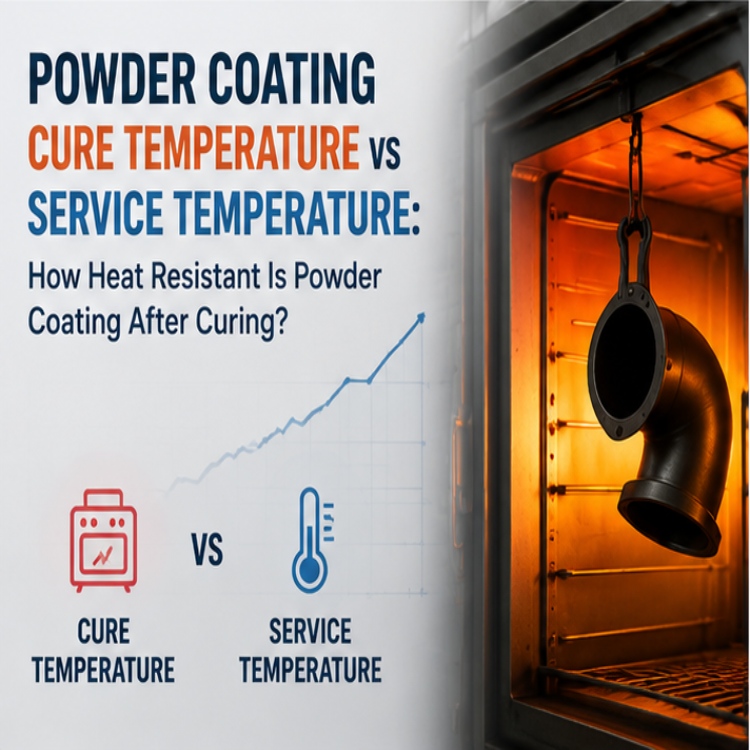
High Temperature Powder Coating gets baked during the application process. Because of this, buyers often think any powder-coated part will handle high operating heat. This guess can lead to early discoloration. It can also cause chalking, peeling, or a loss of adhesion. Cure temperature and service temperature refer to two distinct phases of coating performance. The first phase dictates how the powder turns into a solid film. The second phase shows the heat level that the film can survive in real-world use. Manufacturers deal with items like exhaust components, BBQ grills, fireplaces, ovens, boilers, and industrial equipment. They need to check both temperatures before they approve a coating system.
What Is High Temperature Powder Coating Cure Temperature?
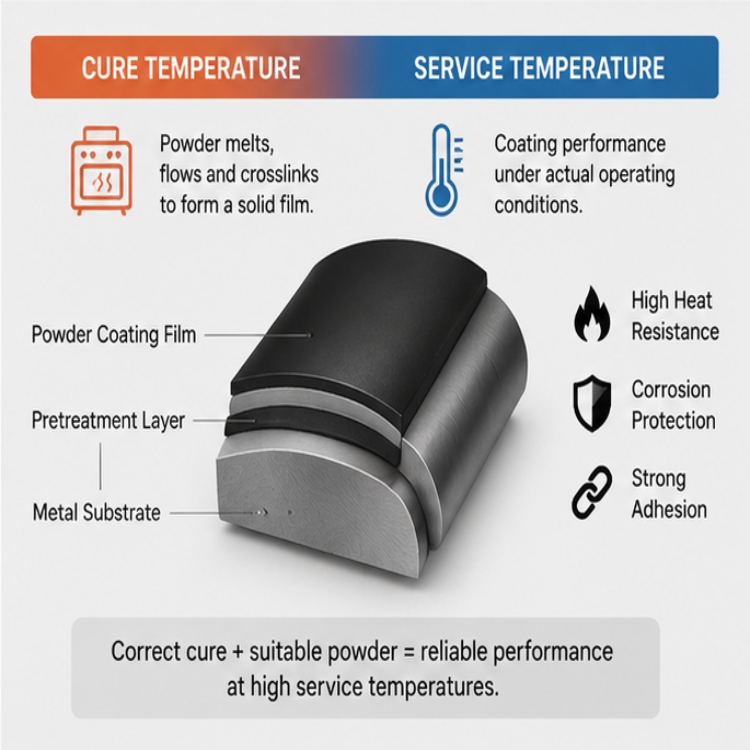
Cure temperature plays a key role in the manufacturing process. It supplies the heat required for the applied powder particles to melt. Then, they flow and build a solid coating. The necessary oven schedule relies heavily on the specific formulation. The coating manufacturer must provide this schedule.
Why Does the Part Need to Reach the Required Temperature?
An oven might hit its target temperature well before the metal part gets hot enough. A thick casting absorbs heat differently than a thin steel panel. A complex welded assembly also has its own heating rate. Workers might start the timer before the metal reaches the right state. If this happens, the coating could stay under-cured. This occurs even if the oven display looks perfectly fine.
Under-curing brings down adhesion and hardness. It also hurts chemical resistance and film quality. Too much heat exposure can ruin the color. It can damage the whole coating system as well. Production teams must control the real metal temperature. They must also track the exact curing time. They should not rely simply on the oven air setting. Teams can attach thermocouples to sample parts. These tools help show exactly when the metal reaches the proper state. They also prove if various oven zones cure the parts evenly.
What Is High Temperature Powder Coating Service Temperature?
Service temperature refers to the thermal load a coated product faces after it goes into operation. This load might involve continuous heat or brief heat peaks. It can also include direct flame contact. Sometimes, it involves repeated cycles of heating and cooling. It may even mean different temperatures across a single component.
Why Is Service Temperature Different from Cure Temperature?
Curing acts as a highly controlled, short process. Its main goal is to build the film. Service exposure, however, can last for many hours. It might repeat daily. Real-world use often brings combustion gases, moisture, and harsh chemicals. It also involves vibration and thermal expansion. A coating might survive a quick oven cycle easily. That does not mean it will remain stable through years of daily work.
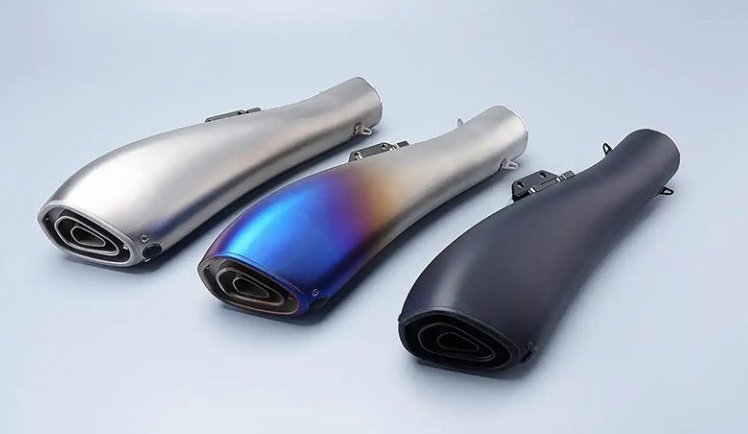
Specialized High Temperature Powder Coating is built for tough applications. Standard decorative powders often lack the right thermal stability for these tasks. KONAZ points out several common uses. These include exhaust pipes, mufflers, and brake or engine parts. Other uses are BBQ grills, ovens, fireplaces, and stoves. Chimneys, furnaces, boilers, and high-heat industrial equipment also need this protection.
How Heat Resistant Is High Temperature Powder Coating After Curing?
There is no single temperature limit that applies to all High Temperature Powder Coatings. The safe working range depends on the resin system and pigments. It also relies on fillers, the metal base, and film thickness. Proper pretreatment and good curing quality matter too. Finally, it depends on whether the heat stays constant or comes in short bursts.
Why Can Ordinary High Temperature Powder Coating Fail in High Heat?
A basic powder can offer a nice, tough finish at normal room temperatures. However, it might lose its shine or change color in high heat. It can also chalk, turn soft, crack, or fall off. This happens when the heat goes past its planned limits. The metal will expand and shrink over and over. This movement puts extra stress on the bond between the paint and the metal base.
A specially designed heat resistant High Temperature Powder Coating relies on a unique formulation. This mix provides great thermal stability and strong adhesion. It also fights oxidation, stops corrosion, and keeps a good appearance. High-temperature powders protect metal by creating a solid barrier. Still, their true performance depends heavily on proper pretreatment and correct curing steps.
Why Must Continuous and Peak Temperatures Be Separated?
Continuous temperature means the heat level that the coating faces for long periods. Peak temperature acts as a short maximum spike. This spike happens during startup, system overload, or direct flame contact. A supplier must know both of these values. Frequent heat spikes can easily ruin a coating system. This damage occurs even if the average daily temperature seems mild.
KONAZ product details state that its high-temperature High Temperature Powder Coating suits tough jobs up to roughly 800°C. However, you should not apply that number blindly to every color or metal base. It also varies by part design and heat exposure style. Buyers must verify the chosen formulation. They need to test it using their actual heating cycles. The inspection process must check for adhesion, cracking, and blistering. It should also look for chalking, color shifts, and rust. This checking must happen after many heat cycles, not just one quick test. Testing real production parts is very important. This is especially true when different areas of one part hit different heat levels.
What Should Manufacturers Confirm Before Ordering?
A clear technical request helps the supplier suggest the right formulation. It also stops any mix-up between oven curing heat and real operating heat. The request needs to describe the actual part in detail. Buyers should not just ask for the highest temperature rating available.
Which Details Belong in the Coating Specification?
Manufacturers need to share details about the metal base and the part shape. They must explain the surface preparation methods. They should also list the continuous and peak temperatures. The length and frequency of heating cycles are very important. Buyers must mention any direct flame contact and rust risks. They should state the wanted color, finish, and application tools. Oven limits and needed performance tests belong in the document too. Trial parts must go through the exact planned production steps.
For OEM or large bulk orders, a High Temperature Powder Coating RFQ organizes all these facts. It does this before the sampling and pricing stages. It gives the supplier plenty of data. This allows them to discuss true curing and service conditions. They will not have to guess based on a simple temperature label.
Why Choose KONAZ as a Heat Resistant High Temperature Powder Coating Supplier?
KONAZ offers functional coatings for metal parts that face extreme heat. The company fully supports OEM/ODM projects and large bulk orders. Its high-temperature High Temperature Powder Coating materials focus on strong thermal stability and firm adhesion. They also offer great rust and oxidation defense for tough industrial jobs. Buyers must still check the exact formula. They need to test it on the actual metal base before starting mass production.
Conclusion
High Temperature Powder Coating cure temperature shows how the coating takes shape. Service temperature shows the heat level the final film must endure. Treating these two things as the same number leads to huge selection risks. Manufacturers must track the true metal temperature during the baking stage. They must find out the continuous and peak working heat. They also need to plan for heat cycles, flames, rust, and the part shape. Basic powders might work well for mild conditions. However, specialized heat resistant High Temperature Powder Coating is necessary for tougher items. The safest choice starts with a full technical document. Real testing on actual production parts must follow this step.
FAQs
Does baking High Temperature Powder Coating make it permanently heat resistant?
No. Baking simply cures the film. The final coating will only handle the specific service temperature that its formula was built to survive.
Is cure temperature the same as operating temperature?
No. Cure temperature relates strictly to the factory application process. Operating or service temperature defines the actual heat exposure during daily product use.
What information should a buyer give a High Temperature Powder Coating supplier?
Buyers must share the metal type and the continuous and peak temperatures. They need to provide the heating cycle length. They should also detail any flame or rust exposure. Finally, they must list the wanted finish, pretreatment steps, application tools, oven limits, and specific testing rules.