A tired-looking wood stove doesn’t necessarily need replacing. The body may be sound while paint around a door has started to lift. It’s tempting to order high heat paint for wood stoves and deal with the patch at the weekend. Pause at the old finish first. Is it attached firmly, and do you know what it is? This guide concerns exterior metal. The firebox is a separate job.
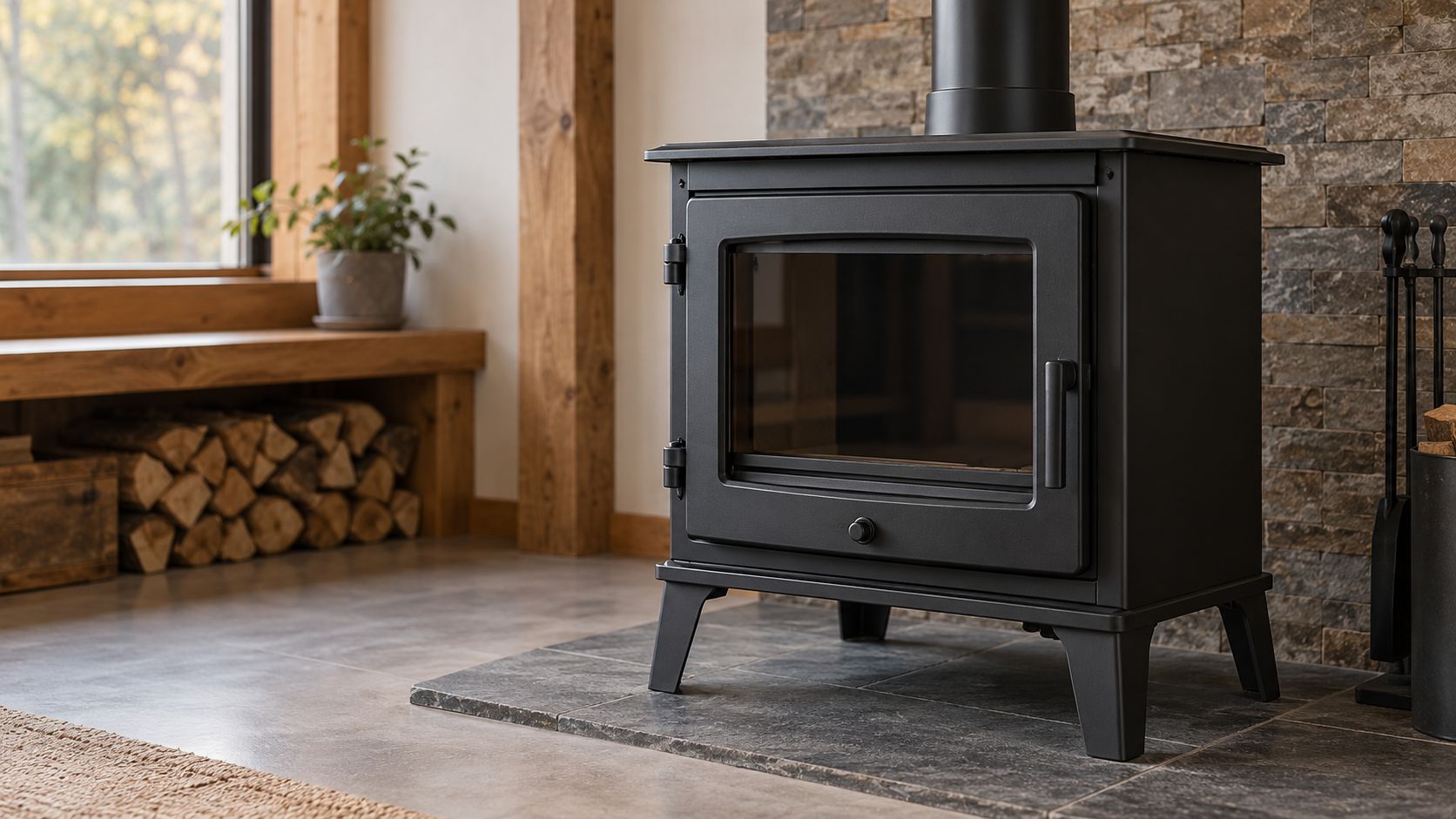
Where does the repainting job stop?
A marked photograph is a good starting point. Circle the panel and repair edges. Is the door frame included? What about the flue connection? Don’t assume trim and handles need the same treatment as the hot metal shell.
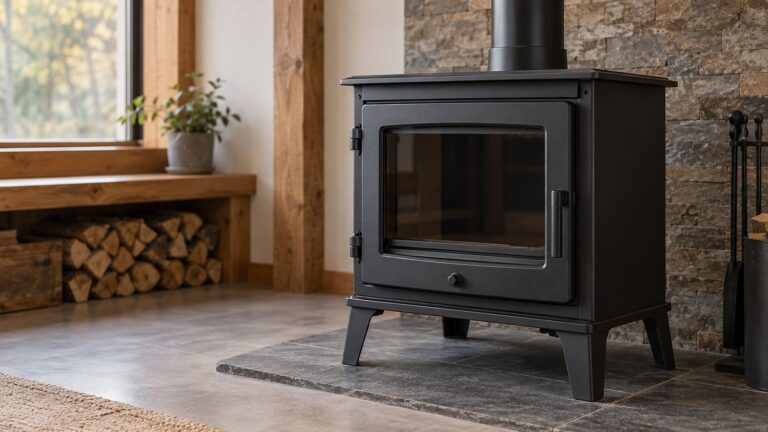
KONAZ’s published wood-burning stove case describes a sprayed, silicone-based black semi-matte finish. It is a useful example of a stove coating application. It provides no reason to extend that choice to a glass panel or a food-contact surface.
What about the inside of the stove?
Ask the stove maker about firebox work separately. “Suitable for stoves” on a product description doesn’t tell you which surfaces were approved. The useful reply names the surface and product together.
Can any of the old coating stay?
One little peeled patch can conceal a larger loose area. Start at its edge and assess the surrounding finish. If that layer isn’t firmly attached, a fresh coat leaves you depending on it anyway. Rust needs attention too.
Paint that remains attached raises a different question: will the replacement coating work over it? Give the supplier the old product name if you have it. “Unknown factory finish” is an honest description when you don’t. That missing information matters more than a guess about how heat-resistant it looks.
KONAZ’s preparation instructions call for clean metal, with oil and water removed. Picture the narrow edge behind a fitting. If it belongs in the repair, it belongs in the preparation as well.
What is beside the repair?
Protect the glass and seals before starting, along with moving parts and labels. Grinding a mating face would change more than the finish. If the assembled stove leaves too little access, work that out with the maker before proceeding.
How hot does the painted metal get?
Paint sees the temperature of the metal beneath it. The warmth of the room doesn’t provide that figure. A manufacturer developing a new model can supply its test information; an owner repairing an existing stove should start with the maker’s advice. Ask about the actual painted locations rather than requesting a single general “stove temperature.”
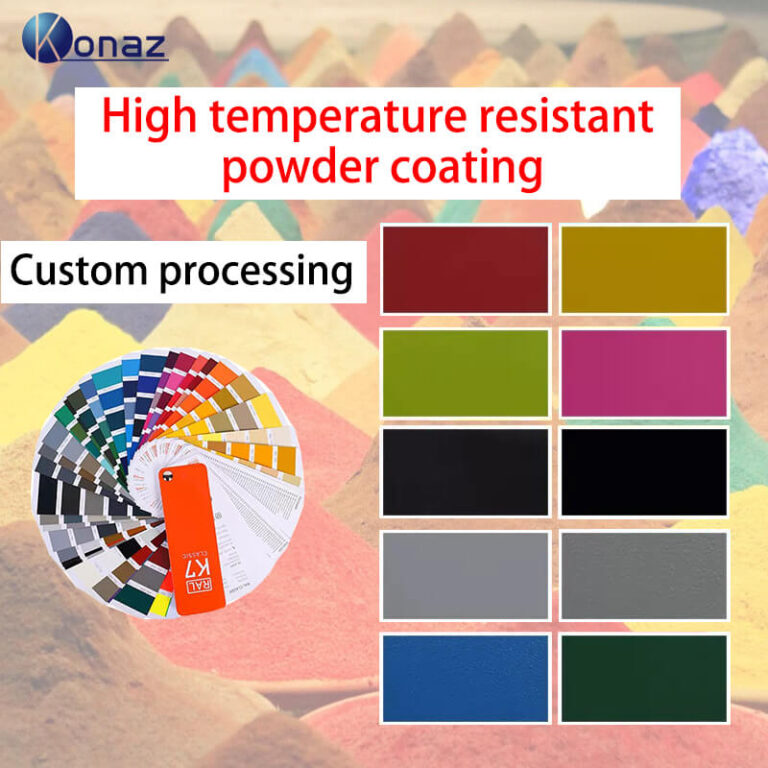
KONAZ’s Heat Resistant Coatings page describes silicone-based coatings for approximately 200-800°C applications. That broad range leaves a product-selection question to answer. Which of those formulas is in the quotation, and what rating goes with the proposed shade?
Give the regular temperature range separately from a short peak. A quotation referring to a stove case should identify the paint used in that case. Otherwise there’s a gap between the example and the tin being offered. Have that gap settled in the supplier’s reply.
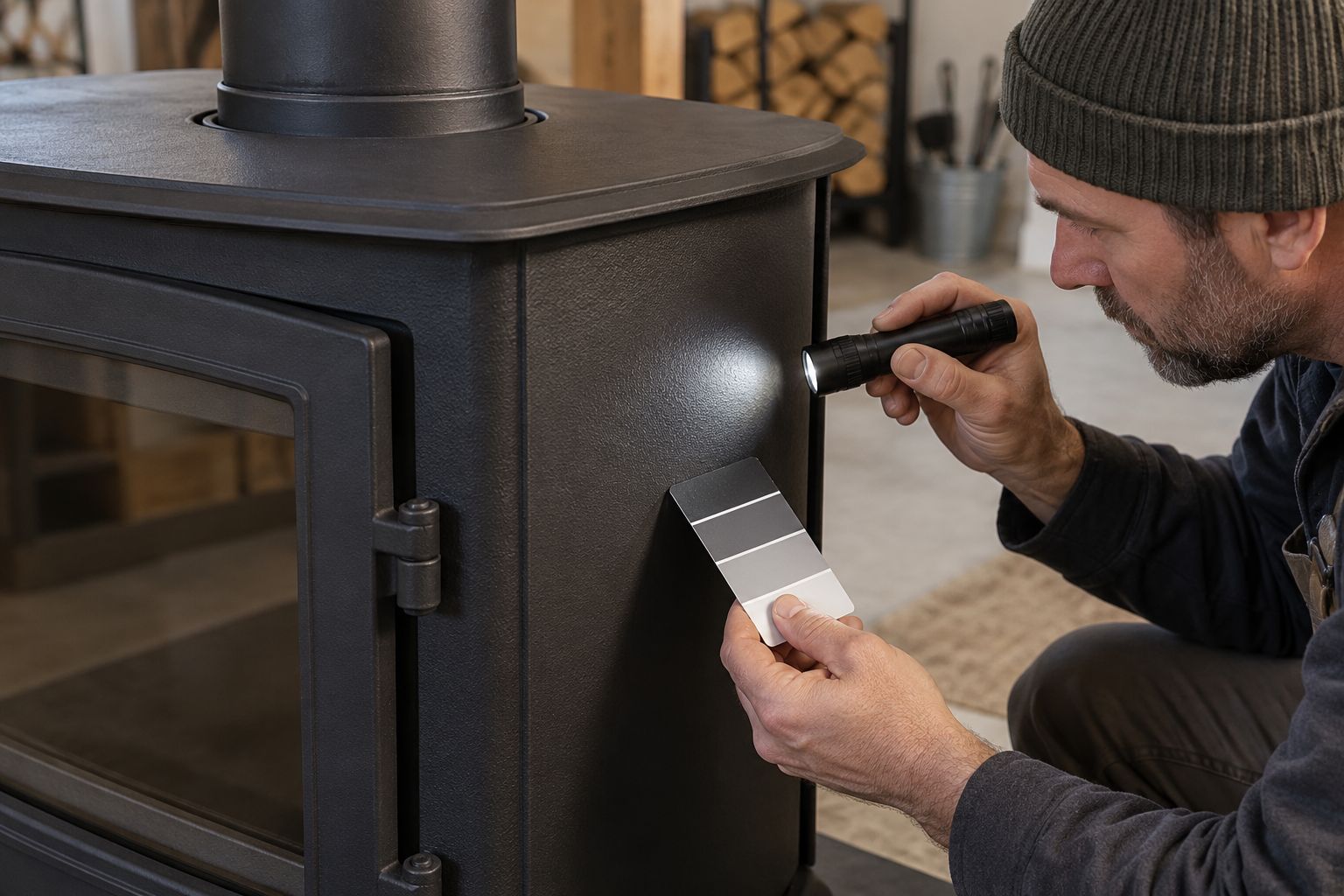
Black semi-matte may suit the stove in the case study; it may not match your existing finish. Assess a dried sample beside the retained coating before committing to the visible exterior.
How much coating should go on?
KONAZ’s instructions are quite plain about application: spray lightly, and avoid a heavy coat. With no spray equipment, a thin brush application is also described. Get the thinning instructions for the chosen product before starting. Guessing a dilution ratio adds an unnecessary variable to a repair already involving an old surface.
For more on film build, refer to the high-temperature paint thickness guide. The product supplier should confirm the target for this paint. At a corner, pause and look for pooled material before deciding another pass is needed.
There’s a visual boundary to consider on a small patch. Decide how it will meet the retained finish. A factory repainting a batch has a sample stage in which to settle that detail; an owner still needs to think about it before painting the middle of a visible panel.
Is the drying time settled before painting starts?
KONAZ’s general instructions describe about 24 hours of natural drying or a 280°C bake for 15 minutes for the coating concerned. Room-temperature drying was used in the published stove case. Put a straightforward question to the supplier: “Which drying route applies to the paint you’re sending me?”
An oven figure for a coating isn’t a baking instruction for a complete stove. Follow the appliance maker’s requirements as well as the paint instructions. Before the repair, obtain the first-use advice too. You don’t want to be deciding whether a dry-feeling panel is ready on the evening you need the stove.
Inspect with the stove cooled. Keep a photograph of the fresh finish for comparison. If a patch lifts again, photograph that as well before another repair covers it. The location of the damage may help the supplier investigate preparation, compatibility or temperature.
Can KONAZ help choose the coating?
Foshan Konaz Technology Co., Ltd manufactures functional coatings and publishes metal-coating instructions and a wood-stove case. Add the marked photograph and old-finish details to your enquiry. Its reply should identify the recommended paint and explain the application and drying route for the surface shown.
Conclusion
A repair with high heat paint for wood stove exteriors starts at the old finish. Once preparation and product choice are settled, the job has a workable sequence: paint, allow the specified drying time, use as instructed and inspect when cool. A firebox question still needs its own answer.
FAQs
Can exterior stove paint be used inside the firebox?
The exterior example doesn’t answer the firebox question. Have the paint supplier and stove maker address that location specifically before applying anything inside.
Can a sound patch of old paint be retained?
It depends on compatibility with the replacement paint. Tell the supplier what the old coating is. With loose material or an unknown incompatible layer, discuss preparation back to clean metal.
Can the stove be lit after 24 hours?
Check the supplied paint instructions and the stove maker’s advice. The 24-hour figure in a published case belongs to that coating and drying route; your job needs confirmation of its own.