
A 24-hour drying time sounds convenient to a wood-stove factory. It means the body could be coated, left overnight and moved toward assembly without occupying a baking oven. Yet a finish that feels dry on the outer shell has not necessarily answered every production question. Can it be handled without marking? Will it keep the agreed semi-matte appearance? What happens to the seams and corners after the stove has been heated and allowed to cool?
Air drying and service testing are separate decisions
The first decision is about the coating process: how the film dries or cures under the conditions specified for that formulation. The second is about performance on the stove. They belong in different lines of the sample record. A successful room-temperature drying trial should not be presented as proof that repeated firing will leave the finish unchanged.
That distinction also works in the other direction. Do not tell a factory that every high-temperature coating must go through a high-temperature bake. Some formulations have an air-dry route. The supplier needs to confirm the method for the exact product and the conditions under which it was tested.
Read the Konaz stove case in its own terms
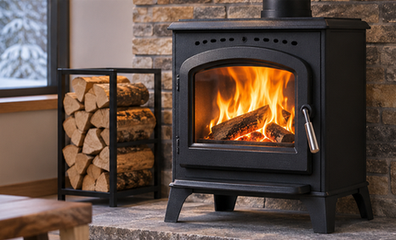
Konaz’s wood-burning stove case describes a sprayed silicone-based black semi-matte coating. The page lists 500–600°C continuous resistance, a 750°C peak and 24 hours of drying at room temperature; it describes the film as fully cured under natural conditions. The reported project also involved stove bodies that previously suffered peeling during repeated heat-up and cool-down cycles.
That is a useful starting reference, but not a universal instruction for all stove paints. The case does not provide every metal grade, film thickness, factory ambient condition or inspection method needed to sign off a different stove. Ask for those details before treating the published figures as a project limit. The broader Konaz heat-resistant coating range includes application information, but a grade-specific document is still needed for production approval.
Check the finish before the stove reaches the customer
The first inspection should happen at the point when the plant expects to assemble, pack or transport the stove body. Keep a reference panel near the trial part and look at the doors, welded joints, folded lips and hardware mounting areas. A broad, flat face may look perfect while a handled corner is still easy to scuff.
Record the workshop conditions during drying rather than writing only “24 h.” The time on the clock does not tell the whole story when the coated bodies are packed close together, airflow varies or a thick section remains cooler than the rest of the load. If the finish is marked during handling, note the exact stage. Otherwise the later investigation will be forced to guess whether the defect started in spraying, drying or assembly.
Use real stove parts for the heating trial
A test coupon can help compare colors, but a stove body is full of awkward locations. Door edges, welds, air openings and regions near the firebox may receive a different heat load. Mark a few of those areas on the drawing, then photograph them before and after the agreed heating sequence. Check adhesion, visible cracking, peeling, chalking and any movement away from the reference shade.
Where the manufacturer expects repeated start-stop operation, include cooling in the plan rather than ending the inspection while the metal is still hot. Konaz also discusses thermal cycling in its OEM thermal-cycling guidance. The particular test conditions, however, should be agreed for the actual stove and coating system, not copied from an unrelated application.
If the first heat run produces smoke or odor, the team should investigate the source instead of assuming it is normal for every finish. Residual process materials, cleaning residues and the intended coating chemistry may need separate review. Any product-market requirements should be checked using current evidence for the chosen formulation.
A good trial includes the factory route
The coating might be sprayed successfully by a supplier but behave differently on the customer’s line. The approval file should say how the steel was cleaned, whether a primer was used, how many coats were applied, and which thickness range the supplier recommended. It should also identify when the coated body was moved, assembled and packed.
A change to the metal, pretreatment or spraying equipment is not merely a purchasing detail. It may be enough to make an old trial unrepresentative. The same goes for a different formulation revision or drying arrangement. Review the impact while the original sample is still available; a photograph alone may not show why the new finish differs.
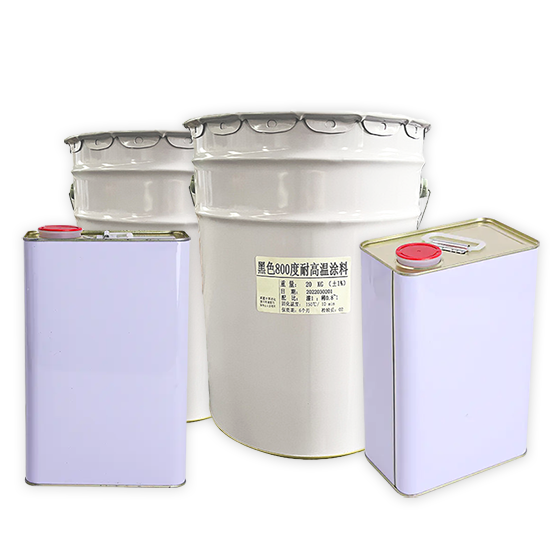
ALT: Konaz heat-resistant coating product packaging (product-series image, not a verified stove-case formula)
What belongs in the first RFQ
Send the stove-body drawing and name the surface to be coated. Add the metal grade, pretreatment, target finish and the best available temperature profile for the exterior surface. Then describe how much time the factory has for drying, how coated bodies are stored before assembly and whether a controlled baking line is available.
Ask the supplier to identify the proposed formulation and its documented application and curing requirements. The next step is a small trial made using those conditions, with acceptance checks performed on the real components.
Conclusion
A stove coating can be suitable for room-temperature drying without every stove design sharing the same approval. Keep the process decision separate from the heating-performance decision, and preserve the evidence for both. That is a sound basis for a production release and for investigating changes in later batches.
FAQs
Does Konaz publish an air-drying wood-stove coating case?
Yes. Its stove application page reports 24 hours at room temperature for the particular semi-matte black coating and describes natural-condition curing. Confirm the exact grade before applying that schedule to a new product.
Does a stove paint have to be baked at 280°C?
Not necessarily. That temperature appears in some general Konaz application guidance, while the stove case records an air-dry method. Follow the instructions issued for the specific formulation and production line.
What should be inspected after the first heating cycle?
Compare the finish with its reference at the marked locations, including edges and welds. Look for color change, chalking, cracking, blistering or loss of adhesion, then repeat after cooling where the service profile calls for it.
Can a test coupon replace a coated stove body?
A coupon is helpful for controlled comparisons, but it may miss the geometry, heat distribution and handling conditions of the finished stove. Use production-representative parts before approval.
When should the factory repeat its coating approval?
Reassess the old result when a relevant input changes, such as the coating formulation, metal, surface treatment, film build or drying route. Engineering and quality should decide whether another trial is needed.