High temperature powder coatings are commonly used in extreme environments like exhaust components, fireplaces, industrial ovens and heavy industrial machinery. The surfaces of such items are frequently exposed to extreme temperatures in a continuous cycle, reaching and even exceeding temperatures of 600°C and more over long periods. Powder coatings that are designed for such high temperatures are highly heat-resistant and very durable in addition to offering superior corrosion protection. Not infrequently, however, items that have been coated with a high temperature powder coating will develop visible color change after being subjected to such high temperatures for a long time.
Color change of coated articles stored at high temperatures has serious consequences for manufacturers, OEM suppliers and coating applicators. High color change often signifies poor coating performance. The reason for color change and the related coating performance can be linked to pigment, resin and to the coating’s oxidation resistance. Knowledge of these factors is crucial to the production of quality articles, the image of brands, and to the selection of the correct coating for long-term use on industrial articles.
This article will explain the color change of high temperature powder coatings at about 600°C and describe the change in relation to the composition of a coating, the environment and application.
What Causes Color Changes in High Temperature Powder Coatings?
The paint of high temperature coatings may change color at about 600°C. This can be due to chemical and physical changes within the paint. High temperature resistant coatings are special paint that can withstand temperatures of 200-800°C+ and still have strong adhesion and no blistering/peeling. They are often used as a long lasting protective coating for things such as gold melting buckets, pet incubators and fireplaces. Although high temperature resistant coatings are resistant to high temperatures the optical appearance of the coating can still change at high temperatures.
Thermal Degradation of Pigments
As temperature is raised, organic pigments will undergo deterioration, such as decomposition or oxidation, which are irreversible and bring about color change to darker shades. While inorganic pigments, iron oxide or chromium oxide for instance, are more temperature stable, some might change in shape or undergo transformation in crystal form and, therefore, change in light reflectance. The color of metal oxides depends greatly on the oxidation state of the metal and in some cases even upon partial reduction that may take place upon heat treatment and bring about change from reddish to brownish tones. This change is especially pronounced upon repeated thermal treatment.
Oxidation Reactions in the Coating Matrix
The resin matrix itself plays a crucial role in color stability. Under high heat, oxygen diffuses into the coating surface and initiates oxidative reactions within both the binder and pigment phases. This process results in thin oxide film formation that modifies surface reflectivity. Controlled curing environments with limited oxygen availability can mitigate these effects by reducing premature oxidation during initial crosslinking.
Influence of Binder Chemistry on Color Stability
Heat stability of colored coatings during prolonged exposure is highly dependent on the binder. Silicone-based coatings are far better in this regard than typical polyester- and epoxy-based systems. Due to the Si–O–Si backbone of silicone, very high temperatures, in excess of 600°C, are well withstood without any loss of color. The crosslinking density of a coating is also a major factor. The higher the crosslinking, the greater the mechanical strength and the better the coating is able to resist pigment migration. Additives such as antioxidants and UV-stabilizers can also help in color retention by neutralizing any reactive radicals that are formed in the coating during heating.
How Do Environmental Factors Affect Color Retention at 600°C?
Even within thermally stable formulations, long-term color stability of high temperature industrial equipment coatings can be influenced by a number of environmental factors.
Role of Oxygen Concentration and Humidity
High humidity increases the rate of hydrolysis and oxidation reactions occurring within the coating film. In addition to these reactions, oxygen rich atmospheres cause pigment to oxidize, resulting in color change or fade. A protective topcoat with low oxygen permeability can prevent the coating film from coming into direct contact with gases reactive to oxidation as well as with moisture.
Impact of Substrate Material and Surface Preparation
Compatibility of the substrate with the color is very important. Since metallic substrates expand more than the powder coating during the heating up, cracks occur. These cracks will open up the underlying color to the air, which will then oxidize. Therefore, for high temperature applications (exhaust pipes, barbecues, fireplaces), surfaces must be pre-treated to remove oil and rust (e.g. sandblasting). There are also different powder coatings that are designed for different temperature ranges. It is very important to choose a powder coating that is compatible with the substrate. Also, make sure that the coating is applied to the correct thickness (20–30μm) and that it is dry/cured according to the manufacturers instructions. Proper surface cleaning is very important to achieve good adhesion. In addition, it will prevent catalytic reactions to occur from residual oxides on the surface. These oxides can cause the coating to degrade faster at higher temperatures.
Why Does the Optical Appearance Shift Even When Structural Integrity Remains?
Note that a change of color does not necessarily indicate coating failure. Instead, it more likely reveals processes of microstructural change instead of mechanical failure.
Light Scattering Due to Microstructural Changes
Thermal cycling may also cause surface of inorganic pigments to change, such as increase of surface roughness and coarsening of grains. This change on surface causes light to be scattered differently. Even though the color has not changed chemically, brightness and color tone is perceived differently.
Formation of Thin Oxide Films on the Surface
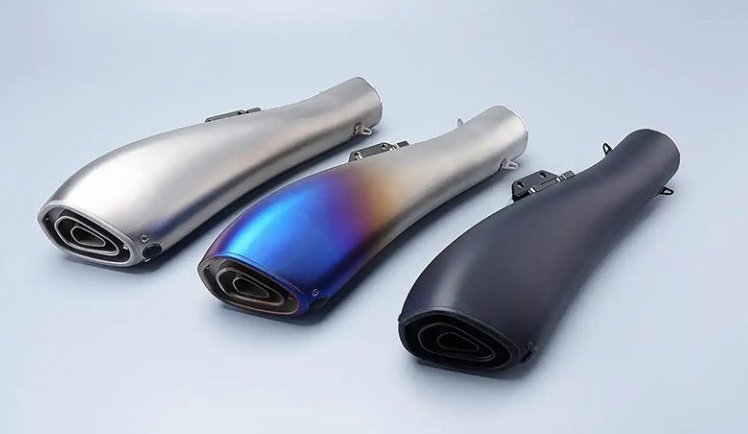
A very thin oxide layer will form on surfaces at 600°C. The colors of thin oxide layers will interfere as with heated metals, and show up in iridescent blues, through pale grey, to dull grey depending on the local thickness gradient. The colors here are physical effects of wavelength-dependent reflection; there is no pigment degradation.
What Can Be Done to Enhance Color Stability of Industrial Equipment Coatings?
Industrial equipment is exposed to continuous high temperature service. In this service, a high temperature resistant coating is required that will provide protection as well as durability and good appearance for long endurance.
Selection of Heat-Stable Pigments and Binders
Inorganic pigments such as iron oxides or mixed metal oxides are recommended for high temperature applications above 600°C. High-temperature resistant paint is formulated in a special way to withstand 800℃ high-temperature environments for the long term, without fading or discoloration. Silicone resin systems are more resistant than organic systems. They are flexible and prevent pigment from oxidizing by encapsulating it.
Optimizing Curing Processes for Thermal Endurance
Control of curing parameters is critical in achieving color stability of polymer films. A controlled temperature ramp-up during the curing process can prevent early degradation of sensitive ingredients. Additional post-cure treatments can aid in achieving more uniform crosslink density throughout the film thickness, which improves both gloss and heat stability under end use conditions.
Maintenance Strategies for Prolonged Color Consistency
Early detection of discoloration by regular inspection is key to preventing any potential damage to the material. For cleaning up surfaces to be reflectively uniform, non-abrasive cleaning agents should be used to avoid stripping protective oxide layers from being scraped off. Keeping surfaces clean will also prevent localized overheating caused by soot from being blown around in industrial environments.
How Does Foshan Konaz Technology Co., Ltd Support High Temperature Coating Applications?
Foshan Konaz Technology Co., Ltd is a leading provider of innovative industrial high temperature coatings for harsh environments above 600°C that are used on furnaces, exhaust duct work and other large machinery items that are typically housed in exterior locations.
Expertise in Advanced Formulation Design
Merk focuses on powder coating using silicone-based technologies that have high heat resistance and excellent color retention. Ongoing R&D efforts concentrate on improving the stability of pigment dispersion in the silicone matrices to prevent agglomeration when subjected to repeated heat cycles while maintaining surface appearance. This technology can be used to coat very large surfaces and maintain excellent optical properties.
Commitment to Quality and Industrial Performance
We test all our products in simulated cyclic heating service, typical for industrial use. In our testing we check the adhesion after heating up and down several times, we check for corrosion in oxidizing atmosphere and we check the reflectance after the aging test. We make special formulations for special service conditions like continuous service temperature and special colors to match a customer’s brand identity.
Key Insights on Managing Color Change at Elevated Temperatures
High temperature powder coatings undergo visible color change at temperatures around 600°C. The color change is a result of a combination of factors including chemical oxidation, pigment change of phase and thin-film interference. However, by selecting appropriate inorganic pigments that are resistant to high temperature degradation and by using a suitable silicone binder system and following an appropriate curing process and regular maintenance, the color change can be controlled to ensure the coating retains its good mechanical durability and appearance.
High-temperature resistant coatings have several advantages: 1) Easy application and long service life of coatings; 2) Weather resistance coatings, resistant to all climates; 3) Temperature resistance of 200–800°C; 4) High coating efficiency and cost-effectiveness; 5) Strong coating impermeability preventing peeling and chalking. Modern industry needs solutions for industrial equipment not only providing protection and maintaining appearance in high-temperature operation but also having functional properties.
FAQs
1. Why does my high temperature coating turn brown or gray after several heating cycles?
Browning of paint can be caused by the paint undergoing oxidation reactions involving metal oxide pigments and/or deterioration of paint binders over long periods of time at high temperatures.
2. Can color change be completely prevented at 600°C?
Total removal of paint from inorganic surfaces is unlikely, however surfaces treated with inorganic paint colors dissolved in silicone-based paint systems remain unchanged for long periods of time with minimal visible deterioration.
3. How does surface preparation influence color stability?
Insufficient cleaning of the surface will lead to poor adhesion of the coating to the substrate. When heat is applied, uneven heat transfer will occur causing localized discoloration through differential oxidation rates.
4. Are all high temperature coatings suitable for continuous operation above 600°C?
No; only formulations specifically engineered with thermally stable binders like silicones should be selected for continuous service beyond this threshold based on verified laboratory testing data.
5. What industries benefit most from stable high temperature coatings?
There are many industries that require highly specialized surface finishes to achieve durability and appearance consistency such as automotive exhaust manufacturing, power generation turbines, aerospace propulsion systems, foundry metal processing, and other heavy machinery.