
A grill lid leaves the factory with an even black finish. Months later, a customer finds brown marks near a hinge and a dull patch above the firebox. Both are called “paint failure” in the complaint, but they may have quite different causes. One could have started with moisture at a cut edge; the other may have appeared only after the grill was heated. The location of the damage is the first useful clue.
Start with the part, not the coating label
Ask for photographs before cleaning or touching up the grill. A rusty line following a folded lip or screw hole points the investigation toward exposed metal, edge coverage or trapped moisture. A broad discolored patch beside a hot zone deserves a different review: actual metal temperature, duration of use and the way the film was cured. Neither photograph alone proves the cause.
The same question applies to complaints reported just after delivery. Was the carton opened with corrosion already visible, or did the marks appear after several cooks? The answer changes what needs to be reproduced. For an export product, record the packing method and storage conditions as carefully as the operating conditions.
A grill has more than one heat exposure
A hood, firebox, side panel and bracket do not share one temperature. A coating trial based on the hottest advertised figure can overlook what happens on the visible lid, where color and gloss matter, or around a bolt, where water may collect. Mark the coated surfaces on the drawing and identify which ones are exposed to flame, smoke, grease or outdoor weather.
If the team has not measured the metal, use “temperature to be confirmed” in the RFQ. The thermometer reading inside the cooking chamber is not automatically the temperature of the outer sheet. It also matters whether the panel stays hot for an hour or only sees a brief rise when the grill is started.
What the Konaz BBQ case can tell a buyer
In its BBQ grill application case, Konaz describes a sprayed, silicone-based matte black coating for outdoor grills. The published project lists continuous heat resistance up to 800°C and a bake at 250°C for 15 minutes, followed by heat exposure in service. It also discusses grease, moisture and appearance. Those are facts about that reported application, not a cure instruction or temperature approval for every grill component.
For a new design, request the formulation identification, substrate and coating thickness behind the sample. If a supplier offers a different product or the factory uses a different bake cycle, the case result should not be copied into the acceptance sheet without a fresh check. Konaz’s heat-resistant coating product information is useful background, but the current technical data for the proposed grade takes priority.
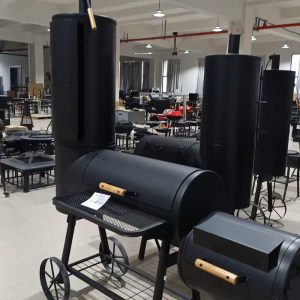
ALT: Black BBQ grills shown in the Konaz high-temperature coating application case
Test the failure that customers actually see
A heat-only coupon is not enough when the complaint is rust around the lid hinge. Make a small trial with real production parts, including the cut edges, folded seams and fastener holes. Photograph those areas after coating, after the agreed heat exposure and again after the chosen moisture or storage assessment. The same marked locations should be checked each time.
For the hot areas, look at color shift, gloss change, chalking, bubbling and loss of adhesion. For the outdoor areas, look for the starting point of rust and whether the coating remains sound around it. Do not describe a stained surface as a heat failure before checking whether grease or cleaning residue is involved. A simple cleaning check using the product’s intended method can help separate removable residue from damage to the finish.
If the grill has parts that touch food, keep that question separate. A heat-resistance claim does not establish food-contact suitability. The buyer needs documentation for the exact formulation, part and intended use, or a different finish for that area.
Check what the factory can reproduce
The approval sample should come from the production route, or any differences must be recorded. Surface preparation, spray technique, film build, flash-off time and oven conditions can all change the result. Pay particular attention to heavy lid assemblies: a stated oven setting tells little about how fast the metal itself reaches the intended curing condition.
Keep one approved reference panel beside the trial record. If the next batch shows a different black shade or starts to lift at a seam, quality staff need something more precise than “same paint as last time.” The formulation version, substrate, pretreatment and cure record give them a starting point.
What to send with the coating enquiry
A useful enquiry contains the latest drawing, metal grade and surface preparation; it also identifies the visible faces and the areas exposed to flame or moisture. Add measured normal and peak temperatures where available, the appearance standard, intended cleaning method and current production equipment. If the factory is still investigating a defect, include clear photographs and explain when the damage first appeared.
Ask the supplier to respond to the unknowns rather than fill them in silently. A trial is worth doing only when its results can be compared with the part that will actually be sold.
Conclusion
Heat damage and moisture corrosion can look similar once a black grill finish has deteriorated. An OEM gets a better answer by tracing the mark to a particular part, exposure and production record before changing coating grades. That also makes the next approval sample more useful.
FAQs
Can one heat-resistant coating be used on every part of a BBQ grill?
Not automatically. The lid, firebox and food-contact components can have different heat, exposure and compliance requirements. Approve each relevant use, not just one headline temperature.
Why does rust appear around a hinge when the rest of the lid looks fine?
Holes, cut edges and tight joints can retain moisture or have different coating coverage. Inspect the actual joint before attributing the mark to the coating formulation.
Is a 250°C, 15-minute bake suitable for every Konaz grill coating?
No. That schedule appears in a particular Konaz BBQ case. Confirm the current formulation’s instructions and the temperature reached by the coated part on the production line.
Should the trial include both heating and outdoor exposure?
Yes, if both occur in service. Record the selected heat and moisture conditions, then inspect the same edges, panels and joints after each stage.
What if a coated grill surface may contact food?
Request evidence specific to the formulation and intended contact conditions. Neither a matte finish nor an 800°C rating establishes food-contact compliance.


