A thorough request for quotation enables a supplier to suggest the proper high-temperature powder coating. It helps them prepare appropriate samples. It also allows them to calculate exact pricing. Asking merely for “black heat-resistant powder” leaves numerous essential questions unresolved. The supplier additionally requires details regarding the coated part. They need to know the operating temperature and the metal substrate. Information about the desired appearance, application process, and performance tests is crucial. Order quantity and delivery destination must be specified as well. Providing these facts early can minimize repetitive communication. It prevents unsuitable samples and avoids production delays. It also lowers purchasing risks.
What Should You Explain About the Coated Component?
The initial section of an RFQ must outline what the coating will cover. It should explain how the completed component will function. Products facing comparable temperatures might still need distinct coating solutions. This happens because their shapes, substrates, and working environments differ greatly.
Which Component Details Are Important?
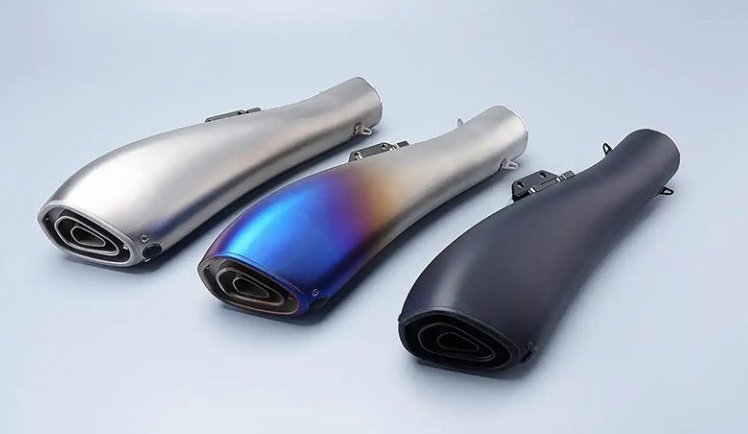
Start with the name and function of the item. Common applications feature motorcycle exhaust pipes and automotive mufflers. BBQ grills, ovens, and fireplaces are typical examples. Stoves, chimneys, boilers, industrial furnaces, and high-temperature pipelines also need these coatings.
The RFQ must pinpoint the substrate. Examples include carbon steel, stainless steel, aluminum, or another metal type. Provide the rough dimensions and the metal thickness. Mention the surface condition and any distinct structural traits. Welded spots, sharp edges, and deep corners can influence the process. Enclosed sections and intricate shapes might alter surface preparation and powder application.
Drawings and pictures serve as highly beneficial additions. They permit the supplier to examine the shape of the part. Therefore, they can spot potential coating hurdles prior to making a sample.
What Temperature Information Should You Provide?
The phrase “high temperature” remains too vague for a precise product suggestion. A coating facing a constant 300°C encounters different stresses compared to one that briefly hits 600°C during use.
How Should Heat Exposure Be Described?
Specify the standard operating temperature and the maximum continuous temperature. Note the short-term peak temperature and the length of each temperature spike. The supplier must also understand how often the component warms up and cools down.
Direct flame contact needs to be noted separately. A part placed near a flame does not necessarily face the same conditions as a surface directly touching it. Detail where the flame sits and how long the contact persists. Clarify if only a single section of the component achieves the maximum temperature.
Konaz offers its high-temperature powder coating for rigorous applications. These include exhaust systems, BBQ grills, ovens, and fireplaces. Furnaces, boilers, and pipelines are also covered. Its product data indicates heat resistance reaching up to 800°C. Purchasers must still ask for a product suggestion founded on their specific operating conditions and necessary test methods.
What Appearance Requirements Should Be Included?
Performance usually stands as the primary concern. However, color, gloss, and texture can likewise impact product acceptance. The accessible finish might shift based on the operating temperature and the chosen formulation.
How Should You Describe the Required Finish?
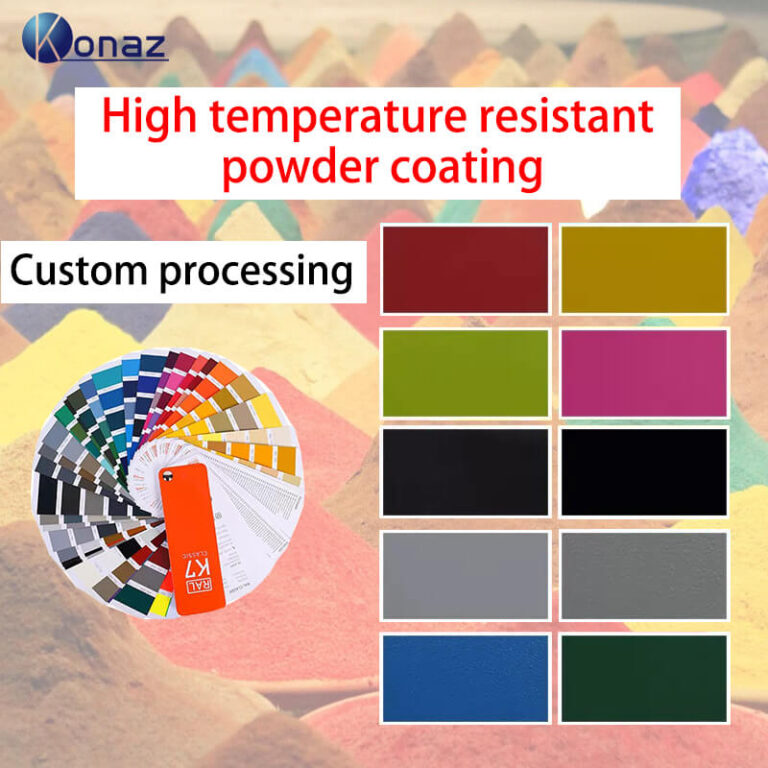
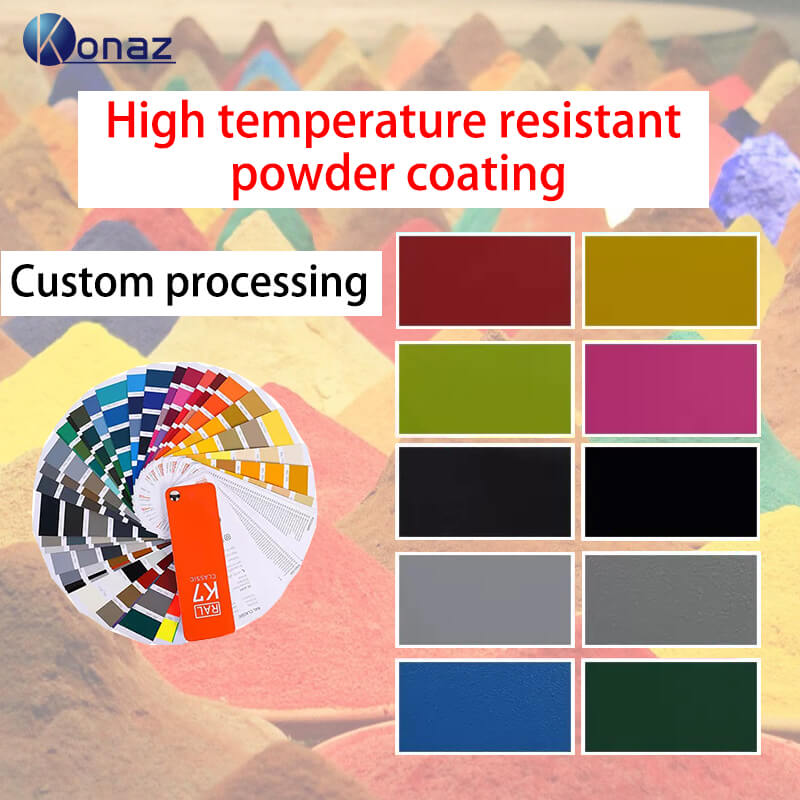
Steer clear of asking merely for a broad color like “black.” Clarify if the goal is matte black, satin black, or glossy black. Metallic black or another exact look should be specified. A widely known color code can offer a preliminary guide. However, a physical panel proves much more practical when precise matching is demanded.
The RFQ must additionally indicate the preferred gloss level and texture. Film thickness and allowable color variation should be stated. Clarify if the coated item remains visible to users or stays hidden inside machinery. Decorative surfaces might demand stricter boundaries for color uniformity and surface evenness.
Purchasers must also state if the coating needs to keep its color and gloss following heat exposure. The initial look and the appearance after successive heating represent distinct approval criteria.
What Application Information Does the Supplier Need?
An appropriate powder must align with the client’s current coating procedure. Sharing details about the production line assists the supplier. They can suggest a fitting curing schedule. They can also create a more accurate sample.
Which Process Conditions Should Be Shared?
Detail whether the application is manual, automatic, or a mix of both methods. Specify the spray equipment kind and the accessible oven temperature. Line speed and the regular curing routine must be shared. The supplier needs to comprehend both the oven setting and the rough time needed for the metal part to hit the target heat.
Surface preparation must also be clarified. Pertinent details might involve degreasing, sandblasting, or shot blasting. Phosphating or another pretreatment method should be noted. The purity and texture of the metal surface can heavily dictate coating adhesion and the ultimate look.
For plants that currently utilize multiple powder products, describe how the line is washed between colors or mixtures. Leftover powder can alter the look of a high-temperature coating. This is especially true when a sleek or uniform finish is demanded.
Which Performance Tests Should Be Requested?
Testing criteria must be settled prior to sample acceptance. An unclear plea for “good heat resistance” fails to offer the supplier or purchaser a quantifiable passing benchmark.
How Can Buyers Define Approval Criteria?
The RFQ must pinpoint the necessary test temperature and the exposure duration. The count of heating cycles, substrate, pretreatment, and checking technique should be listed. Based on the application, purchasers might ask for adhesion or heat exposure tests. Thermal cycling, film thickness, color shift, or gloss change evaluations may be needed. Corrosion resistance, chemical resistance, or abrasion testing could also be requested.
If a direct flame forms part of the planned usage, detail the flame test parameters. Do not merely ask if the coating resists flames. The gap from the flame and the length of exposure must be noted. Substrate thickness and passing standards should all be documented.
For crucial OEM tasks, the purchaser can ask for sample powder. They can create coated panels utilizing the planned production line. One accepted panel must be kept as a guide for subsequent batches.
What Commercial Information Produces a Better Quotation?
Technical data dictates if a coating fits the job. Commercial specifics permit the supplier to figure out production, packing, and transit expenses.
What Should Be Included in the Purchasing Request?
Specify the volume needed for samples and the anticipated initial order. The projected monthly or yearly demand should be stated. The supplier must also realize if the task demands standard packing or smaller bags. Private-label packing or customized labels might be needed.
Mention the destination nation and the delivery port. The favored trade term and the necessary delivery date should be included. Any paperwork required for customs clearance or client approval must be listed. When OEM or ODM service is demanded, clarify the anticipated degree of customization. This includes color creation, performance tweaking, packing layout, or branded tags.
It proves highly beneficial to mention if the task sits at the assessment phase or the pilot-production stage. It might also be prepared for mass production. This permits the supplier to organize samples, raw materials, and manufacturing capacity much more efficiently.
Why Choose Foshan Konaz Technology Co., Ltd.?
A dependable supplier must assess both coating capability and the client’s manufacturing setup. It must also deliver steady backing from sample creation all the way to bulk shipment.
How Can Konaz Support B2B Customers?
Foshan Konaz Technology Co., Ltd. provides high-temperature powder coatings for diverse sectors. These include automotive, motorcycle, household, commercial, and industrial metal parts. Its product data emphasizes heat resistance, adhesion, and corrosion defense. Wear resistance and finish steadiness are also highlighted.
The enterprise backs OEM and ODM manufacturing alongside custom formulations. Bulk requests and export shipments are handled. These skills can assist coating applicators, equipment makers, and distributors. Private-label clients looking for items for varied temperature spans and uses can also benefit.
Conclusion
A practical high-temperature powder coating RFQ must plainly detail the component and the substrate. The standard operating temperature and the peak temperature need to be stated. Direct-flame situations, the preferred finish, and surface preparation are vital. The curing routine, test criteria, order volume, packing, and destination must be outlined.
Exact data assists the supplier in picking a fitting mixture. It helps them create a relevant sample. It additionally boosts quotation correctness and builds a distinct quality guide for mass production. Dedicating extra time to the RFQ can consequently conserve time during testing and purchasing. It also speeds up the final product acceptance.
FAQs
Can I Request a Quotation Without Knowing the Exact Operating Temperature?
Yes, you can. However, the supplier might only offer an initial suggestion. Before accepting a sample, verify the standard temperature and the maximum continuous temperature. Confirm the short-term peak temperature and the length of heat exposure with your engineering or manufacturing crew.
Should I Send the Supplier an Actual Metal Part?
It is not always required. Yet, it can prove highly beneficial for items possessing unusual shapes or welds. Sharp edges, deep corners, or distinct pretreatment demands make a physical part useful. A drawing, picture, or sample substrate might also supply sufficient data during the early quotation phase.
Is a RAL Number Enough for Color Matching?
A RAL number acts as a practical starting point. However, it might not ensure a flawless match. Substrate, gloss, texture, and film thickness can alter the outcome. Curing conditions and heat exposure can all shape the ultimate look. A physical reference panel is strongly advised when exact color matching is demanded.