
Floor area and colour aren’t quite enough information for a repaint order, although they might seem enough at first. The awkward question is what happens to the old finish. If you intend to keep it, the new epoxy floor paint will depend on it staying attached to the concrete. You could be keeping a perfectly sound coating, or covering a layer that is already letting go. It is worth finding out before you order the paint.

Who Knows What Was Used Last Time?
Try whoever ordered the last paint. They may have the invoice or specification. A product name gives the contractor something to check; a photograph mostly tells them the colour. "It has always been epoxy" may be what everyone calls it, but what was actually supplied?
What if the records have disappeared?
Write "existing coating unknown" in the enquiry so the contractor knows investigation is needed. Even with an invoice, ask about repairs. Matching colours don’t establish that a patch used the original product.
KONAZ Epoxy Floor Paint is a two-component product for factories, warehouses, parking areas and basements. "Suitable for warehouses" answers an application question, though, not the question of whether it can go over an unidentified finish in yours.
What Is Wrong with It?
A scratched patch is easy to dislike when you want the floor to look smart again. A peeling patch may look no worse from a distance, but the installer has an extra problem there: something has detached. Writing "worn floor" in the enquiry doesn’t distinguish between them. That distinction matters when deciding what work to allow for.
How do you agree on the removal scope?
Beside the loose patch, the question is whether the trouble extends into apparently sound paint nearby. That is something to discuss on site. A photograph of the doorway or machinery around it helps locate the problem later; close-ups alone lose that context. There should be a record of sound-looking floor as well.
Unsound paint needs removing. For the rest, ask what evidence the installer needs before approving it as a base. If adhesion testing is needed, agree on the method and acceptable result for the proposed system. A scratch with a key is no substitute.
Has This Been Repaired Before?
The useful comment may be, "We repaired that before, and the blisters came back." A visitor won’t learn that by looking. Oil is another example: once it has been cleaned up, there may be little to show how it collects during normal operation. Whoever looks after the building can fill in that part of the story during the survey.
"It looks dry now" doesn’t settle the moisture question. KONAZ discusses this in its concrete moisture testing guide. Ask about testing where removal exposes concrete, and get the requirements for the material you intend to use. A figure found online for somebody else’s product won’t tell you whether this system can go down.
Oil can’t simply be left for the mechanical preparation to deal with. It needs cleaning away first, rather than spreading further across the floor. Where washing is proposed, ask when drying will happen. As for an active leak, painting over the affected area while it is still leaking leaves you with the same cause beneath a different colour.
What Does "Prepare and Recoat" Include?
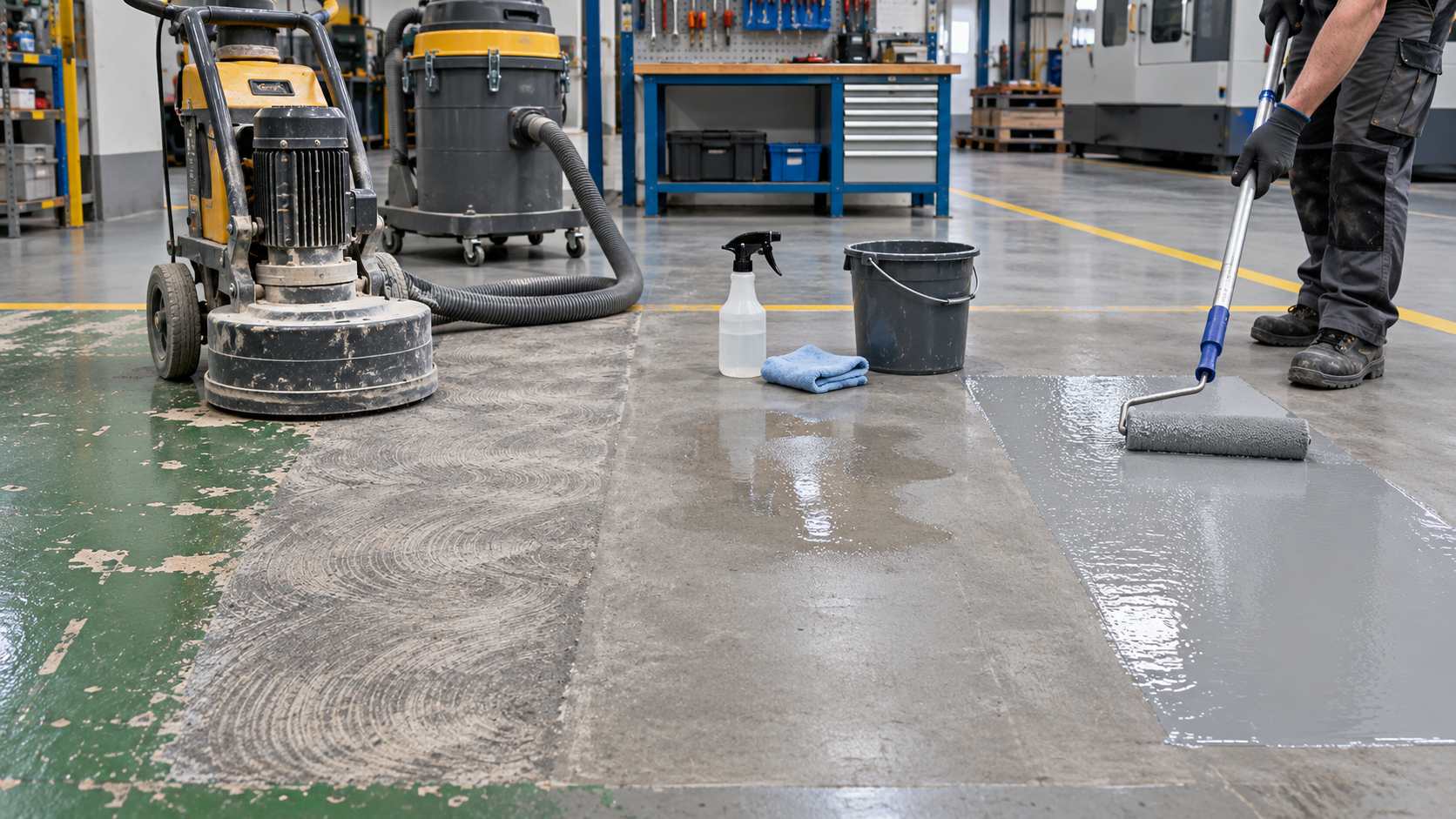
It would be hard to approve "preparation" afterwards without having agreed on what it meant. A glossy old finish may need abrasion even after washing. Dust from the preparation has to be removed as well. The description should explain those operations for the selected system, otherwise "prepared" can mean one thing to the buyer and something else to the crew.
Would a trial settle the question?
If you are unsure about compatibility, this is worth asking about. You want to see the proposed work on a representative area, with the cleaning and preparation that will actually be used. It is no use approving an unusually well-prepared demonstration if the main floor will get something different. Agree beforehand when to inspect the trial and what adhesion and appearance you will accept.
Success in a clean corner won’t settle the question of an oily repair elsewhere. That needs assessing separately.
What Can You Order from KONAZ?
KONAZ publishes a 20 kg two-component set for its epoxy floor paint, with a glossy finish. The colour options listed are green, grey, blue and custom colours; application can be by trowel, roller or spray. Those are details to bring into the order once the floor assessment and proposed system are settled.
There is room in the enquiry for the floor’s uncertainties as well as its dimensions. With photographs and the available coating records, the supplier has something to review when discussing preparation and the proposed system.
Why Check the Quotation Beyond the Paint Price?
Suppose one price includes stripping the floor and another leaves most paint in place. Comparing the totals wouldn’t tell you which offer was better; first you would need to know why they had priced different jobs. Get removal and repairs described separately from the coating work. Ask what happens to the price if the inspection uncovers more loose material.
And what does the promised reopening date mean? There is a difference between touching dry paint and running vehicles over it. The answer has to come from the chosen system’s instructions, with the expected traffic made clear to the supplier before the date is booked.
Conclusion
By the time you enquire about a renovation, you may know the old product name, where it has failed and what the floor will be used for. Or some of that may still be unknown. Either way, putting it in the enquiry makes the remaining questions visible. Retaining the coating can then be a considered part of the job, rather than something everyone assumed to save work.
FAQs
Can new epoxy stop old paint peeling?
No. Loose paint needs removing; a new layer will still depend on that weak base.
Does sound epoxy always have to be removed?
No. It may remain where compatibility and preparation requirements are satisfied after assessment.
When can traffic come back?
The supplier’s instructions for the selected system should answer that. Feeling dry is not enough to establish readiness for working traffic.


