
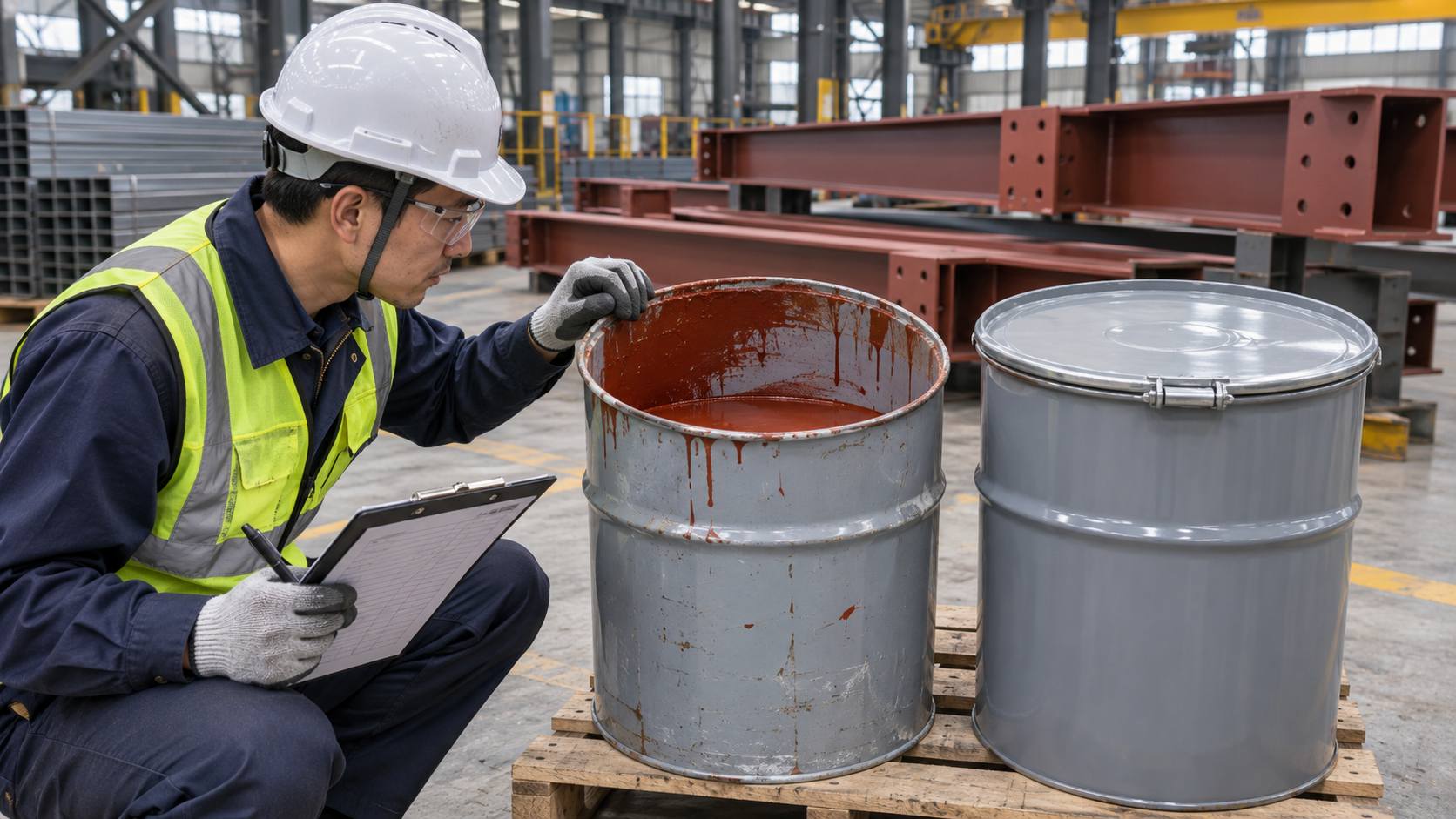
“There is some paint left” is useful news when you are placing the next order. It would be a pity to buy twice. But before deducting a part-used drum of anti rust paint, you need to know what came back and whether it can actually go into the next run.
What Does the Product Information Actually Confirm?
“Twelve months” sounds like a simple answer until the drum comes back opened. On the KONAZ Anti-Rust Paint page, that period belongs to sealed containers kept cool and dry. There is no matching figure for a part-used drum. The number is useful for one stock decision, but it cannot settle the other.
There is a date to check as well. The information does not say when the count begins. It would be easy to use the delivery date because it is on the receiving slip, but that may not be the date KONAZ intends. Ask which applies to the batch and put the answer beside the receiving record.
Does replacing the lid make a used drum sealed stock?
“We put the lid back on” is not much of a history. The buyer still needs to know when it was opened and what happened between jobs. Neither point appears in the available product information. A batch number, together with the painter’s recollection, gives KONAZ something specific to consider when advising on the remainder.
What Can the Return Quantity Tell Purchasing?
The returned drum can be weighed to establish the amount on hand. The product’s theoretical coverage, about 6–8 m²/kg per coat, helps estimate a fresh order: 20 kg works out to roughly 120–160 m² per coat on paper. It does not convert returned weight into approved usable quantity.
You can show the returned drum beside the forecast without deducting it yet. That way, the buyer sees the possible saving without promising paint to production before it is cleared. Once the supplier has answered, the quantity available for the run can change. Until then, “on site, awaiting guidance” says more than a single inventory total.
Which Details Are Worth Keeping with the Drum?
A product name and batch number let you trace the material. The job number connects it to the last run; receipt and return dates, opening status and location explain where it has been. If nobody knows the opening date, write “unknown.” That is an honest gap for the next buyer to investigate.
“Anti-rust paint, half full” may be enough for the person returning it, but not for the buyer who sees the note a month later. If the job number or batch mark is missing, the buyer has to go back to the people who handled it. A quick conversation with the painter can recover what they remember; anything else should stay unknown rather than becoming a guessed date in the stock record.
Where Should It Wait During the Gap?
The published storage direction for sealed drums is “cool and dry.” There is no temperature range alongside it. A factory needing a numerical limit will have to ask KONAZ for that detail. Location can cause a less technical problem during a pause: the paint is in the factory, just not where the inventory says. Record a move from stores to the line and back so the next shift can find it.
The people issuing the paint need access to the product label and current safety data sheet. Request the current documents with the order. The information available here still leaves the opened-container period unanswered.
Now suppose the next run has slipped. Holding the full order means more stock waits on site; splitting the delivery means another receipt and freight terms to consider. Purchasing can compare those options against the revised production date. The returned drum may change the quantity once cleared, but it does not resolve the timing question.
Does the Next Job Match the Returned Paint?
The quantity might fit while the finish does not. Grey and red oxide are among KONAZ’s listed colours, with custom colours also available; the listed finishes are matte or semi-gloss. So “enough paint” is only part of the allocation decision. The work order still needs to call for what is in that drum.
That distinction matters when the returned amount appears to cover the next run. The forecast says how much; the work order says which material. Until both line up, the drum is useful to know about but cannot yet be treated as confirmed supply for that job.
And a matching drum does not tell the crew whether the steel is ready. The stock record describes paint; the site team assesses the metal. KONAZ’s steel structure painting guide covers checks on that surface.

What Should Purchasing Ask KONAZ?
KONAZ supplies anti-rust paint in 20 kg drums for applications including machinery and steel structures. Give the supplier the batch, opening status and planned next-use date. You need guidance about that remainder and the date basis for sealed shelf life. Request current technical and safety documents, plus a storage temperature range if the factory needs one.
When you contact KONAZ, include the schedule and return history. The reply should stay with the lot record; the buyer arranging the next run may be someone else.
Conclusion
The remainder may still reduce the next order. First it needs an identity and a decision about use, backed by its history and supplier guidance. Keep it visible in the forecast while that is unresolved, without treating the sealed-container shelf life as an answer for opened paint.
FAQs
Does an opened drum have the same shelf life?
The product information does not say so. Its 12-month period covers sealed containers kept cool and dry; ask KONAZ about the opened remainder.
Why isn’t weighing the return enough?
Weight tells purchasing the amount physically present. It does not establish whether that paint can be allocated to the next job. That decision also needs its identity, history and supplier guidance.
What should purchasing record when paint comes back?
Keep the product and batch identity, originating job, return date, known opening status and current location together. Mark missing details as unknown and ask KONAZ what applies before allocating the remainder.


