An exhaust component can leave the paint booth with an even heat-resistant finish and arrive at the assembly line with a scuff. At the customer site, the same part may show a dent from a carton separator or a mark where two coated pieces rubbed together. OEMs need a handling and packaging plan that protects the finished surface from curing through final delivery.
When Are High-Temperature Painted Parts Ready to Handle?
Touch-dry appearance is not the same as resistance to clamping, stacking or transport pressure. The earliest safe handling point depends on the selected coating and the actual production process.
Why Should OEMs Confirm the Curing Procedure?
The curing schedule must match the product formulation, part geometry and equipment. For its relevant liquid system, KONAZ lists oven baking at about 280°C for 15 minutes or natural drying for about 24 hours when baking is unavailable. Those figures describe the published application options, not a blanket guarantee that every coated part may be tightly packed at that moment.
What Should Workers Check Before Moving a Batch?
Make sure parts have cooled sufficiently for safe handling and that the coating is free from tackiness, lifting or visible soft spots. A hot component should never be wrapped simply because it has finished the oven cycle. Use clean gloves and approved contact points; dirt or metal chips on a rack can scratch the coating as soon as the part is lifted.
How Can Assembly Fixtures Prevent Coating Damage?
These locations are predictable and should be considered when fixtures and work instructions are designed.
Where Do Scratches Commonly Begin?
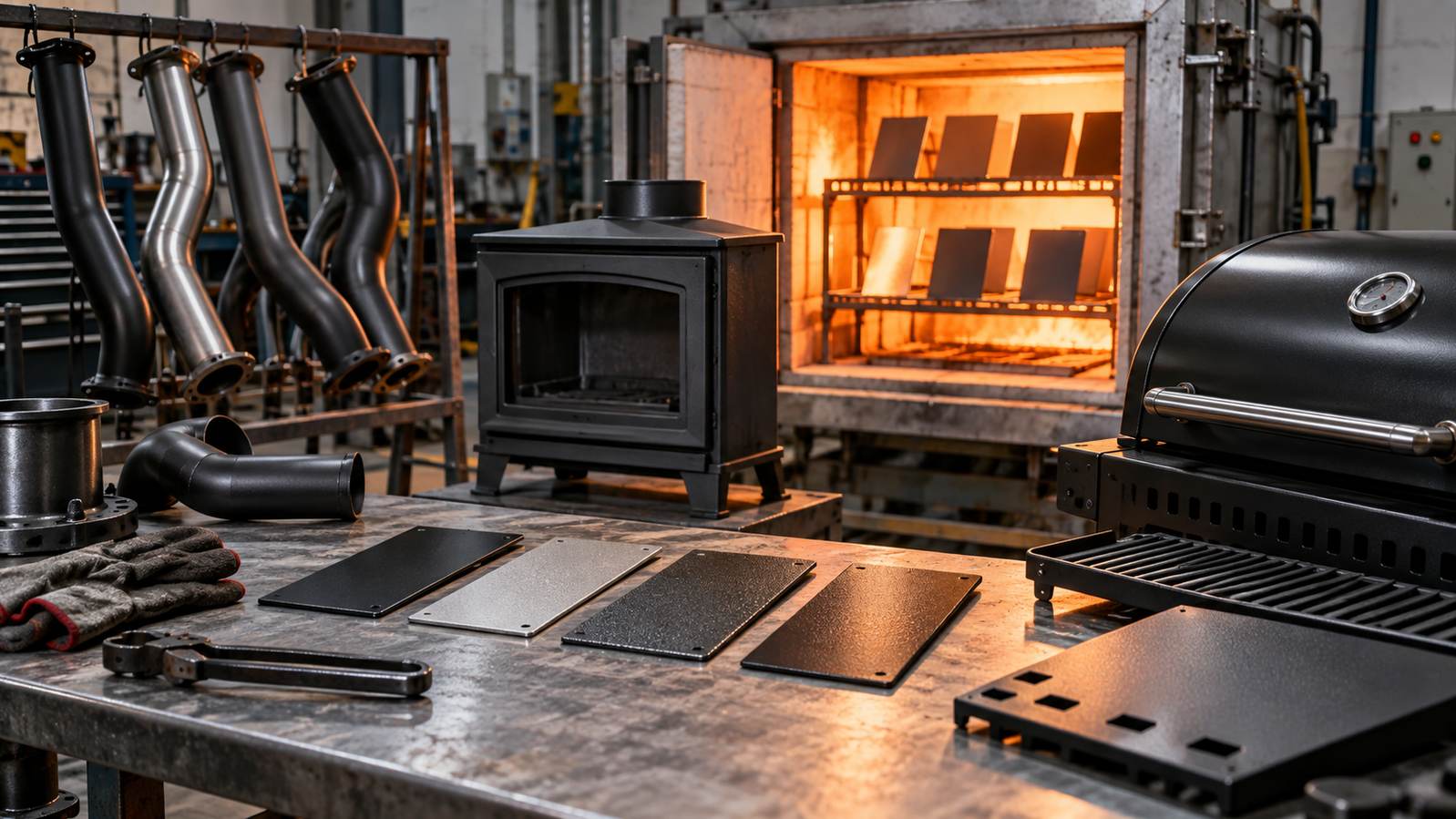
Metal hooks, vise jaws, sockets, conveyor guides and uncontrolled bench contact can mark a finished surface. Exhaust pipes may rotate against fixtures while brackets are installed; stove panels can scrape along a metal table when aligned. Review the workpiece path from coating rack to finished assembly.
Should Protective Pads Be Used on Every Fixture?
Select pads and liners for the part’s temperature, shape, load and coating compatibility. A soft material may protect a cool component but transfer residue or deform against a warm one. Avoid adhesive films or tapes unless the coating supplier and packaging team have qualified them for the actual dwell time and removal conditions.
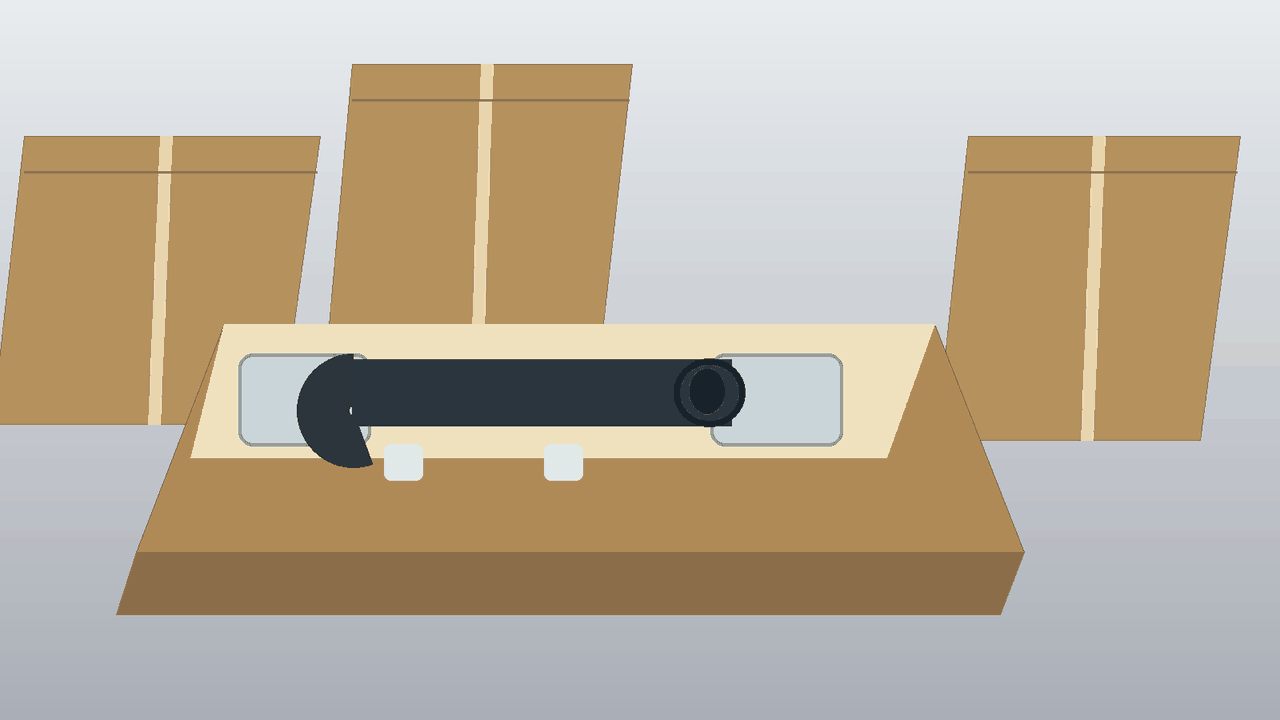
What Packaging Works for Coated Exhausts, Stoves and Grill Parts?
Packaging should prevent coated surfaces from touching one another, control movement inside the carton and distribute load through stronger structural regions of each part.
How Should Separators Be Positioned?
Use clean, compatible sleeves, dividers or shaped supports to isolate neighboring components. Keep the main weight away from thin coated panels or exposed decorative faces. For a curved exhaust tube, a cradle can support its geometry without letting the tube rub against a second part.
Why Should Buyers Inspect the Whole Pack, Not Just One Part?
A single protected sample does not represent a tightly loaded export carton. Verify the number of parts, packing density, allowed stacking height and the position of clips, bolts or loose accessories. Sharp hardware should be bagged or held separately so it cannot move across the coated finish.
How Can Shipping Tests Reduce Surface Complaints?
Transport combines vibration, impacts, changes in orientation and long periods of contact pressure. OEMs should validate the finished pack rather than relying solely on the appearance of an unpacked sample.
What Should a Packaging Trial Examine?
Pack representative production components with their real accessories and shipping materials. Apply the distribution tests required by the customer or logistics route, then unpack and inspect under consistent lighting. Look for scratches, rub marks, dents, coating transfer, trapped packaging residue and contact between parts. Check the bottom layer of stacked cartons as well as the upper layer.
How Should a Failed Trial Be Corrected?
Change the contact geometry, support location, divider strength or carton fit that caused the damage, then repeat the relevant test. Simply adding more wrap can increase pressure or trap contaminants. If the coating itself appears unusually sensitive, review surface preparation, film application and cure records before altering the packaging. The high-temperature paint thickness guide explains why coating build should follow the selected product recommendations.
What Should the OEM Shipping Specification Include?
A practical specification links production release, assembly handling, approved packaging and customer inspection. Without this connection, one department may approve a surface that another department damages later.
How Should Final Inspection Be Documented?
Define acceptance criteria for visible faces, contact zones, packaging residue and functional mating surfaces. Record any repair or rework and confirm that touch-ups use a qualified procedure. The high-temperature service-rating guide addresses temperature exposure, which is separate from mechanical damage in distribution.
What Can KONAZ Offer for High-Temperature Metal Products?
KONAZ offers KONAZ Heat Resistant Coatings for exhaust components, fireplaces, BBQ grills and other hot metal equipment. Its published application guidance covers substrate preparation, thin coating and drying or baking options. For an OEM program, buyers should confirm the formulation and curing plan alongside their own handling, assembly and shipping requirements rather than treating a heat-resistance rating as a packaging qualification.
Conclusion
Protecting high-temperature painted parts does not end when the coating has cured. A reliable delivery process verifies safe handling, controls fixture contact, separates components inside the package and tests a fully loaded carton. Inspecting the packed product after a realistic shipping trial reveals risks that a beautiful loose sample cannot show. Written release criteria and an approved pack design help OEMs preserve the finish they worked to achieve on the coating line.
FAQs
1. Is a part ready to ship as soon as the coating is touch dry?
No. Touch dry does not establish resistance to packing pressure or abrasion. Confirm the qualified curing and handling-release conditions for the actual product.
2. Can foam padding damage heat-resistant paint?
It can if the part is too warm, the foam is incompatible or contamination is trapped at the contact point. Test the selected materials on cooled, fully prepared parts.
3. What should be checked after a shipping trial?
Inspect for rub marks, scratches, coating transfer, dents, trapped residue and contact between packaged components; then correct and retest the pack design.