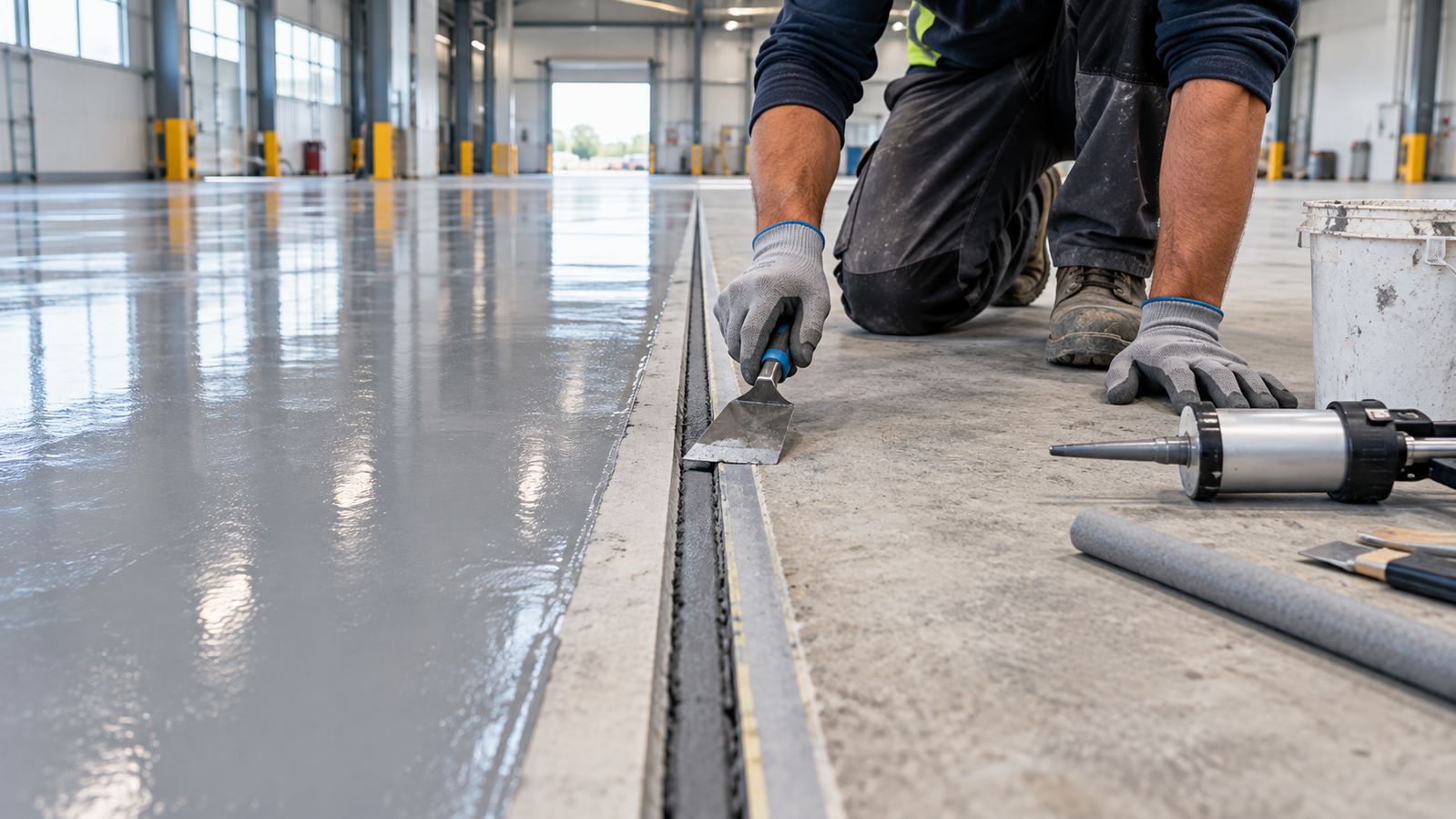
A freshly coated warehouse floor can look continuous and glossy, but a rigid finish across a working concrete joint may crack when the slab moves. Contractors sometimes treat every line in a floor as an ordinary crack that needs to be filled before painting. Before applying epoxy floor paint, the installer should identify each joint, assess expected movement and agree on a compatible finishing detail.
Why Should Contractors Identify the Joint Type First?
Different joints serve different structural or construction purposes. Their treatment should follow the building design rather than the visual preference for a seamless floor.
What Is an Expansion or Isolation Joint?
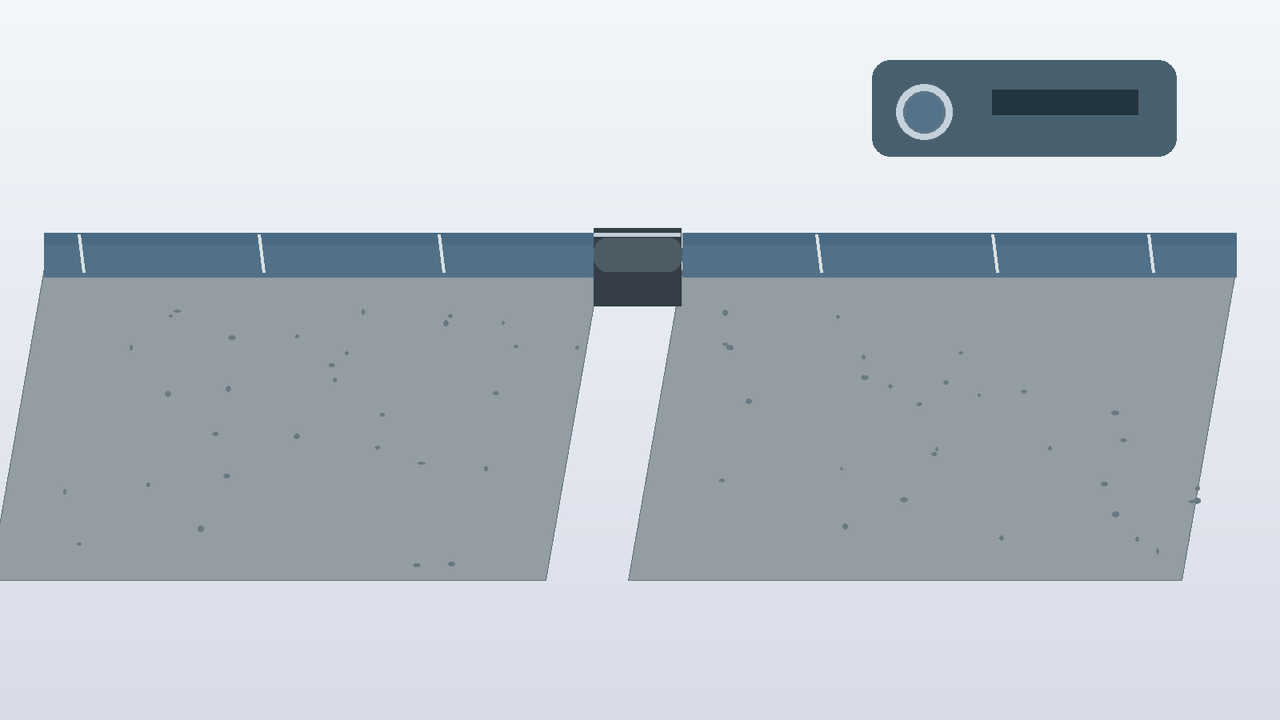
An expansion or isolation joint separates parts of a slab or separates the floor from columns, walls or other fixed elements. The gap accommodates specified movement. Filling it rigidly with ordinary epoxy floor paint can transmit movement into the coating, causing cracking or detached edges.
How Is a Saw-Cut Control Joint Different?
A control joint is introduced to influence where concrete shrinkage cracking occurs. A construction joint marks where separate placements meet. Their movement and treatment depend on slab design, loading and age. Ask for the slab drawings or consult the engineer if the function of a line is unclear.
What Should Be Inspected Before Any Joint Is Filled?
Inspection should cover both the gap and the adjacent concrete. Good coating adhesion around the joint cannot compensate for damaged edges or an active moisture problem.
How Should the Contractor Assess Joint Condition?
Record the joint width, depth, alignment, previous repairs and condition of both shoulders. Remove loose material, weak old filler, oil, dust and debris using methods suited to the concrete. Check for broken edges that need a separate repair before a new joint seal is placed.
Why Should Moisture and Movement Be Checked?
An apparently dry surface may hide slab moisture or leakage through a joint. Movement may also continue with temperature, settlement or loading. Record evidence of active opening, closing or vertical displacement and seek the responsible engineer’s direction where movement is uncertain. KONAZ’s guide to epoxy coating on moisture-prone concrete addresses the related substrate assessment.
How Should Expansion Joints Be Detailed Before Epoxy Application?
The objective is to protect the concrete edges and allow the designed movement. The coating system and the joint system should be selected together, with a clear boundary between them.
Should Epoxy Floor Paint Bridge an Active Joint?
A conventional rigid epoxy film should not be used as the sole bridge across a joint that must move. The installer should preserve the designated gap and follow the architect’s or engineer’s joint detail. Depending on the project, that may involve a suitable backer material, flexible sealant or engineered joint cover.
When Should Concrete Edges Be Repaired?
Spalled shoulders or weak concrete can undermine a newly installed joint seal. Repair them first with a compatible system and allow the repair to reach the condition specified for subsequent work. Prepare the surrounding slab to the epoxy manufacturer’s requirement while keeping debris and coating out of areas that must remain free to move. Masking and neat termination lines help prevent an irregular ridge that catches wheels or cleaning equipment.
How Can Contractors Coordinate Joint Work with Epoxy Floor Painting?
Sequencing matters because floor preparation, coating and joint sealing can contaminate one another if performed in the wrong order. The sequence must follow the selected system’s instructions rather than a fixed rule for every building.
What Should the Coating Team Agree Before Starting?
Confirm which trades prepare the joint, repair shoulders, apply the epoxy and install final sealant or cover. Approve the joint edge profile, temporary masking, allowable surface levels and curing or return-to-service limits. Where sealant is installed after coating, check that joint preparation will not damage the finished epoxy edges.
How Should Traffic and Cleaning Requirements Affect the Detail?
A warehouse forklift route, a parking area and a lightly used storeroom place different demands on the joint. Ask the system designer to address these conditions instead of choosing filler only by color. If traffic resistance is the main procurement concern, the industrial epoxy floor thickness guide explains why a single coating build does not suit every area.
What Should Buyers Check Before Approving the Finished Floor?
The finished floor should have a deliberate, consistent joint detail rather than a painted line that may fail on first movement.
Which Acceptance Checks Are Practical?
Compare joint locations with the drawings; inspect edge repair, bond condition, surface level and continuity of the chosen seal or cover. Confirm that coating has not blocked a required gap. Document any unapproved rigid filling, damaged shoulders or visible contamination. Obtain the joint system’s maintenance and replacement guidance because a flexible seal may require different care from the surrounding floor coating.
How Can KONAZ Support Industrial Flooring Projects?
KONAZ offers KONAZ Epoxy Floor Paint for factories, warehouses, parking areas and other industrial floors. Its product information describes a two-component system with a glossy finish, wear resistance and application by trowel, roller or spray. For jointed slabs, buyers should provide drawings and request coating-system compatibility information; the joint treatment itself must be designed and approved separately for the project.
Conclusion
Expansion joints are functional breaks in concrete, not ordinary defects to hide under paint. Identify each joint, investigate moisture and damaged shoulders, preserve required movement and coordinate the edge treatment with the epoxy application sequence. A clearly approved joint detail can reduce cracking and maintenance at the most vulnerable lines in an otherwise durable industrial floor. Inspect the completed joint as carefully as the surrounding coated surface.
FAQs
1. Can epoxy floor paint be applied directly across an expansion joint?
A rigid epoxy film should not be relied on to bridge a designed movement joint. Follow the approved joint detail and retain the required movement space.
2. Can every saw-cut joint be filled with the same material?
No. Joint purpose, movement, loading and the project specification determine the suitable treatment.
3. Who should specify the final joint seal or cover?
The project designer or responsible engineer should approve a compatible joint system for the expected movement, traffic and exposure.