Picking between brush-on and spray high heat paint involves more than just personal choice. The way you apply the material changes the film evenness and production speed. It also impacts overspray, reaching tricky shapes, and the final look of the metal part. Facilities coating exhaust pipes, stove bodies, fireplaces, BBQ grills, or industrial gear need to check the part shape first. They must also look at their daily production setup before picking a method. Brushing and spraying both do the job well. The coating just needs to match the working heat, and the metal must be clean. Ultimately, these two methods fix very different manufacturing issues.
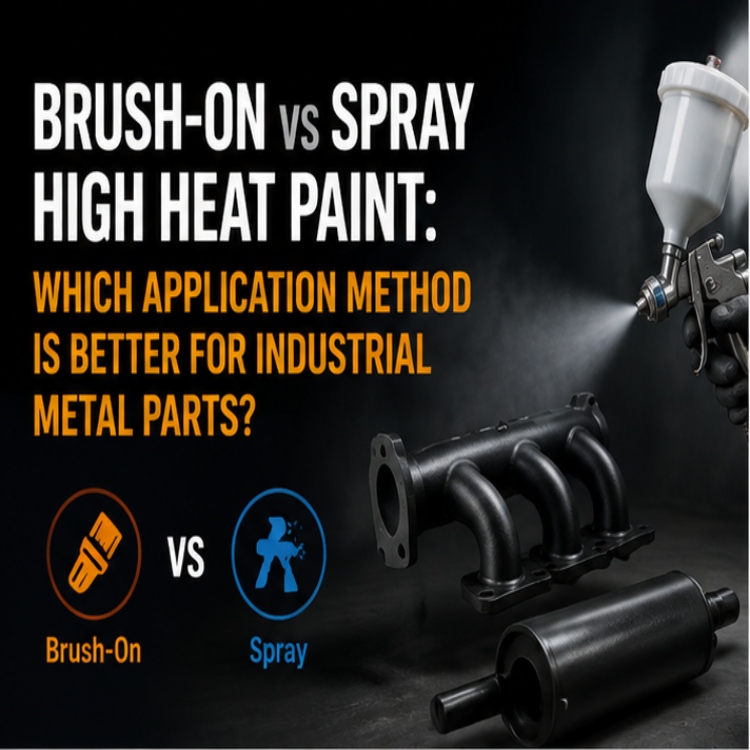
What Is the Main Difference Between Brush-On and Spray High Heat Paint?
You can often apply the exact same heat-resistant coating using multiple ways. However, the delivery method alters how well workers manage the wet layer. Because of this, buyers need to look closely at the whole process. They should avoid thinking one format always beats the other.
How Does Brush Application Work?
Brush-on high temperature paint moves straight from a can to the metal using a simple brush. This gives the worker tight control over the exact placement of the fluid. It also stops messy airborne overspray. This approach works great for routine upkeep and small batches. It is equally handy for edges, welded joints, and parts placed near delicate machinery that needs to stay clean.
Brushing makes sense when a shop lacks a proper spray booth. It also helps when taping off nearby areas takes more time than actually painting the item. Still, putting on too much fluid at once causes problems. It can leave ugly brush marks, drips, or a bumpy layer. Because of this risk, KONAZ application guidance suggests a very light brush coat if spraying tools are missing.
How Does Spray Application Work?
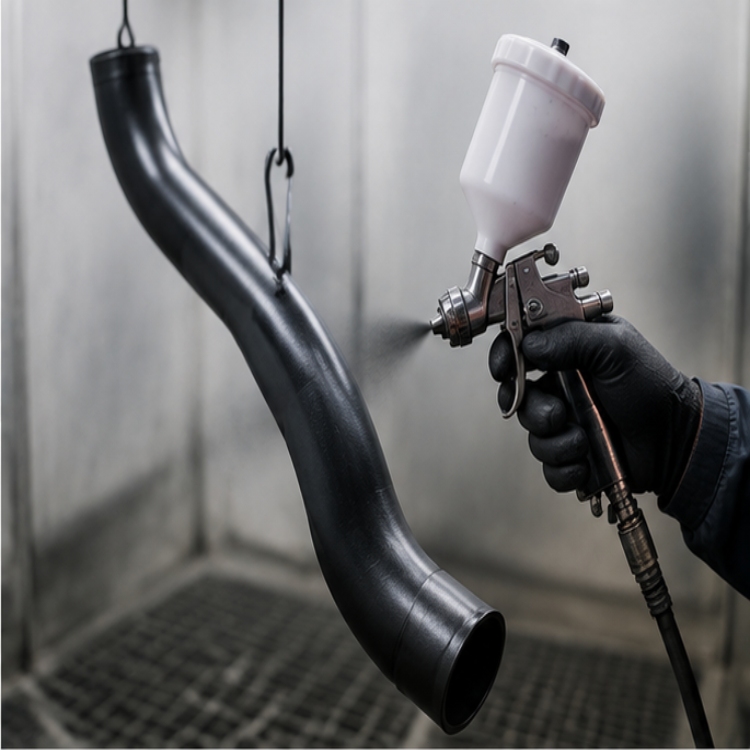
Spraying breaks the liquid into tiny drops and spreads it over the target area. For KONAZ Heat Resistant Coatings, spraying stands out as the top suggested choice. It helps workers build a thin, flat layer on the metal. This becomes highly valuable when visual appeal and exact repeatability matter. It also ensures steady coverage throughout a large production run.
A spray gun hits curves, tight corners, tubes, and bulky housings quite easily. It covers these tricky shapes much more smoothly than a standard brush. The main downside is the extra setup. The facility must have the right gear, good air flow, and proper masking supplies. They also have to manage the fluid wasted through airborne overspray.
Which Method Is Better for Different Metal Parts?
The size and shape of an item usually give a much clearer answer than broad claims about surface quality. Makers need to pair the delivery method with the specific target areas. They must also think about the amount of daily repetition on the factory floor.
When Is Spraying the Better Choice?
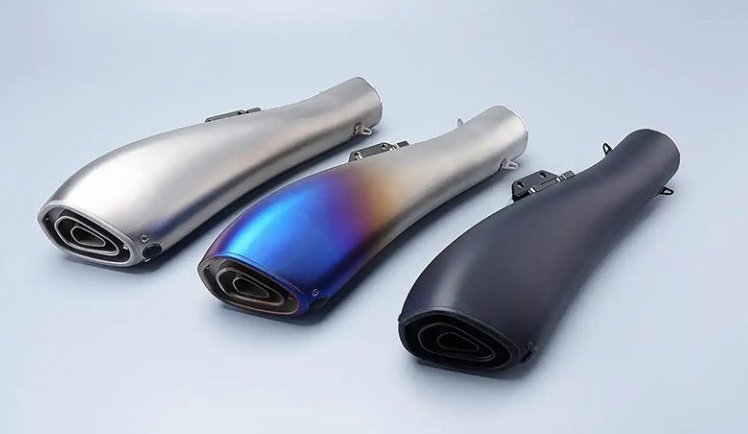
Spraying generally runs faster for exhaust pipes, flat stove panels, grill bodies, and heater housings. It is also great for identical OEM parts. A steady spray pattern coats large zones rapidly. This completely removes rough brush textures. Furthermore, managers can easily set rules for gun distance and fluid flow. They can lock in the pass speed to maintain strict batch quality.
Facilities painting high-temperature metal items must still check the actual working heat and peak spikes. They need to verify the base metal and the curing steps before starting work. A good delivery method cannot fix a chemical mix that fails in hot settings. A smart heat-resistant coating selection process must always start with these exact working facts.
When Is Brushing the Better Choice?
Brushing proves highly useful for spot repairs, early prototypes, and tiny orders. It works perfectly on welded seams and tight zones where stray mist causes huge cleanup headaches. This basic tool also lets repair crews cover a specific spot. They can finish the job without dragging a massive machine into a dedicated spray booth.
For items that must look perfect, makers need to run a quick test. They should see if the brush texture looks fine after the part dries and bakes. A brush often leaves thicker liquid at sharp corners or joint overlaps. Because of this, workers must avoid doing multiple heavy strokes. They need to watch the wet layer closely to stop drips or massive fluid buildup.
How Do Production Cost and Quality Control Affect the Choice?
Buying the cheapest gear does not guarantee the lowest total painting bill. Many things change the final math. Daily output volume, worker hours, and taping tasks play a big role. Fluid transfer rates, fix-up jobs, and visual demands also steer the final choice heavily.
What Should Factories Compare During a Trial?
A solid test runs both methods on the exact same metal base under strict rules. The shop needs to check coverage evenness, visual appeal, and total fluid used. They must track worker hours, corner access, drying speed, and grip strength after heating and cooling cycles. The test pieces must undergo the exact same cleaning and baking steps planned for real production. Workers need to log every single flaw by method. This includes nasty drips, dry spray, ugly brush lines, skipped gaps, and thick edge blobs. Keeping these detailed notes makes the final decision easy to explain and copy across different work shifts.
No matter which path you pick, you must grind or wash the metal to reveal a solid base. The item must stay completely free of annoying oil and water spots. KONAZ guidance demands a very thin layer rather than a thick, heavy coat. You can bake the related coating in an oven at roughly 280°C for 15 minutes. If an oven is missing, you can let it air dry naturally for about 24 hours. This timeline depends entirely on the specific chemical mix and your daily shop conditions.
Why Work with KONAZ for High-Temperature Metal Coatings?
KONAZ creates strong functional coating materials for tough metal jobs. These include car exhaust systems, home fireplaces, BBQ grills, hot stoves, and similar heat-exposed parts. Makers can use a deep supplier chat to align the chemical mix and the delivery method. They can also match the metal prep and baking steps to their own factory floor. This works much better than just picking a product based on the application format alone.
Conclusion
Spray high heat paint usually stands as the best pick for steady industrial output. It handles tricky shapes and flat zones that demand a smooth look. Meanwhile, brush-on high temperature paint offers huge value for quick repairs and tiny batches. It fits perfectly for local touch-ups and shops lacking spray gear. Keep in mind that neither tool promises heat survival on its own. Makers must first pair the liquid with the exact working heat and the bare metal type. After that, they need to check layer smoothness, baking results, visual appeal, and bonding strength on real parts. A fast shop trial quickly shows which option brings the best mix of quality, speed, fluid savings, and low failure risk.
FAQs
Can high heat paint be applied with a brush?
Yes, you can do this if the product label allows brushing. Just put on a light, flat layer and stay away from thick liquid buildup. KONAZ guidance permits thin brushing whenever standard spray tools are missing from the shop.
Is spraying high temperature paint better than brushing?
Spraying usually wins for large batch runs and tricky metal shapes. It easily builds a much smoother final look. On the other hand, brushing works better for minor fixes and tiny spots. It is also ideal for tight places where you must completely stop stray mist.
Does the application method change the temperature rating?
No, it does not. The actual chemical mix and the stated working rules decide the heat limit. Bad layer control, dirty metal prep, or wrong baking steps can still ruin the job. This failure happens even if you buy a liquid with the perfect heat rating.