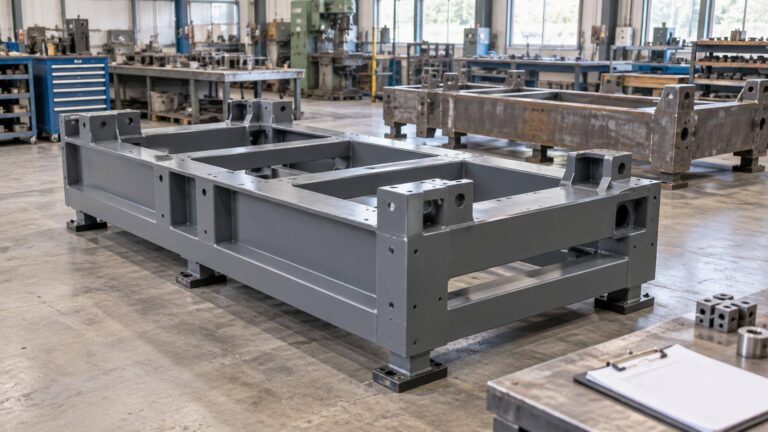
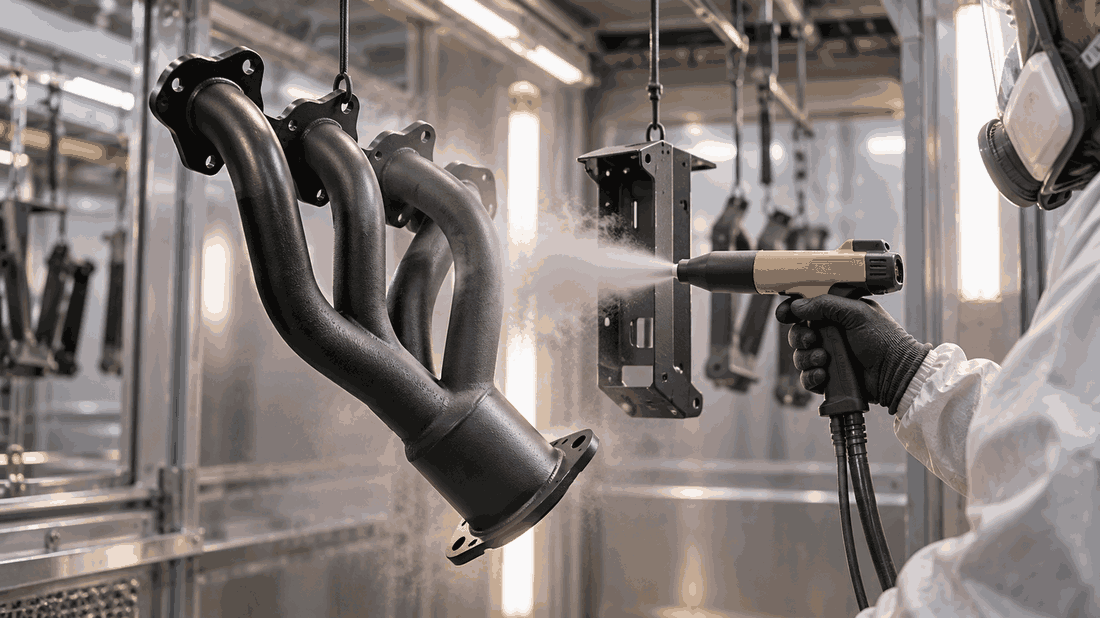
A coated bracket can look flawless from the front while the inside corner remains nearly bare. Exhaust tubes, grill frames and recessed equipment housings create similar problems: powder accumulates on accessible surfaces but misses the places that are harder to reach. For manufacturers, uneven coating coverage is more than a cosmetic defect. It can leave localized metal exposed and cause inconsistent results after curing.
Why Is Even coating Coverage Difficult on Complex Metal Parts?
Electrostatic spraying works by attracting charged powder to a grounded workpiece. The electric field and airflow are not equally effective at every point on an irregular component. Recognizing which areas are difficult makes process adjustments more targeted.
What Happens Inside Deep Recesses?
In a narrow cavity, the electric field can concentrate around the opening while fewer charged particles travel to the back. This is commonly called the Faraday cage effect. An operator may see a heavy build around the rim while the deepest surface receives little powder.
Why Do Edges and Welded Corners Need Separate Attention?
Sharp projections, close-fitting brackets and weld intersections create different spray angles. Some areas receive excessive powder while others sit in the shadow of a neighboring surface. A complex exhaust manifold may therefore have a uniform-looking outer pipe but weak coverage close to a mounting flange. Visual approval from one viewing angle is insufficient.
How Should Manufacturers Adjust the Spray Process?
The spray setup should be developed around an actual production part, not a flat demonstration panel. Small controlled trials can establish which changes improve the difficult areas without sacrificing the visible finish.
Can Gun Distance and Voltage Improve Recess Coverage?
Changing gun angle, distance, powder output and electrostatic voltage can alter how particles enter a cavity. Operators may need a lower-voltage pass or a different nozzle arrangement for a deep recess. These are trial variables, not universal settings: the powder formulation, gun design and part shape determine the workable combination.
Why Do Grounding and Hanging Position Matter?
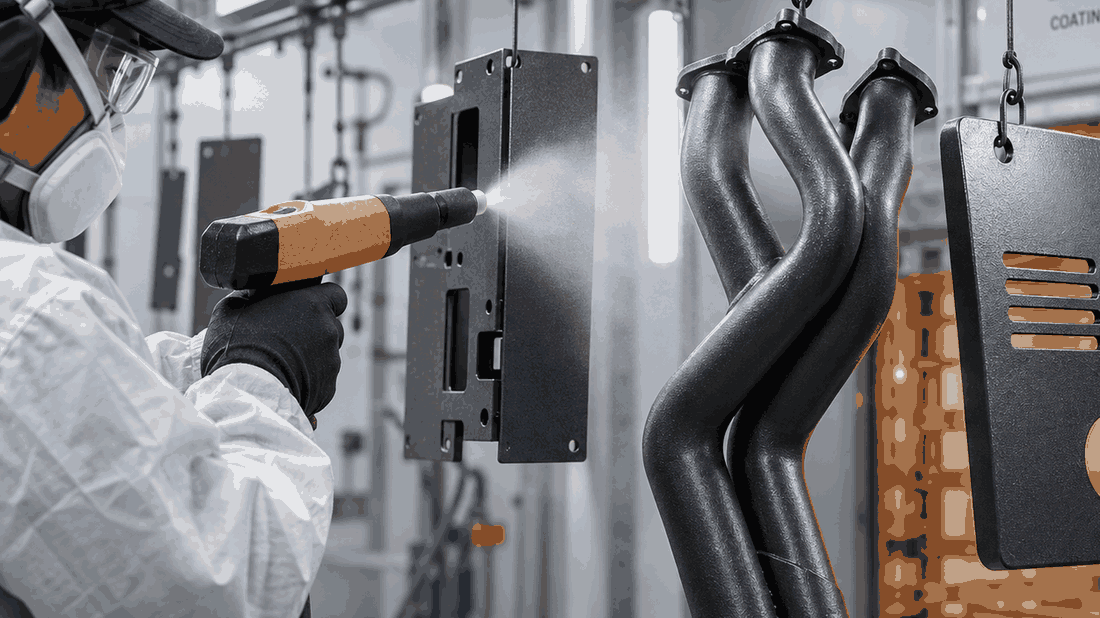
Poor electrical contact can make deposition unpredictable. Check the connection between the workpiece, hook, rack and grounding system; remove insulating buildup from contact points where appropriate. Position parts so the spray reaches the inside face, tube junction and back of each bracket. If the line permits rotation, confirm that the rotation exposes rather than hides the critical surfaces. Hanging holes and contact marks should also be included in the approved finishing plan.
What Should Be Checked Before the Parts Enter the Curing Oven?
Curing cannot fill a recess that received too little powder. An inspection before heating therefore offers a chance to correct application defects without stripping an already cured finish.
How Can Operators Find Thin or Missed Areas?
Inspect inside corners, undersides, weld toes, openings and mounting faces under suitable lighting. Turn representative parts and compare them with an approved sample. Confirm that the powder has reached the required locations and that heavy accumulations have not developed on external edges. A clean-looking front surface alone is not a release criterion.
Should Every Surface Receive the Same Coating Build?
Not necessarily. Contact areas, threads, sealing faces and certain mating surfaces may need masking, while exposed protective surfaces need sufficient coverage. The drawing and coating specification should distinguish the two. Buyers should define the applicable dry-film-thickness range for the selected powder system rather than copying a number from an unrelated product. The final measurement plan should include the difficult geometry, not only a convenient flat face.
How Can Buyers Validate Coverage on Tubes and Recessed Parts?
A useful approval sample should reproduce the production substrate, pretreatment, hanging method, application settings and cure schedule. It should also include the locations most likely to reveal a coverage problem.
What Should a Production Trial Include?
Coat multiple parts across different rack positions and operators. Inspect open tube ends, flange intersections and recessed brackets before and after curing. Record appearance, thickness where accessible, adhesion and any visible pinholes or uncovered metal. For a high-heat application, the selected powder must also be qualified for the real service temperature; good geometric coverage does not establish heat resistance by itself. A separate guide to continuous and peak heat ratings explains why a maximum rating is not a complete service specification.
How Should the RFQ Describe Difficult Areas?
Attach photographs or marked drawings showing the surfaces that must be coated, masked or inspected. State the expected volume, part dimensions, substrate, permitted hanging points and inspection access. Agree on a reference sample and document any exceptions. Clear requirements reduce disputes when a complex component looks attractive overall but has an unprotected recessed area.
Why Work with KONAZ on Complex High-Temperature Metal Components?
KONAZ offers KONAZ High Temperature coating for exhaust components, grills, ovens and industrial metal equipment. Manufacturers can discuss operating conditions, desired appearance and trial requirements before placing a bulk order. The company’s published product information describes heat-resistant formulations, but the final geometry, curing schedule and coverage acceptance criteria should be confirmed for each production program. Its BBQ grill coating guidance provides additional application context.
Conclusion
Uneven coating coverage on complex parts is usually a process and geometry problem, not simply a shortage of powder. Manufacturers should identify recesses and hidden corners, check grounding, trial spray settings, orient the workpiece correctly and inspect critical areas before curing. Approval on representative production parts gives buyers more useful evidence than a perfectly coated flat panel. The finished specification should state where coverage is required, where masking is necessary and how each difficult area will be inspected.
FAQs
1. What is the Faraday cage effect in coating?
It is the reduced penetration of charged powder into a recessed area when the electric field concentrates around its opening. Gun setup and spray angle may need adjustment.
2. Can a second powder coat fix every thin spot?
No. Another pass can overbuild accessible edges while leaving the deepest recess undercoated. Identify the reason for poor access and test the correction first.
3. Should tube interiors always be powder coated?
Not automatically. The required interior coverage depends on the design, service conditions and coating specification. Buyers should define which internal surfaces require protection and how they will be verified.